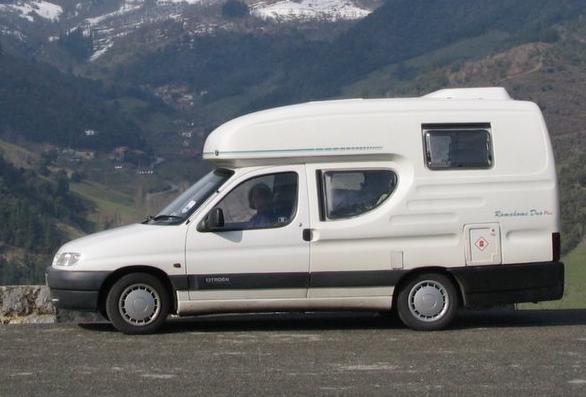
The glorious weather continues so today we invited Susanne to join us to visit a couple of our favourite treasures in the locality – Château-Chalon and Baume-les-Messieurs, both to found in the direction of Lons-le-Saunier.
Our original plans to eat lunch at a tiny restaurant sited near the entrance to the deep gorge of Baume-les-Messieurs, serving unforgettable hot reblouchon salad and tartiflette du comté, were frustrated by the French passion for road diversions. With no warning a barrier will appear across the only road through the hills, supporting a bright yellow “Route barrée” sign. There are rarely any further indications as to how to reach your destination. As these roads are normally maintained by the local community, it is probably assumed everyone will be aware of the works and make alternative arrangements. However, there does not seem to be any co-ordination between the communes and yesterday the road workers seemed out in force. We actually encountered a diversion from the diversion of the diversion and found ourselves driving through the same villages several times over, approaching from different directions!
After driving up to the top of the plateau with the huge iron Croix de Dan dominating the delightful little town of Poligny and offering extensive views westwards across the flat plains of Bresse, we continued across flat farmland towards Baume-les-Messieurs. The surrounding pastures and woodland provided a haven for birds of prey. There were dozens of buzzards in the sky, sitting on the fence posts beside the road or standing with their prey in the fields amongst the cattle. The little fieldmice or campagnoles are plentiful here and were the probable attraction.
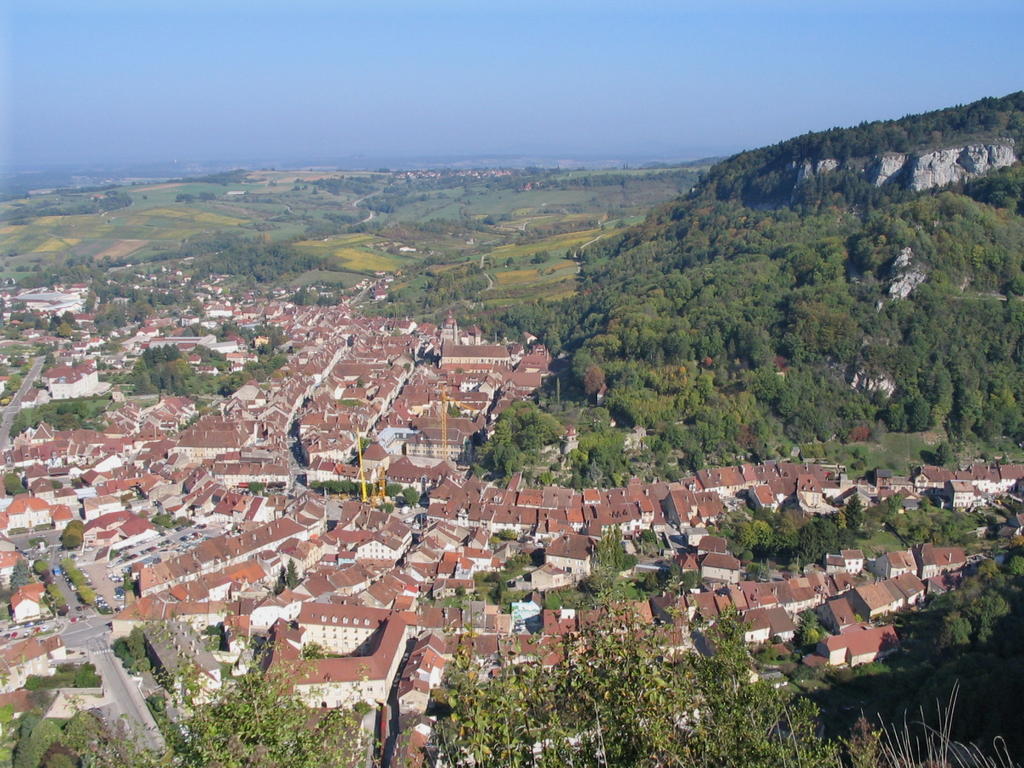 Poligny from the Croix de Dan
After several diversions we eventually reached the edge of the plateau and the road leading down the side of the rock-face into the reculée below. This happens quite suddenly. One side of the road is a pleasant flat field and the other is just an empty void! It can be really frightening standing on the edge to peer over. Here we found our route blocked yet again and the only remaining entrance to the reculée was from the lower level of the plateau requiring a massive diversion via Château-Chalon and Voiteur. So we revised our plans and stopped first at Château-Chalon.
 The Cirque de Ladoye. Our intended route down can be seen through the trees on the right
We will fail in any attempt to do justice to this delightful village of tumbling dry stone walls, farms and houses clinging to the edge of the sheer rockface that drops away to the vine clad southern slopes of the valley far below. The vineyards are extensive, well maintained and seen from the village above at this time of year, offer a wonderful patchwork of yellow corduroy. The village today is mainly famed for its vines but actually dates from mediaeval times with the remains of its ancient castle and its old stone church. The buildings are built entirely of the local stone. Even the roof tiles are specially shaped limestone blocks. Today at lunchtime the place was almost deserted but during the season it is easy to imagine it as a popular place for visitors. Almost every building lining the couple of narrow streets offers free “dégustations” or tastings at any time with temptingly displayed bottles beside the huge round doors leading down to the cellars where vats can be glimpsed in the dusty gloom.
 Vineyards below Chateaux Challon
 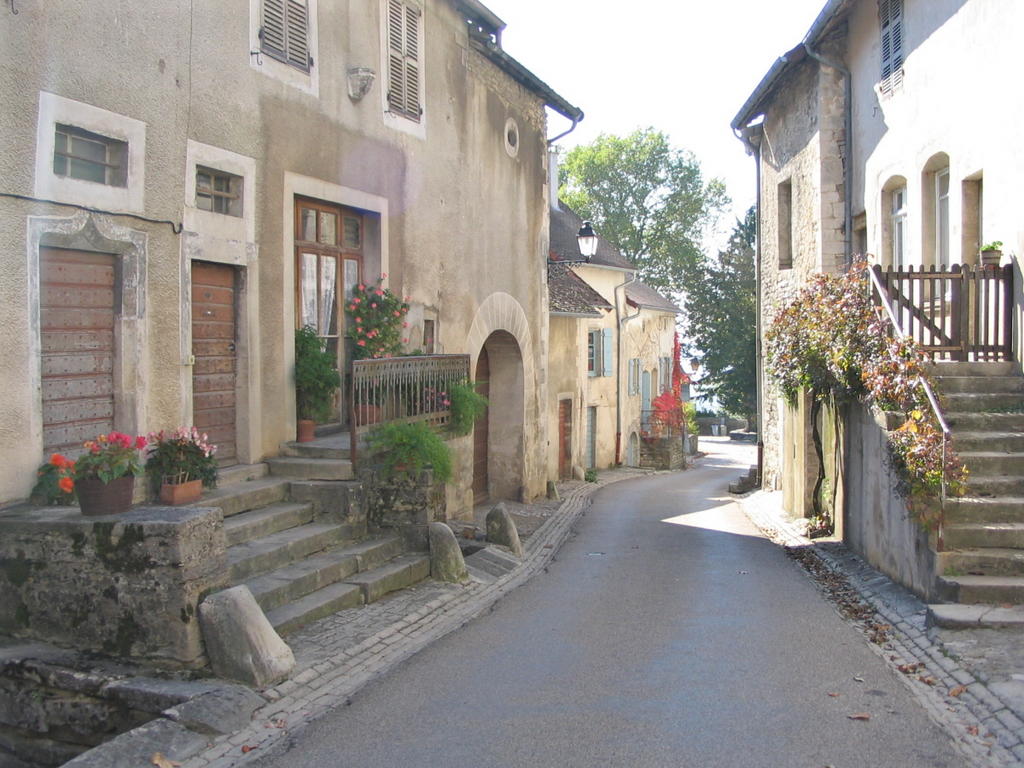 Wine growers’ houses in Château-Chalon
 The former monastery precincts and terraces above the vineyards
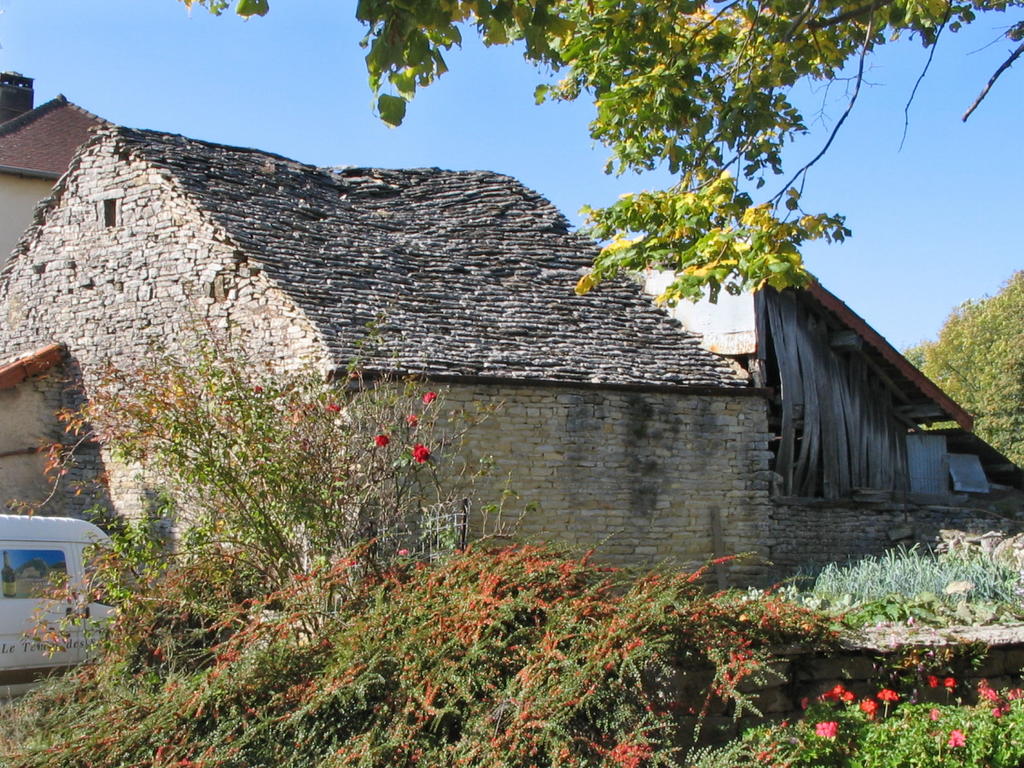 Limestone building in the village
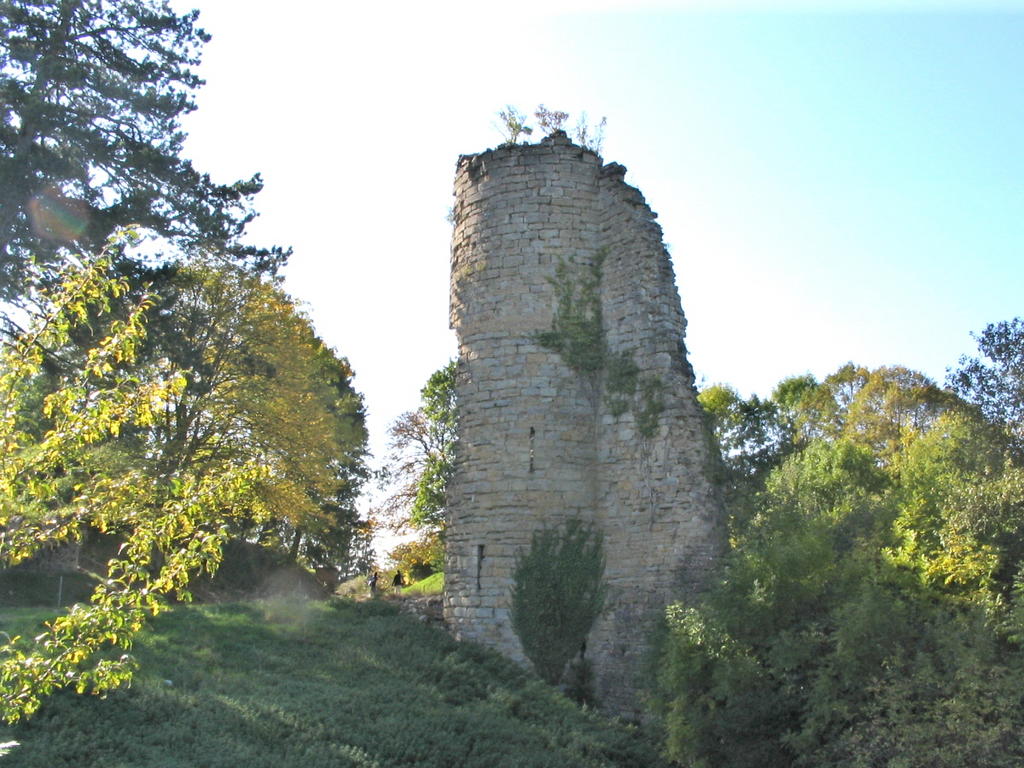 Remains of the Medieval Castle
 We found a tiny restaurant up some tumbling stone steps lined with geraniums. At this time of year we were the only customers and it seemed to open on demand. We were offered fluffy omelettes of local cheese. It was very pleasant and helped overcome our disappointment at missing out on our tartiflette at Baume les Messieurs.
Tearing ourselves away from the warm sunny streets of Château-Chalon with its stupendous views we descended steeply down to the valley floor and the small town of Voiteur where Susanne and Jill watched a funeral cortege at the local church while Ian enjoyed choosing French pastries at the patisserie.
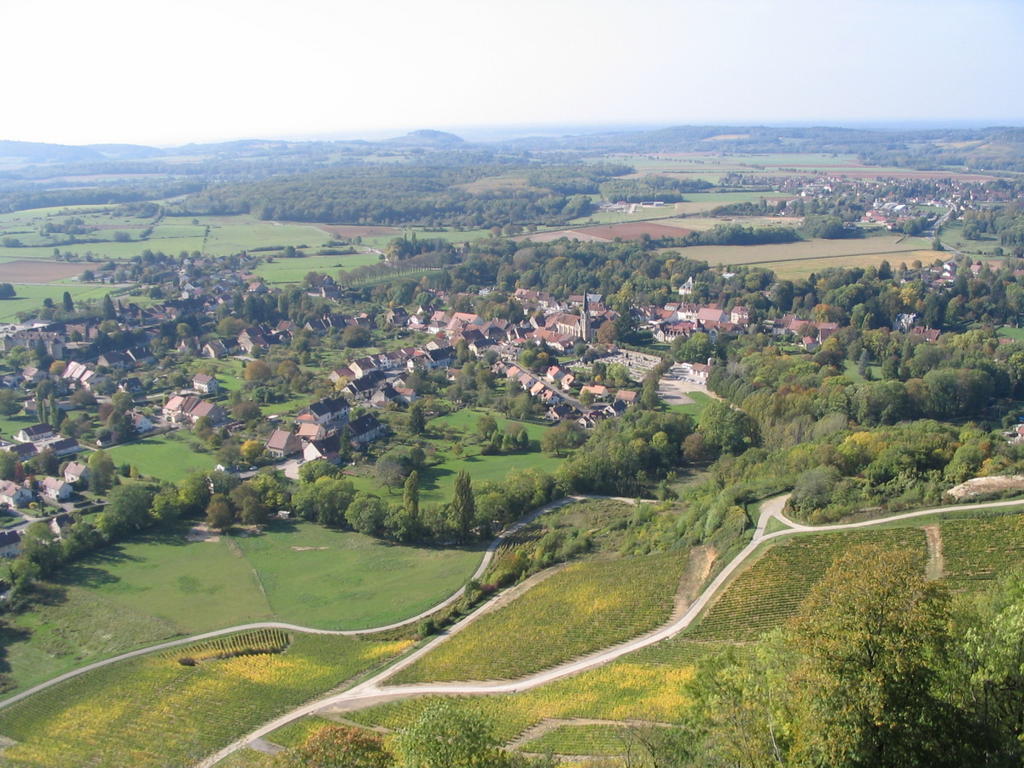 Voiteur from Château-Chalon
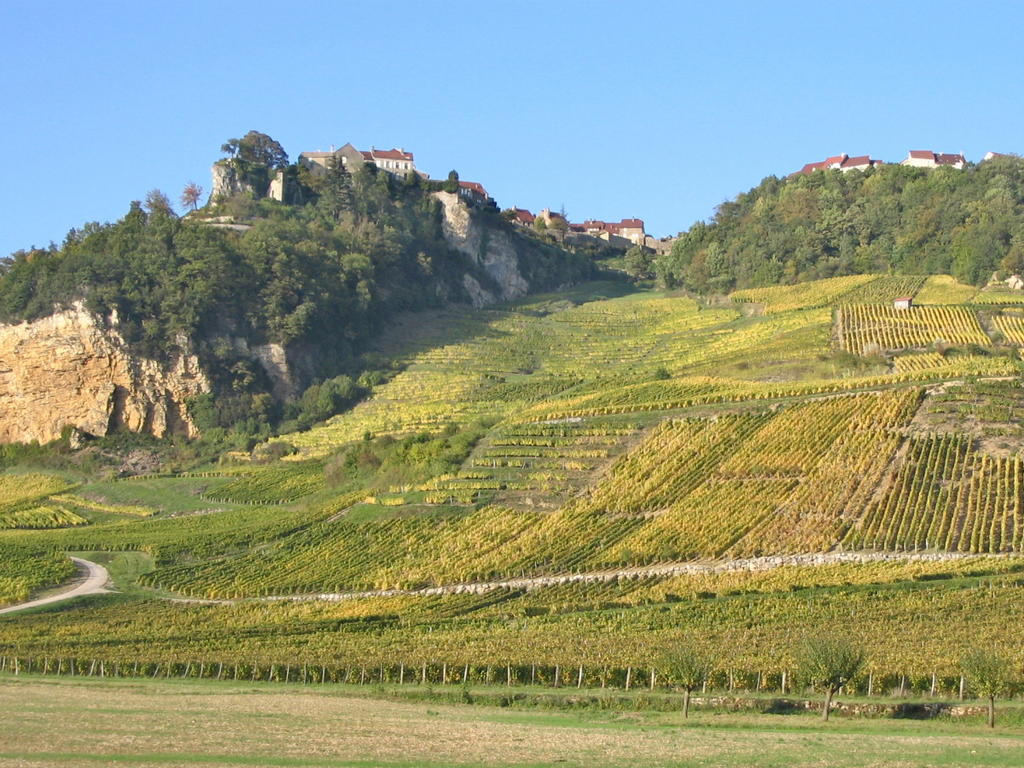 Château-Chalon from Voiteur
From here, Ian triumphantly assured us, nothing could be closed as there was no other way in or out of the reculée. Locals call the further end of these blind valleys “le bout du monde” (end of the world) and it seems very appropriate. Four kilometres into the reculée brought us to the village of Baume-les-Messieurs, so called because a Benedictine monastery was established here in the sixth century by the Irish monk St. Colomba. In the seventeenth century the monks became rather wealthy and were replaced by more noble and worldly canons who changed the name from Baume-les-Moines to Baume-les-Messieurs. The Abbey was finally dissolved during the French revolution in 1793.
Of course, the little restaurant we had been seeking was open, devoid of customers and serving tartiflette. How frustrating!
We explored the wonderful stone-walled abbey, a national monument but in need of considerable restoration work. The arcades of the cloisters had unfortunately been demolished and the 13th-century interior of the massive abbey church was very stark, the floors paved with funeral slabs, mainly of the 17th century. In the church is the tomb of Jean de Watteville (1618-1702), probably the most colourful of the abbots, originally a soldier, he fled after killing a Spanish noble in a duel, briefly became a monk, but escaped to Spain where he was involved in another duel. This forced him to Constantinople, where he converted to Islam, became a pasha and local governor, surrounding himself with a harem. Sent on a mission against the Venetians, he deserted to them and gained absolution from his sins and also the position of Abbot of Baume. He governed the abbey in military style, in the 1660s assisting Louis XIV in his annexation of Franche Comté – although the Holy See did draw the line when the archbishopric of Besançon was proposed as a reward for his support.
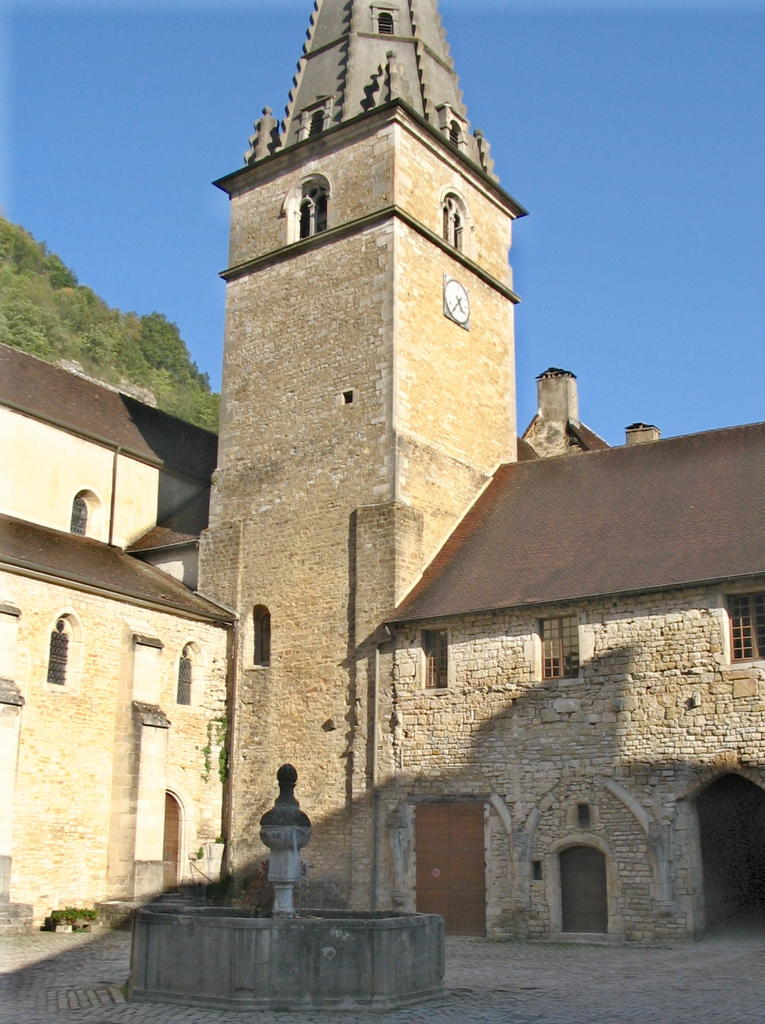 The former cloisters at Baume-les-Messieurs
 The interior of the abbey church
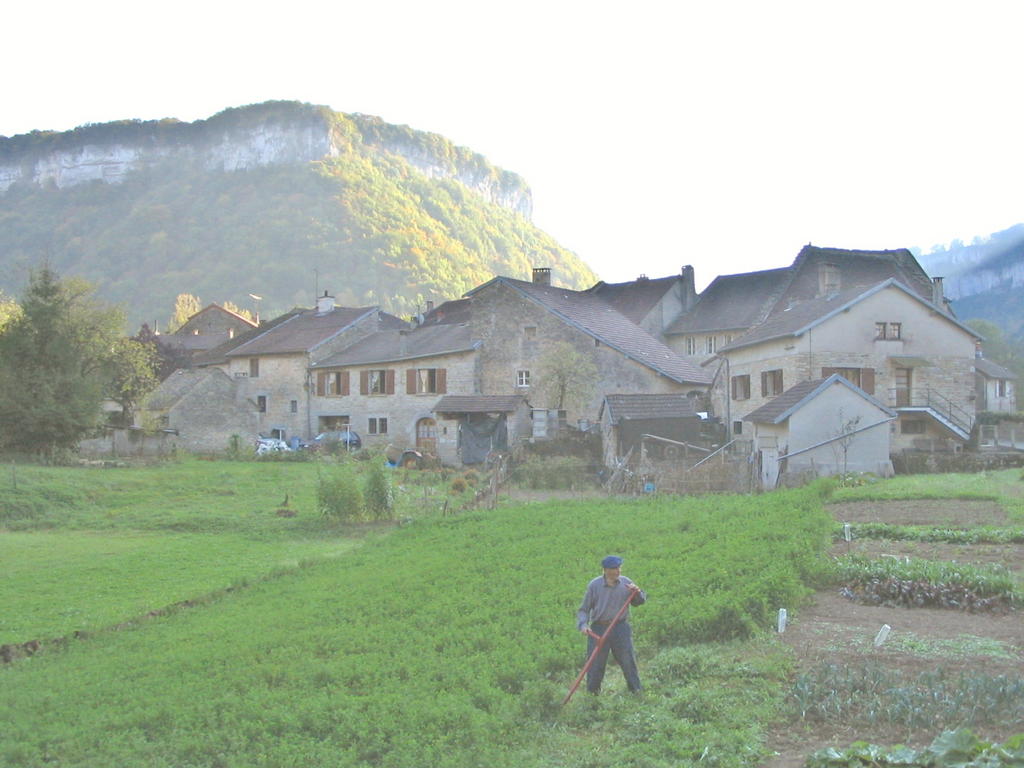 Late afternoon in the reculée
Thirsty work absorbing culture and beauty at the same time, so we sat beneath the abbey walls in the sunshine watching the late afternoon shadows spreading across the cliff face on the far side of the reculée, enjoying mugs of tea with Ian’s assorted fruit gateaux.
Our plan was to continue the final 3 kilometres up the reculée to the “bout du monde” to see the source of the river Dard as it exits from its dark cave into the sunlight. The local commune however had other plans. Beyond the village the only way in was barred by road works and the laying of new drainage pipes. Well, the villagers have to pass the winter there and the holiday season is officially over in France, so it was just our bad luck. We have had a wonderful day anyway and it is something to encourage us back to the Jura again in the future.
On our way home we diverted to visit the somewhat dilapidated château of Arlay, built in the eighteenth century on the site of an old convent with the remains of a medieval castle in the park. Attractively set in pleasant parkland with a cellar retailing wines from its own grapes, it offered pretty views across the village and the surrounding fields. The interior was closed so we continued home to Champagne at the end of yet another full and happy day.
Thursday 13th October 2005, Champagne-sur-Loue
Today we discovered a town we had never previously heard of, Gray in the neighbouring department of Haute-Saône about thirty miles north from here. It proved to be a pleasant and interesting little town. Although it only has some 10,000 inhabitants today, in medieval times because of its location at the highest navigable point of the Saône, it was an important mercantile centre, and this former prosperity is clear from the many late medieval, Renaissance and 18th century houses leading from the bridge up the Grande Rue and along the Rue du Marché to the historic upper town where in the Place Charles de Gaulle there is a magnificent arcaded Renaissance palace with a polychrome tiled roof. This is now the town hall. In front are statues of local notables, including Romé de l’Isle, born in the town in 1736, whose mineralogical studies led him to develop the law of the constancy of angles, thus initiating the modern study of crystallography. Behind the town hall, near the basilica, can be found the only public toilets in the town. They are a classic example of the worst the region has to offer and are a complete disgrace.
 Gray from the River Saône
 The Town Hall at Gray
 Romé de L’Isle, pioneer in crystallography
Another mathematician, Augustin Cournot, was born in Gray in 1801 and worked on probability theory. The town also hosts the National Museum of Esperanto, open by request - presumably this has to be made in Esperanto! Gray has all the usual attributes of any French town of note: a medieval castle subsequently rebuilt as a Mansion (in this case by the Count of Provence) and now housing a museum, the Hôtel Dieu or religious hospital, established in the early 18th century with a pharmacy museum, a parish church which has been granted the status of a basilica, because it houses a miraculous statue of the Virgin, and a public library rich in illuminated manuscript, incunabula and other early printed books.
Set in a flatter more, open landscape than the Jura, Gray exemplifies the fact that even small French towns have treasures to offer, once the inevitable déviations have been negotiated to reach them.
Friday 14th October 2005, Champagne-sur-Loue
Market day in Arbois at last provided the opportunity for Jill to buy some cheap replacement shoes. For a mere fifteen euros it’s doubtful how long they will last but they are comfortable and so much cheaper than those in the town shops that we were able to lunch at the Cuisance restaurant we discovered last week on the savings!
This was indeed every bit as good as we’d anticipated. As the market drew to a close around midday, the stallholders began packing away their wares before heading for some to the local bars for an apperatif together. Others drifted towards La Cuisance for the menu du jour. The restaurant is upstairs, above the crowded bar where the customers all call out “bon appetit” as you push your way through. We were offered a sunny table on the airy terrace overlooking the clean shallow river where the ducks waddled and dipped amongst the bright green waterweed.
For twelve euros each (about £8.50) the menu of the day provided an entrée, main dish, cheeses, a dessert and coffee with chocolate. It consisted of warm herb sausagemeat in a glazed “croute” of puff pastry on a bed of mixed salad leaves with crudités (assorted grated vegetables.) This was followed by a bowl of warm Concoillotte (a delicious, viscous local cheese) to pour over a saucisse de Mortain (from the Haut Jura) with boiled potatoes. The plate of cheeses was also regional – goat’s cheese, Comté, Morbier and Bleu de Gex. Finally came the tarte aux pommes. As we were savouring all this with a half bottle of the famed Arbois wine, we were rather full and contented by the time we eventually tottered down the stairs and into the street again!
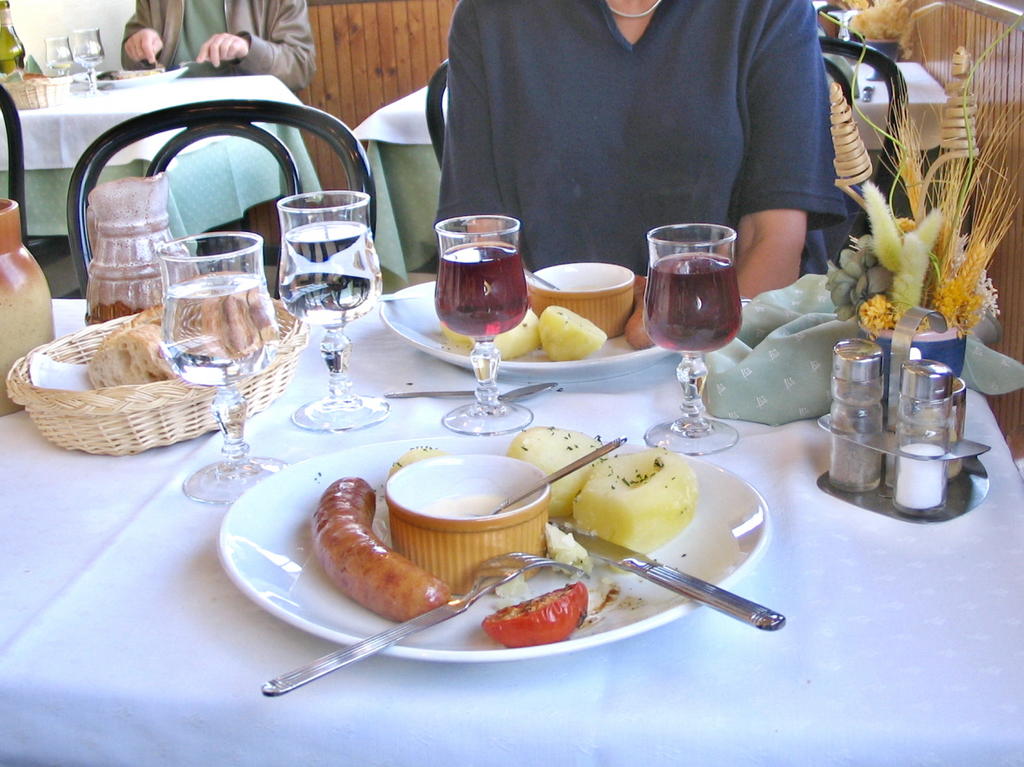 Lunch at the Cuisance
 Unsolicited publicity
Back in the sun-soaked market square everything was silent and deserted with not a scrap of evidence remained of the busy morning’s activities. Most of the town seemed asleep at this hour, which is not surprising if the people generally ate half as well as we had just done!
Arbois really is a delightful town. The local stone is a warm, golden colour and the town is set on sunny south-facing slopes surrounded by the brightly coloured vines that have bought prosperity to the town throughout the centuries. The streets are lined with huge elaborate seventeenth century houses many still with their original doors. Beneath are the cellars used for generations to store and mature the barrels. As you walk down the street the smell of the wine drifts up through the gratings from the cool dark interiors.
 Typical house in Arbois
  Shop window displaying game in Arbois
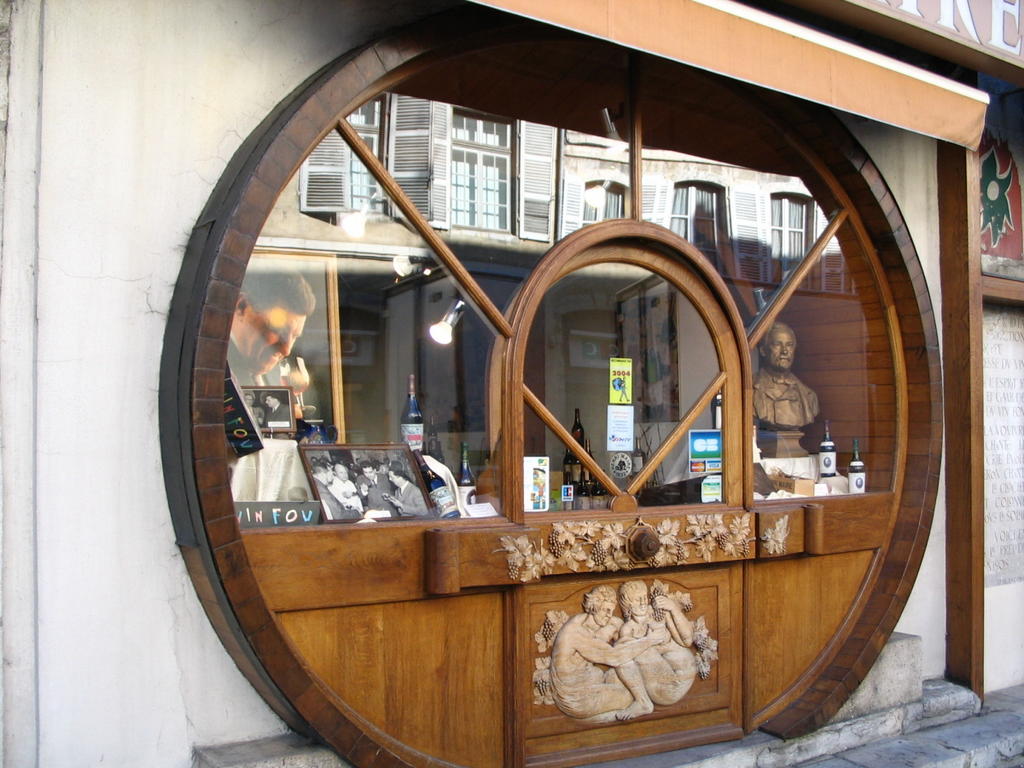 Vintner’s window in Arbois
 Our afternoon wanderings around Arbois took us up to the Château de Pecauld, housing the wine museum and surrounded by miniature vineyards showing the main types of vine. We also explored the oldest quarter, around la Tour Gloriette by the mediaeval stone footbridge across the Cuisance. This brought back memories of an earlier visit after a heavy rain shower when Neil and Kate were small. Their services were requested by an elderly lady who set them to work removing all the snails from her roses in her pretty riverside garden. When their jars were full they were sent to release the snails at the foot of la Tour Gloriette. Meanwhile the old lady took us into her cottage to show us her pictures of the Duke of Edinburgh! Today her garden looked as lovely as ever but the recently tiled roof and satellite dish convinced us the lady had probably long since departed. She would surely have been over a hundred by now!
 Château de Pecauld
 La Tour Gloriette
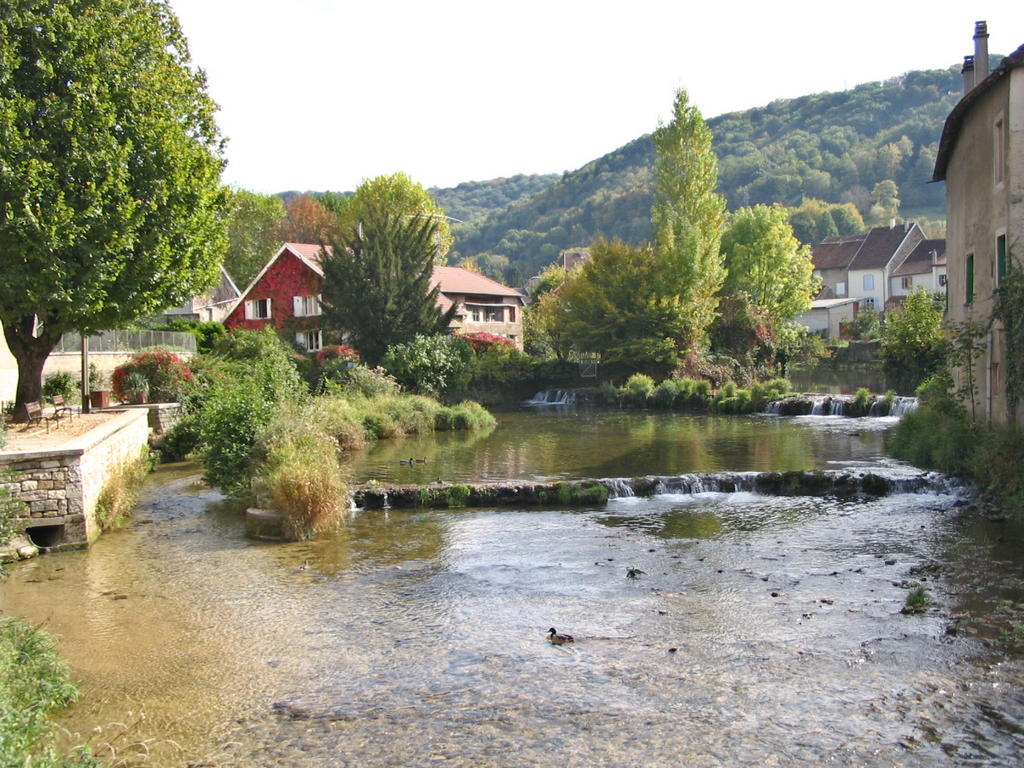 The house of the snails
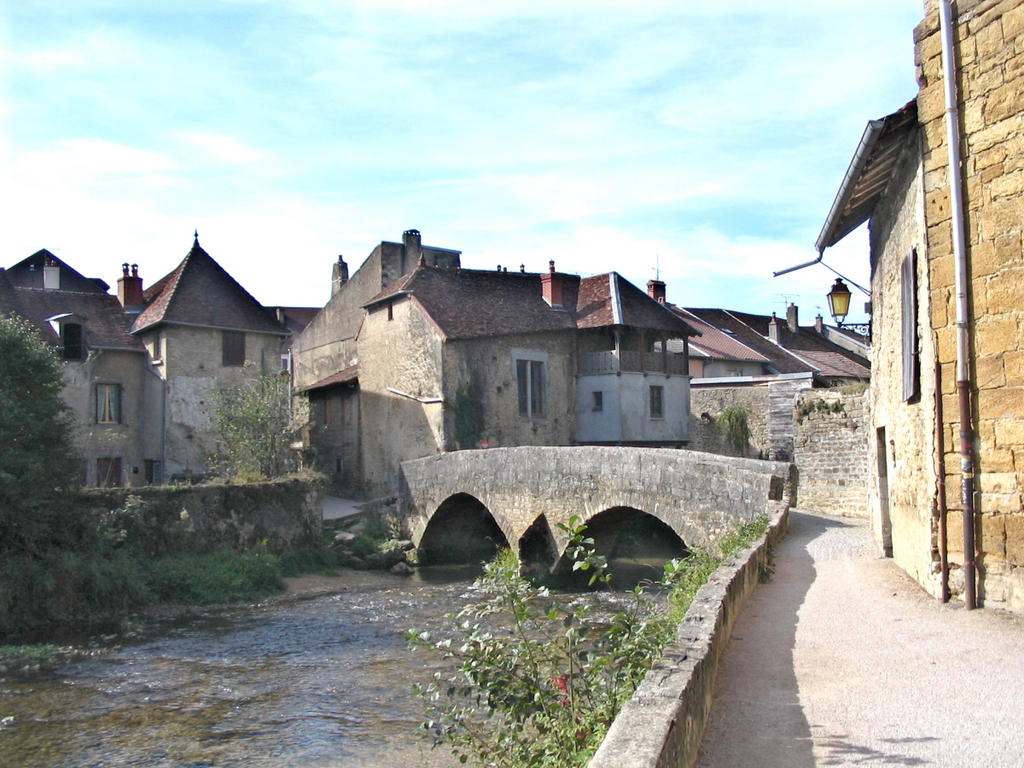 Mediaeval footbridge in Arbois
 A chance to cool off
We made our way back to Modestine stopping on the way to look at the main church of St. Just. It was very dark and cool inside while outside it was swathed in scaffolding and plastic sheeting during restoration work, so we did not see it to its best advantage.
Leaving Arbois we followed the narrow road up beside the Cuisance to the Reculée des Planches. There are two sources to the Cuisance, one emerging from the Grotte des Planches beneath a towering cliff and open only to guided groups, and the other a mile or so away trickling out from a tumble of moss-covered rocks into a little pool deep in the woods. The limestone layers here have formed a series of ledges and basins down which the little river gently steps. We wondered just how these basins had been formed and shared our thoughts with a couple of passing walkers. “Ah,” one of them replied “c’est une des mystères de la nature”. A little further downstream the water cascades over a mossy rock in a scene that landscape gardeners across the centuries have sought in vain to emulate, with sparkling ribbons of water falling in front of mysterious rocky grottoes - one of the most romantic spots in this beautiful region.
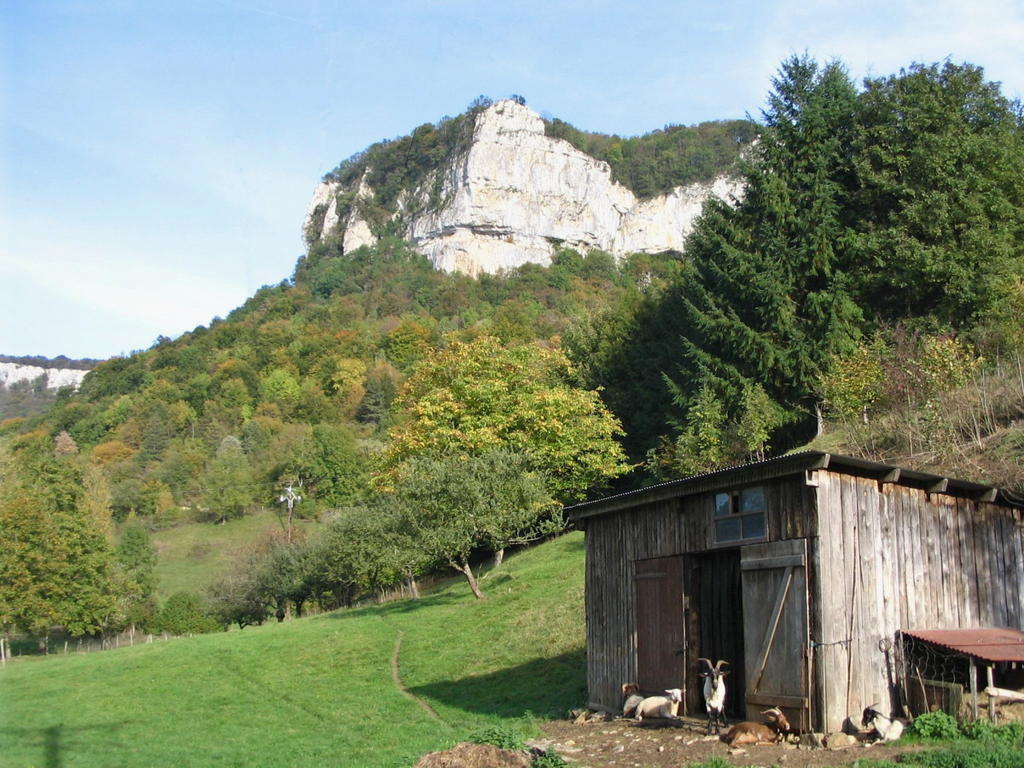 View towards the top of the reculée
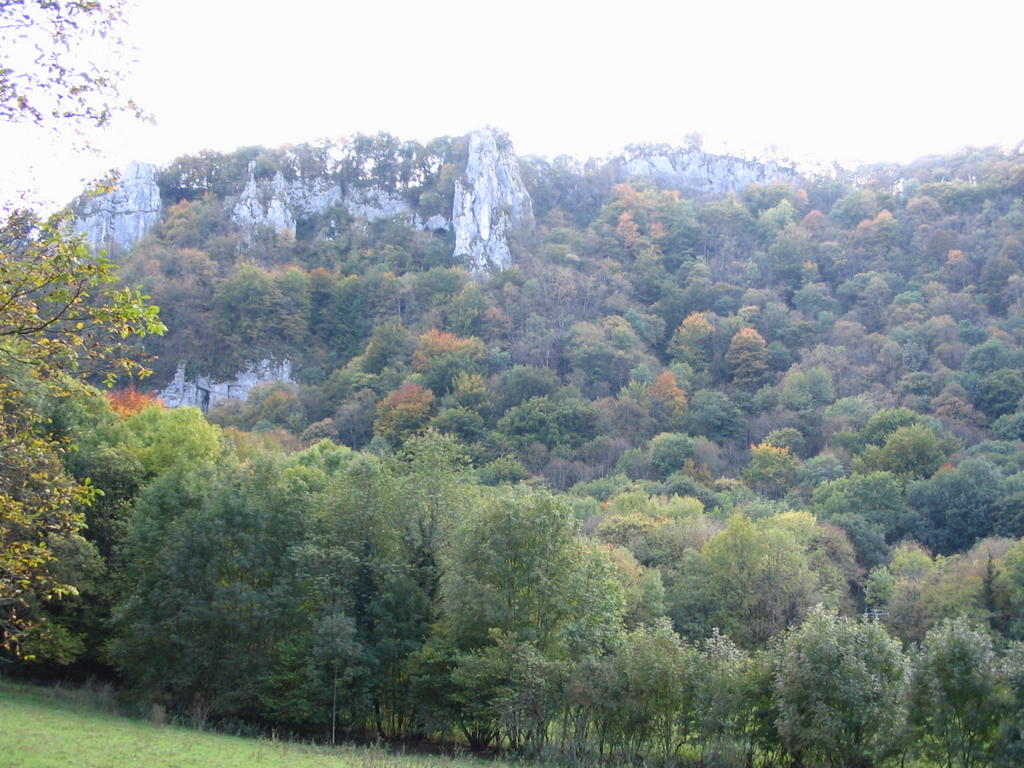 Within the reculée
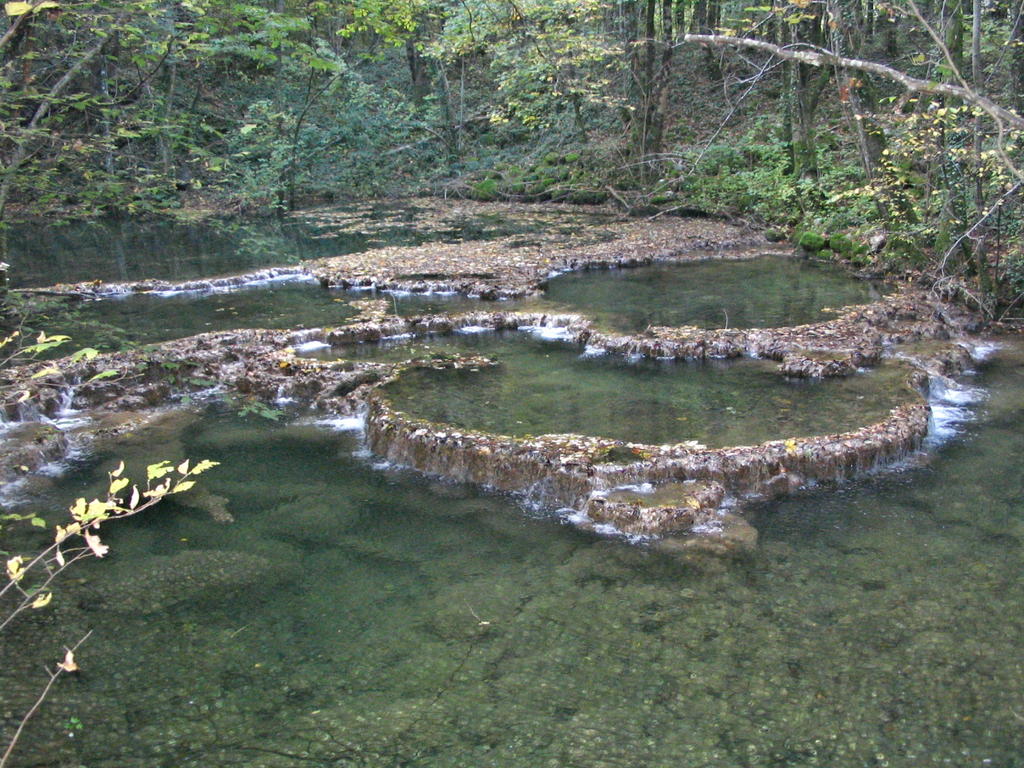 Naturally formed basins
 Cascade de la Cuisance
 Can’t have too much of a good thing!
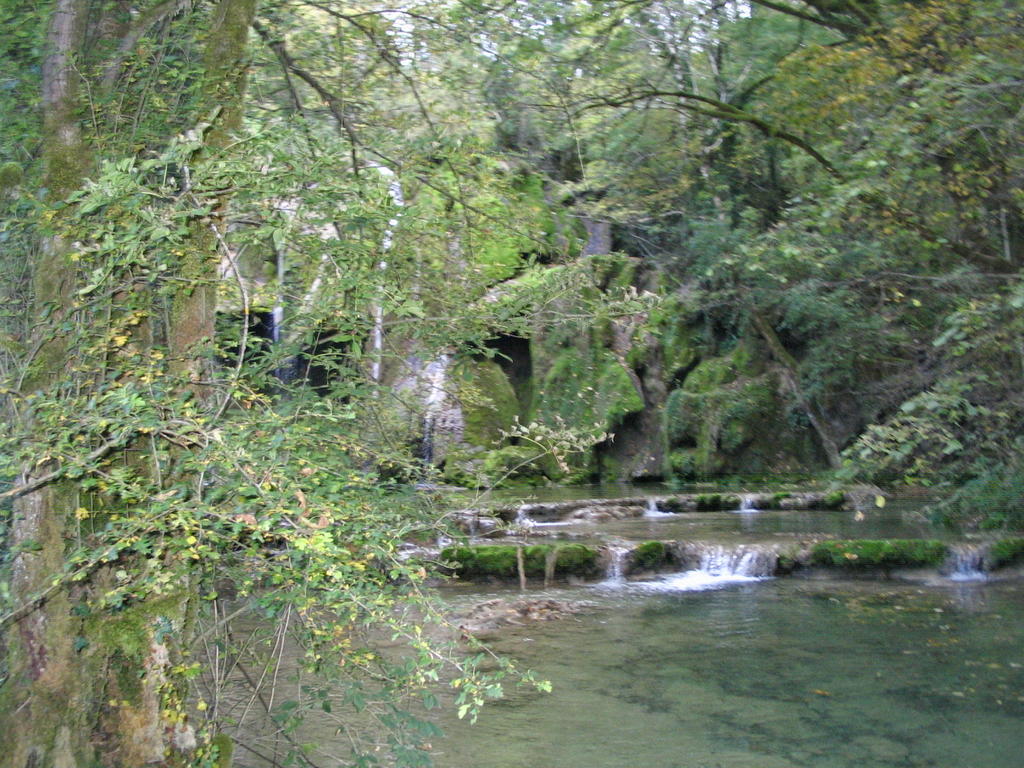 In the woods
Saturday 15th October 2005, Champagne-sur-Loue
We were back in Salins this morning for our regular fix in the internet shop after which we picked up quiches at a baker’s and drove up to a viewpoint above Salins, by Fort Belin, the other side of the valley to Fort Saint André which we had visited earlier. ( See 2005-08-26, entry for 27th Sept.)We picnicked with a bird’s eye view over the town before exploring the ruins of Fort Belin, which is as deserted and neglected as Fort Saint André is busy, with its crowds of youthful climbers in the adventure playground there. Fort Belin was built between the 1820s and 1850s and there are severe warnings on the dilapidated walls that it is private property and dangerous to enter. Despite this a footpath is signposted across the site and under the crumbling entrance gateway which is propped up by wooden scaffolding and steel braces. It has clearly not stood the test of time as well as the Vauban fort on the other side of the valley. Nevertheless it is spectacularly situated on a tongue of rock and a good place to relax and admire the views.
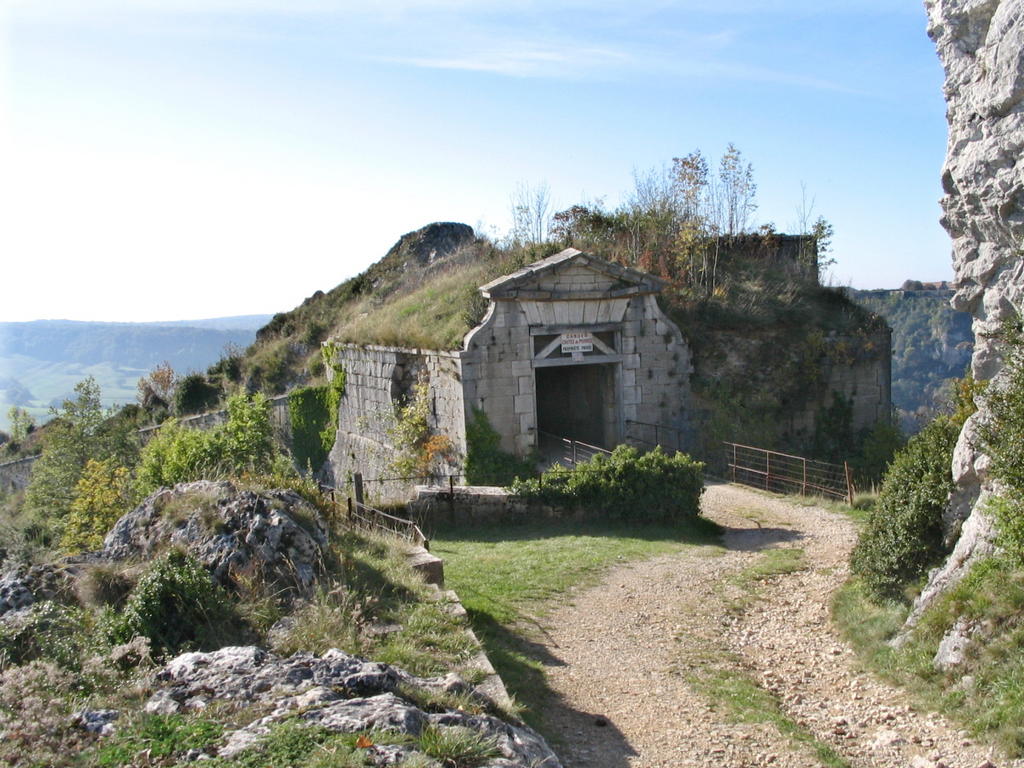 Entrance to Fort Belin
 Fort Belin on its rocky outcrop
We had to be home by seven as Susanne had invited us to join the family for a raclette. The two younger grandchildren were already playing in the garden when we returned and happily accompanied us down to the bottle bank by the river, chatting about school and the early stages of learning English and German. Seven year old Valentine counted all the cows in English for us, once his eleven year old sister Tiphaine had translated our question for him. Their big brother Thibault didn’t join the celebration until later as he was playing in the regional table-tennis finals in Mouchard until nearly 10pm. Their dad, Hugues, had spent the afternoon renovating the mobilette he used in his youth around the village. This is now destined for Thibault to get to and from his lycée in Dole. To little Valentine’s great glee, Hugues then took him for a test drive around the village. It was lovely to see their shared pleasure and questionable which of them was the more delighted.
 Hugues, Valentin and Tiphaine
Nine of us sat around the long table in the timber-beamed dining room, sharing the raclette – a table-top device for cooking slices of cheese which you then slide onto your plate to enjoy with charcuterie, boiled potatoes and crudités. Huge plates of sliced ham and sausages, baskets of French bread, dishes of brightly coloured grated vegetables surrounded the raclette and a dish of potatoes stood on top of it to keep hot. Roland’s ratafia as an aperitif set the evening off to a good start – the kids had apple juice. The main proceedings were then accompanied with a 1997 wine produced from the vines above the village. This was followed by one produced in 1998 and another in 1999! With six more years to go and our French rapidly deteriorating we were getting worried! We gradually ate and drank more and more slowly. The children, bored with the adults, set up their own imaginary restaurant at the far end of the room. To our astonishment we then progressed to the Cheese course! (The French ALWAYS have a cheese course no matter what the main dish may be.) Finally two huge fruit tarts, the results of Susanne’s afternoon’s labour, were brought in and accompanied by a bottle of Roland’s own sparkling wine. “Ce n’est pas de Champagne mais c’est de Champagne” Hugues joked, meaning that it had been produced here in Champagne-sur-Loue. It was a wonderful dry red wine that exploded into thousands of prickly bubbles in the mouth. We found it so much nicer than the sweet white expensive fizz masquerading under the Champagne umbrella in Britain.
 Raclette with the family
As if we were not all already merrier than is decent, we then had glasses of strong coffee laced with Plum eau de vie distilled (legally) from Roland’s own wine! Our diminishing command of the language just about enabled us to understand Hugue’s explanation that Cognac is produced from cherries while Armangnac comes from Plums.
Thibault then arrived around 10pm, having come fifth out of sixteen in the table tennis championship. The wolves that used to exist in this area were as nothing compared to his appetite, having last eaten at lunchtime. He completely swept the board and enjoyed small samples of each of the different wines we had saved for him. The evening continued until 1am, by which time the rival imaginary restaurant at the far end of the room had close because both the customer and the waitress had fallen asleep. Scooping them up they were carried down to the car and taken off home. (Their poor mum had been on the wagon all evening so they were quite safe.) We tottered downstairs to our flat, tumbled into bed.
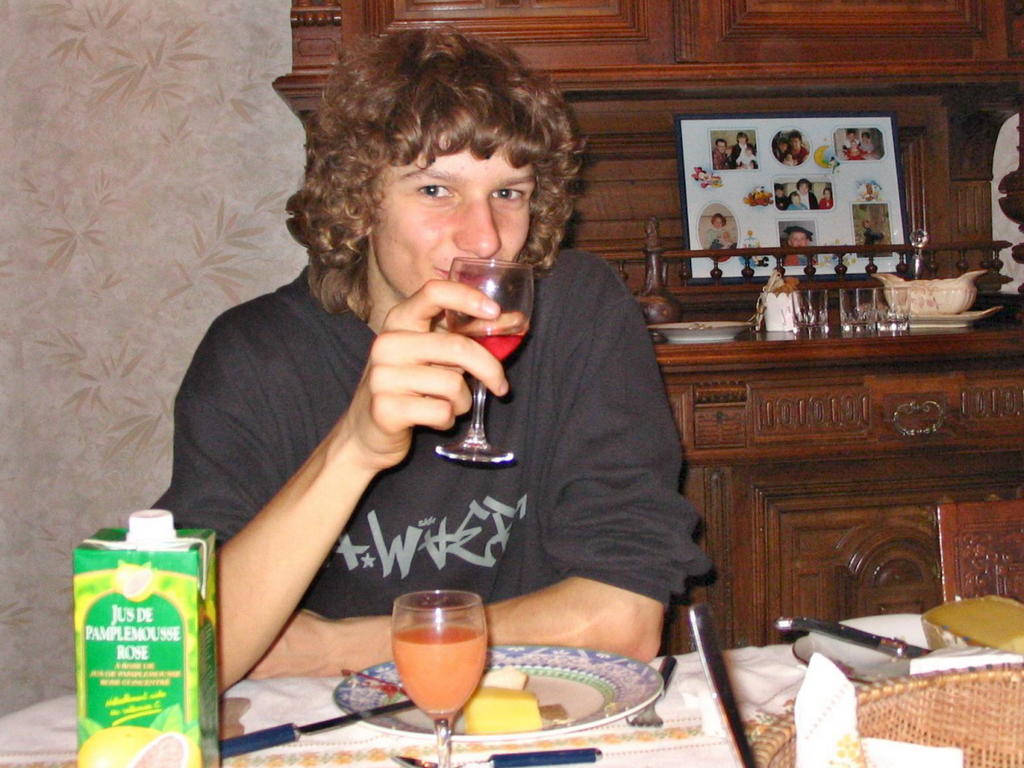 Thibault the champion eater
Sunday 16th October 2005, Champagne-sur-Loue
We were dead to the world until 9.30 this morning when we were roused by the sounds of Roland and Hugues dragging yet more barrels up from the cellar and preparing them for the next stage of the wine fermentation.
Unbelievably the weather is continuing to defy the laws of nature and remains hot and sunny. So today we went on a Maxted family outing. That’s Ian, Jill and Modestine of course, but this time also accompanied by our folding bikes Hinge and Bracket. We recently discovered the towpath along the Rhine-Rhone canal and the banks of the river Doubs, easily accessible at Dampierre about fifteen kilometres north of Champagne. After lunch by the canal we left Modestine watching a small group of fishermen and cycled off for an easy ride along the canal side beneath walnut trees, through a pleasant open countryside of grazing cattle and fields of maize. We passed the little town of St.Vit and several small lakes as we continued towards Besançon. At times the canal merged with the river, separating from it to pass through locks, bypassing the weirs, evidence of earlier industries on the river. The wonderful weather had tempted other cyclists, walkers, fishermen and horse riders to enjoy the riverside, free from the sound of traffic. We did not see a single barge all day.
We diverged from the canal on our return, cycling along country lanes. This was hillier but took us through several villages, including Fraisans where we discovered the dilapidated ruins of a nineteenth century iron works. Today the village is run-down with a population of only 1,100, its main buildings of interest being the church and the mairie in the impressive former Chateau Caron.
At its peak in the 1860s the population was 4,000 of which 2,500 were employed at the iron foundry. Perhaps the most notable work undertaken by the foundry was the production of the iron girders for the Eiffel Tower. Thirty percent of the tower, including the legs and up to the first floor, were produced in this small village the girders being then floated down the canal and round to the Pont Iéna in Paris. The iron work too for Pont Alexandre III and the Gare de Lyons in Paris was produced here as was transatlantic cabling.
In its heyday the foundry had obviously been very grand with huge buildings of ashlared stone with colonnaded porticos and impressive wrought iron gateways. Today grass grows in the guttering, shutters hang loose, beams sag and windows have lost their glass. The enormous cast iron tubine on the weir is rusting away, propped up with decaying timber, and only one furnace chimney remains, held together by bands of iron and looking very unsafe. None the less, the place exuded an atmosphere of its past grandeur. If it stands neglected and forgotten today, at least the wonders of 19th century engineering produced from its furnaces stand as a memorial in Paris.
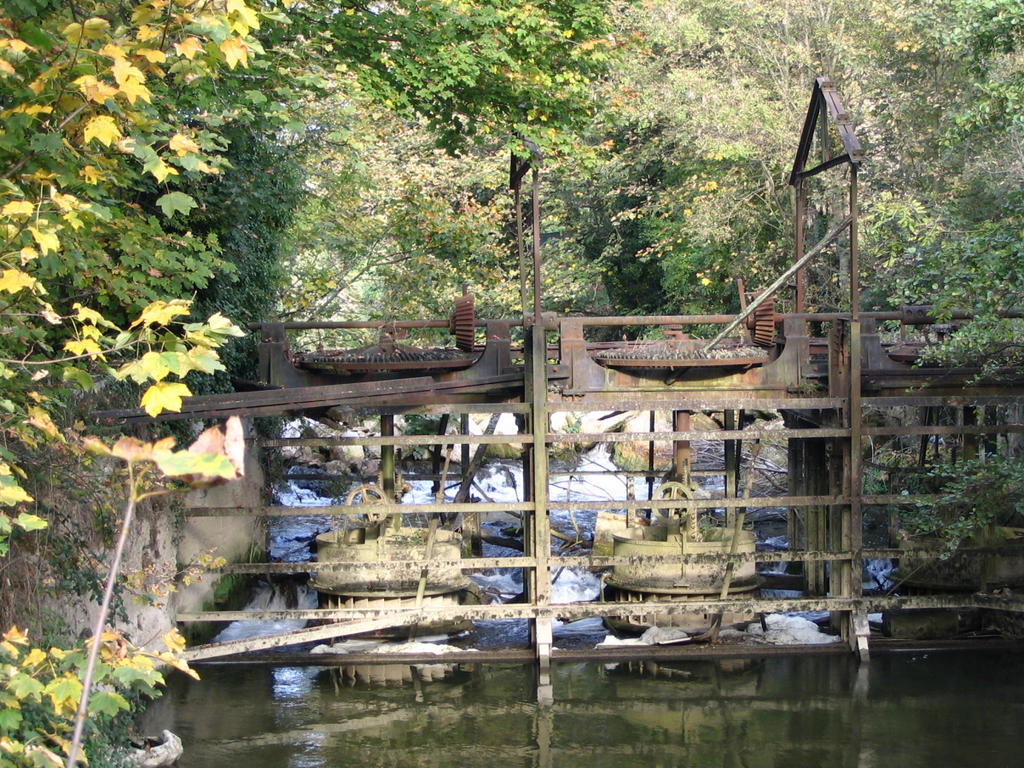 Rusting turbines at Fraisans
 Decayed grandeur at the iron foundry
Tuesday 18th October2005, Champagne-sur-Loue
Monday we decided to give both you and us a day off. We did very little really. The weather here was the warmest in all France so during the afternoon we made the effort, donned our hiking boots and dragged ourselves up onto the clos behind the village for a sunny stroll through the dozens of little vineyards. Nothing stirred. Even the hunters seemed to have taken the afternoon off. Our walk took us on a round trip of about ten kilometres taking in the little Chapelle de Lorette on a limestone outcrop above the woodland overlooking the Loue in the direction of Port Lesney. Below us the river gently curved its way through green meadowland where the brown and white Montbéliard cattle browsed relentlessly on.
 The valley of the Loue from the Chapelle de Lorette
But today has been very different! We’ve done it folks. We have finally entertained the French in their own country with an English meal! Believe us, this took courage, particularly in a region that is so patriotically tied to its terroir it considers anywhere outside of Franche Comté as foreign! Take into account too, that our guests included Françoise who has spent her entire life cooking for other people and has seen at first hand how hopeless Jill can be in the kitchen when she occasionally offered to help Françoise prepare lunch for forty at the convent school many years ago. Wisely at that time, Françoise directed Jill’s culinary skills towards preparing the vegetables rather than the sauces.
We felt we would like to return the hospitality shown to us during our 6 weeks here by inviting Susanne and Roland, Françoise and Eugene for lunch in our kitchen. We had thought it enormous but once there were six of around the table and Jill and Ian were trying to serve lunch, clear the dishes and saucepans, look cool and in command and follow several different conversations in voluble French at the same time, we realised just what we had undertaken!
Everyone was curious to “manger à l’Anglaise” and to our relief, once the main dish was served, decided “Qu’on mange bien en Angleterre”. Of course we couldn’t hope to persuade anyone to eat completely as we do, so we started with a glass of Muscat as an aperitif accompanied by various charcuterie and nibbles. The main dish was chicken and mushrooms in a cream and tarragon sauce served with pasta, runner beans and carrots. (At least that was the plan, but our guests looked horrified at having it all on the plate together so it became several courses accompanied with bread.) With this we served a white wine from Arbois. Then came the cheese course. No chance of finding Cheddar, Stilton or Wensleydale here so we compromised on St. Agur, Camembert and Comté which was probably more acceptable anyway. With this we served a red Bordeaux which was pronounced excellent. (It was only a couple of euros a bottle in the supermarket but we kept quiet.)
Eventually it was time for the dessert. We had decided on apple crumble and custard. Even without the cinnamon or cloves I’d thoughtlessly forgotten to pack for our year long trip in Modestine, it turned out very acceptably. We didn’t have sugar either so our entire stock of those little packets they insist on giving you in cafes, and we are too mean to leave, went into the crumble. The custard we made up from a powder bought in the supermarket using half the amount of milk recommended and served hot, rather than runny and icy cold as the French usually think of crème Anglaise.
Finally we served coffee and started to relax. Then Roland popped upstairs and returned with his bottle of Gentian liqueur as a digestive. It had been 12.45 that we sat down for lunch. By the time we finished it was 5.30pm!
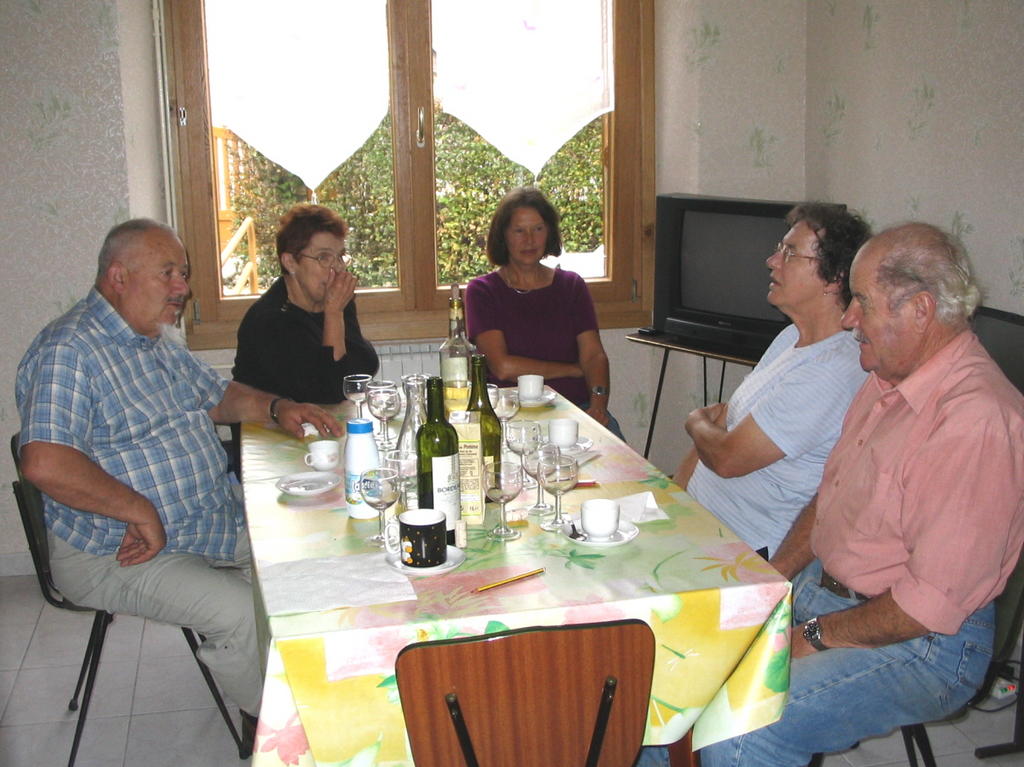 Lunch in the kitchen
Admittedly we had been very preoccupied in ensuring everything worked okay but we both felt as if we had made no progress in French over the weeks we have been here, reckoning we only understood about 30% of what was being said around us. However, it was all at high speed and everyone was talking at the same time and on different topics. A good time seemed to have been had by all and English cooking has been found quite acceptable.
After everyone had eventually departed we cleared away the debris and went for a brisk walk in the gathering dusk. Bats were flying and lights beginning to come on as we followed an unmade track beside the Loue, passing a tumbling weir that helps to feed electricity into the French network. In the gloom cattle peered over fences as we passed and on the far side of the valley we could hear the train as it passed along the track towards Besançon, a moving ribbon of light in the darkness.


 Tower of Pope Calixtus II, Quingey
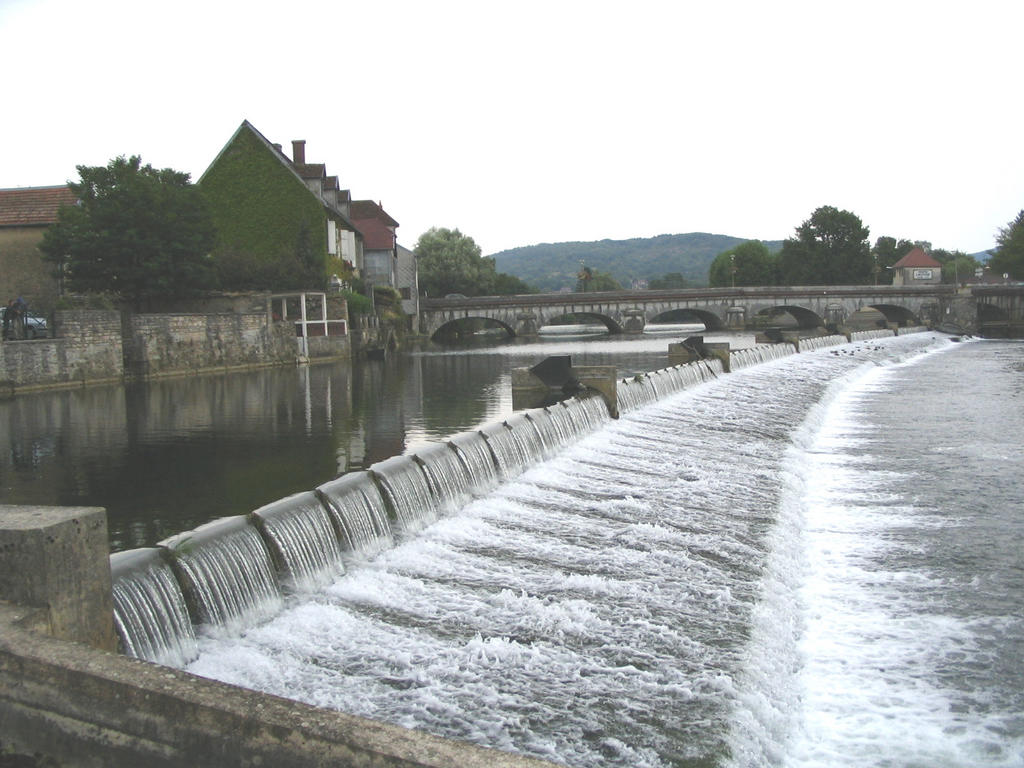 The weir at Quingey
 Chevaliers du vin d’Arbois
 Ian enjoying Comte cheese with local white wine
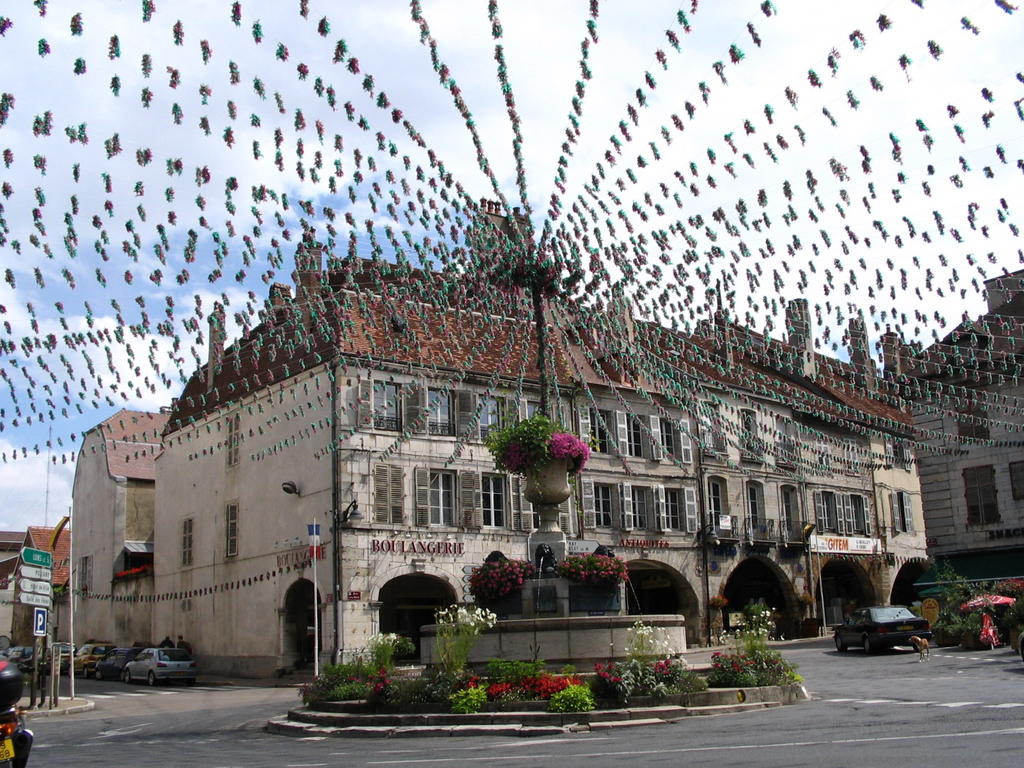 Arbois celebrating the fete des vins
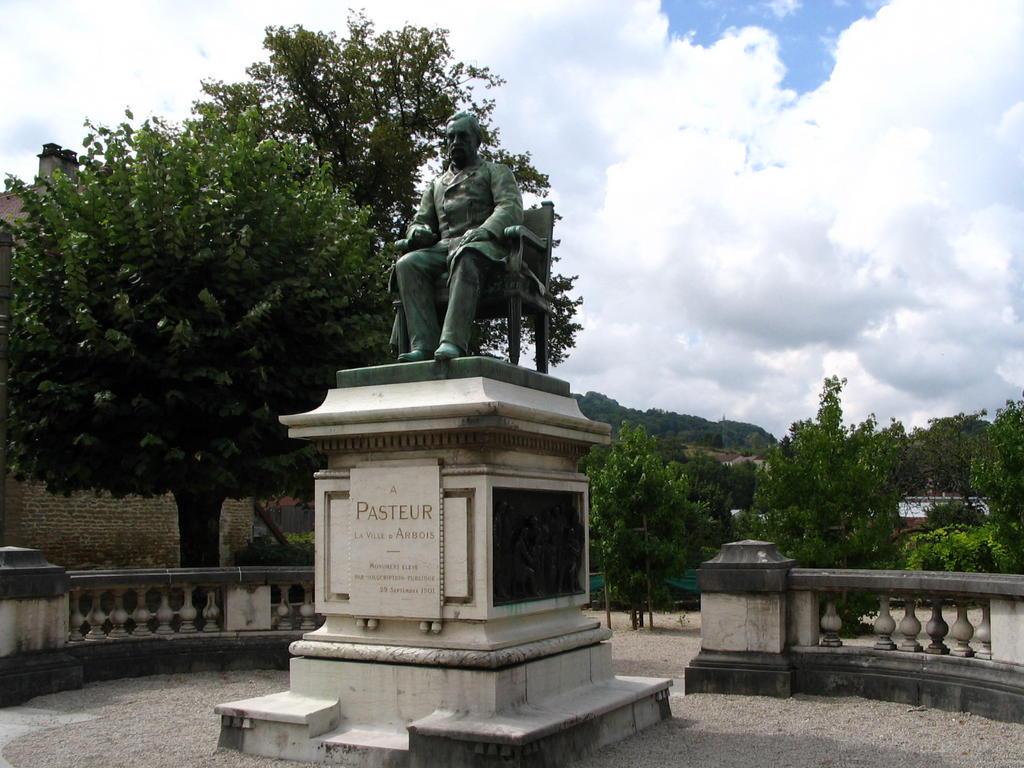 Louis Pasteur at Arbois
 Preparing to make a Morbier cheese at Nans-sous-Ste. Anne
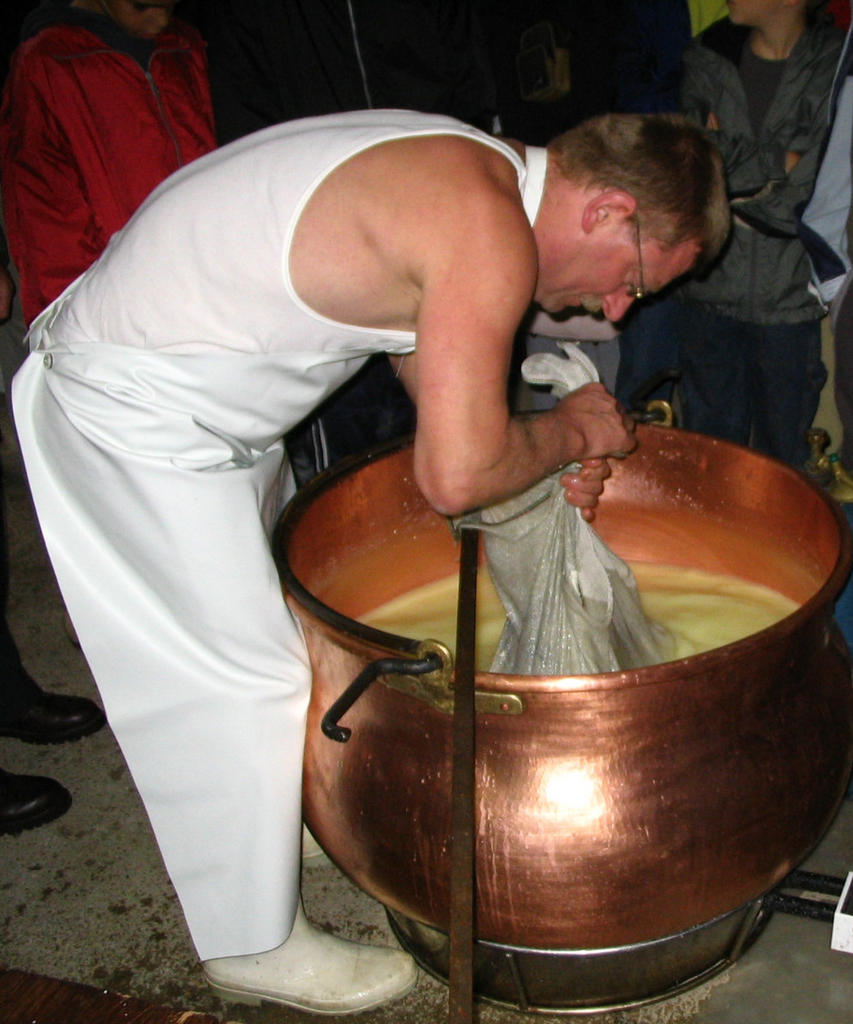 Draining the curds from the whey
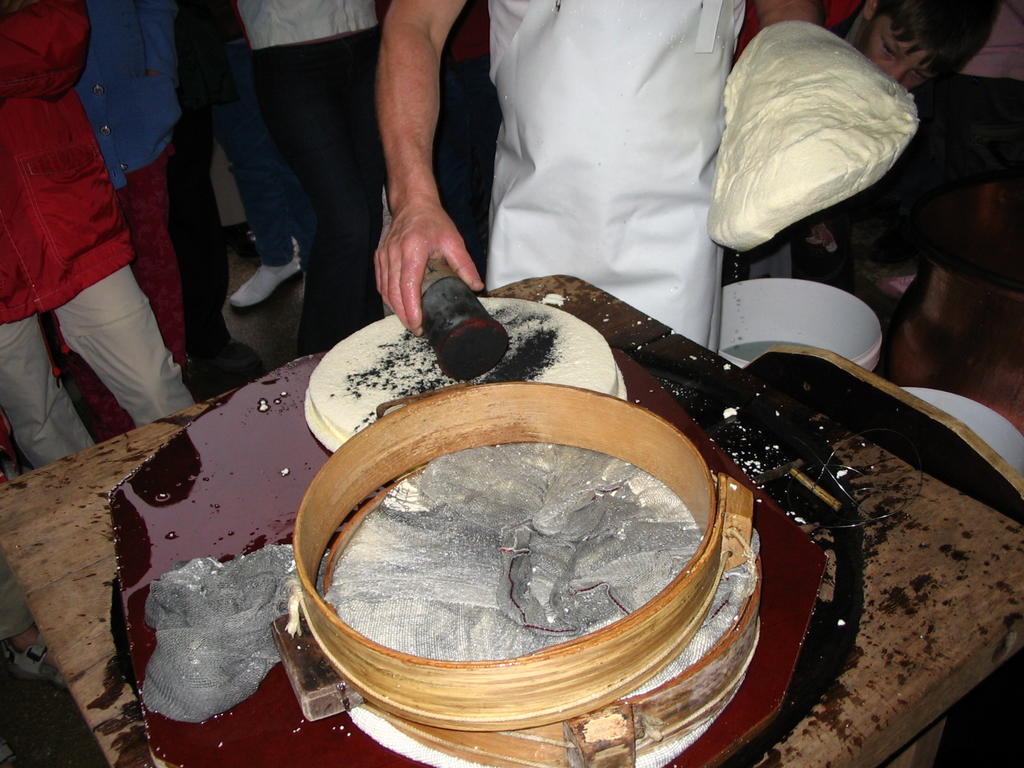 Sprinkling charcoal to make the distinctive stripe in Morbier cheese
 Ripening cheeses in the cellers at Nans
 View of Nans-sous-Ste Anne from the fromagerie
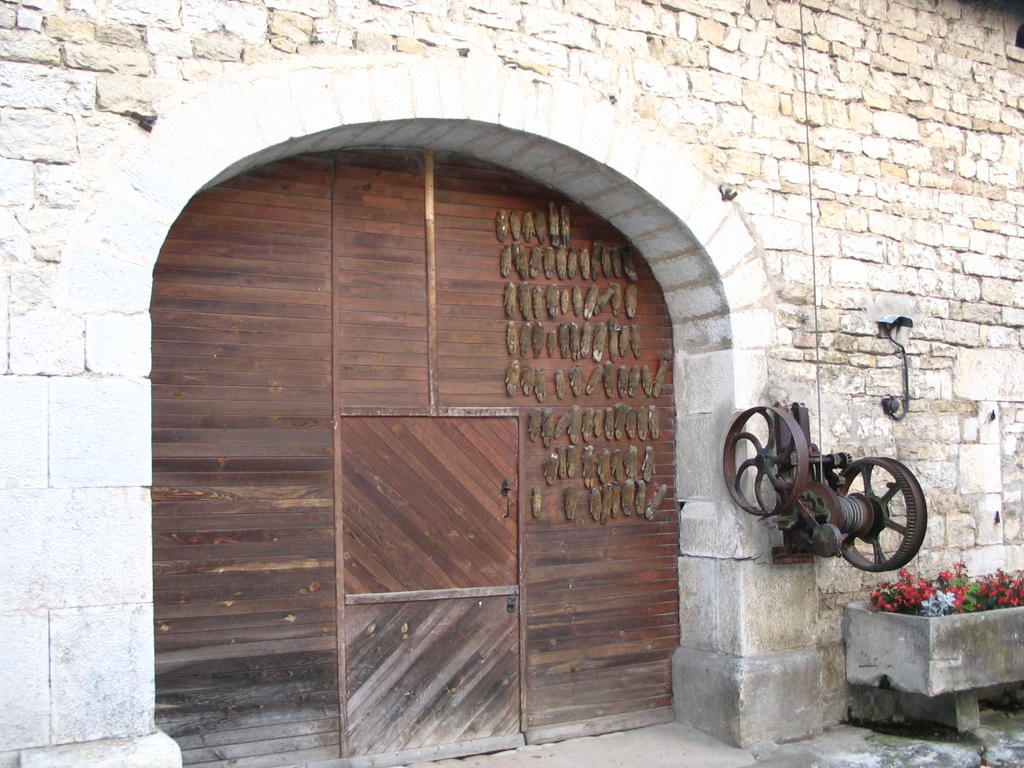 Barn door with trotters of wild sangiers hunted at Champagne-sur-Loue
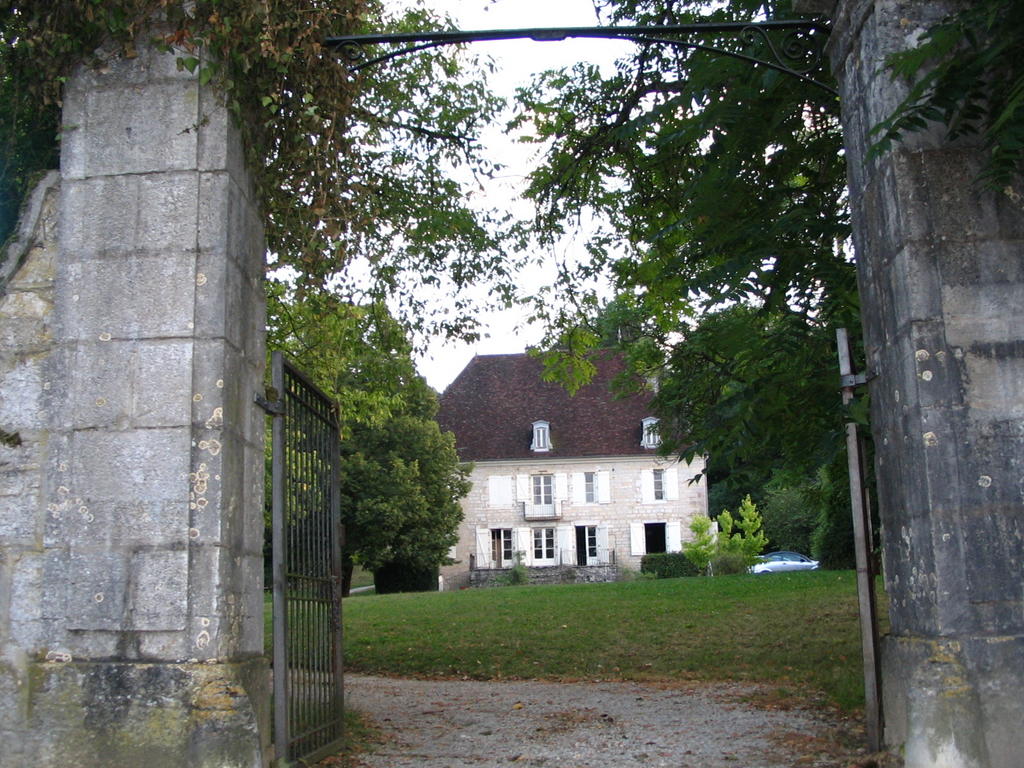 The Chateau, formerly a Dominican convent and school at Champagne where Jill taught English in the 1960s
 Cows with bells roam free in the woods and fields around Champagne
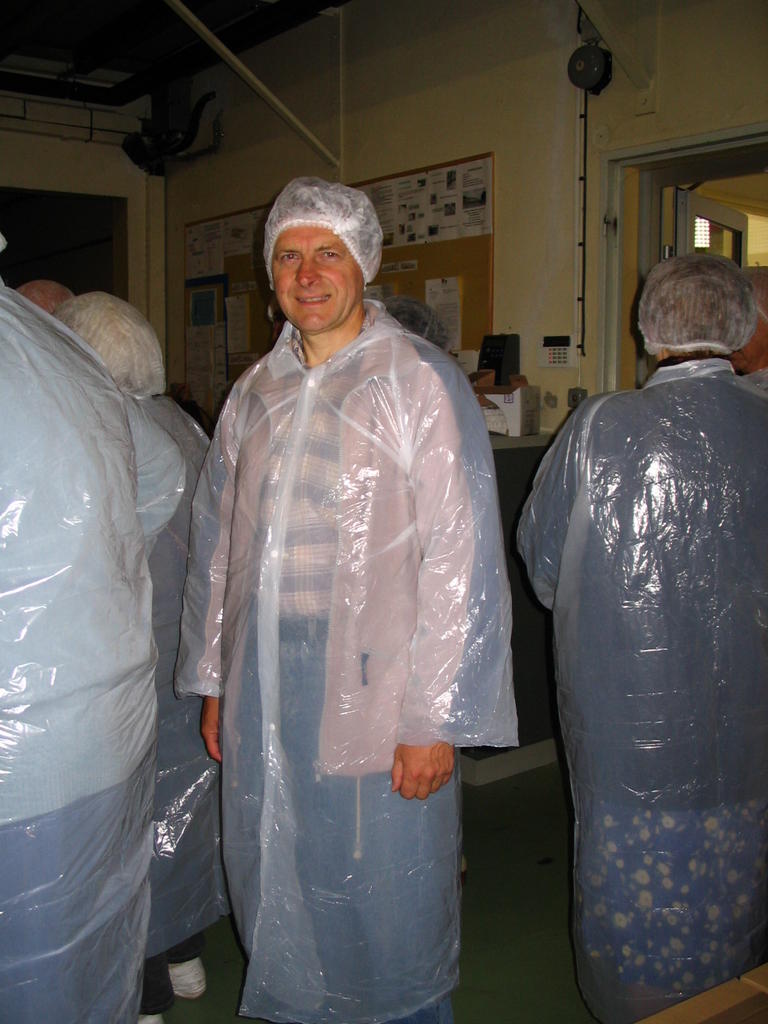 Ian on the shop floor of France Miel
 Jill suspects the town of Mouchard produces clothes pegs somewhere
 Edible snails – miam miam glou glou!
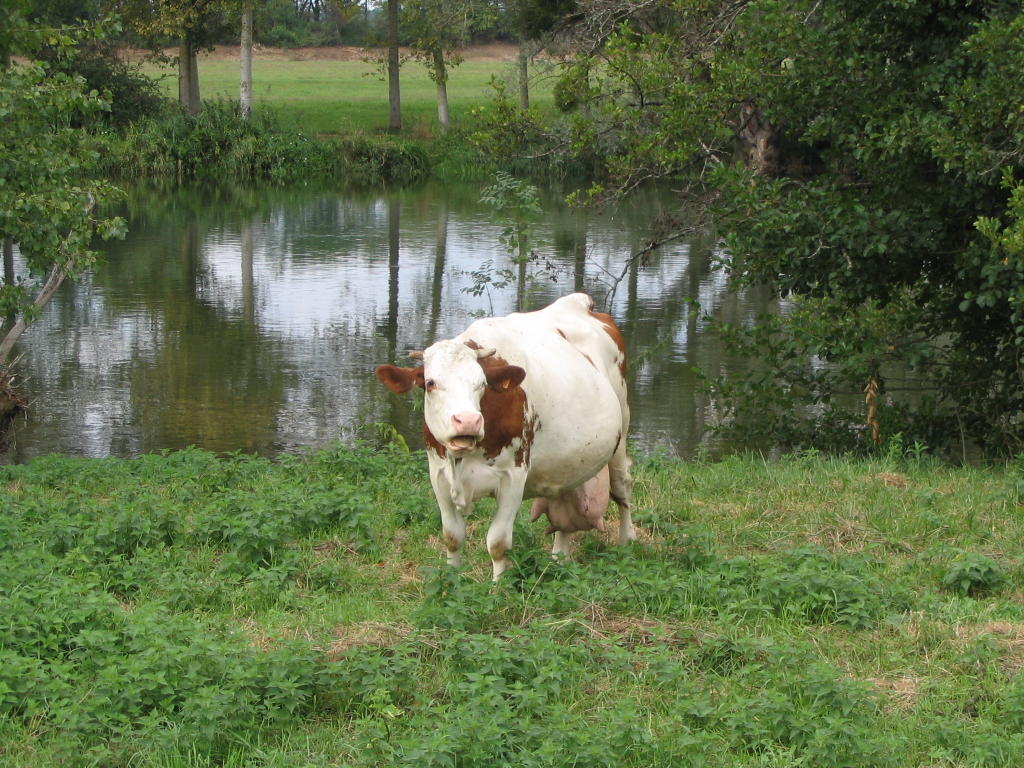 Oh for a bra!
 Arbois from the Circuit de Fer à Cheval
 Modestine on the Montagne de Modestine
 Foncine le Haut from Le Bayard
 Meeting Modestine and her foal in the woods
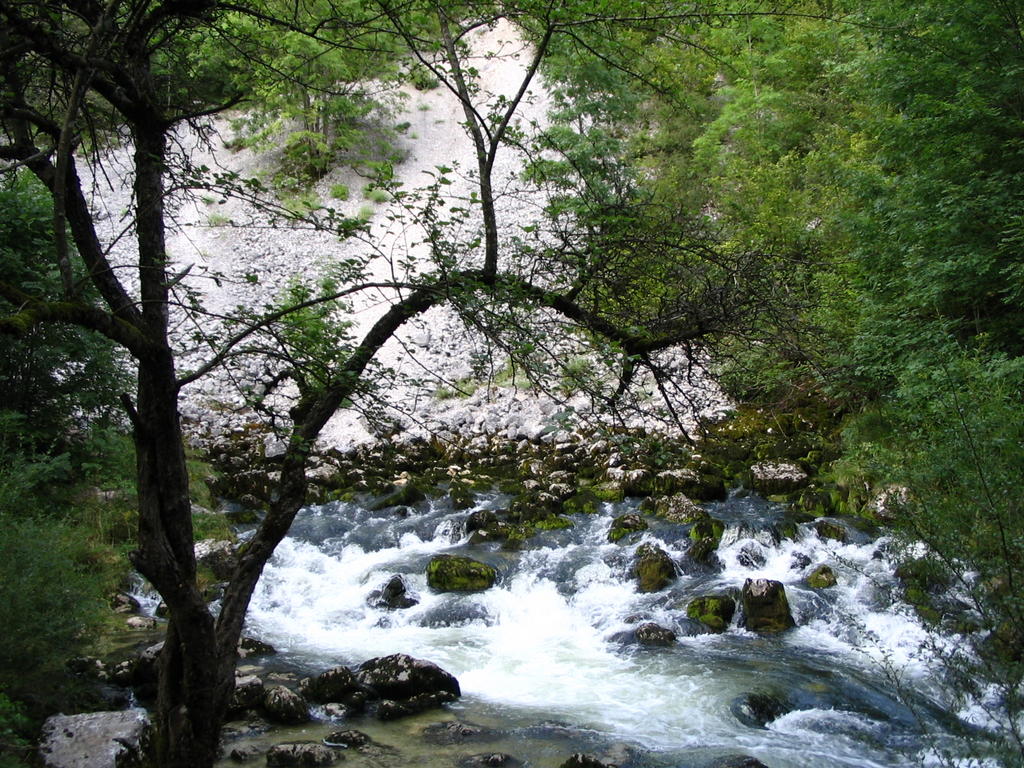 La Source de la Saine