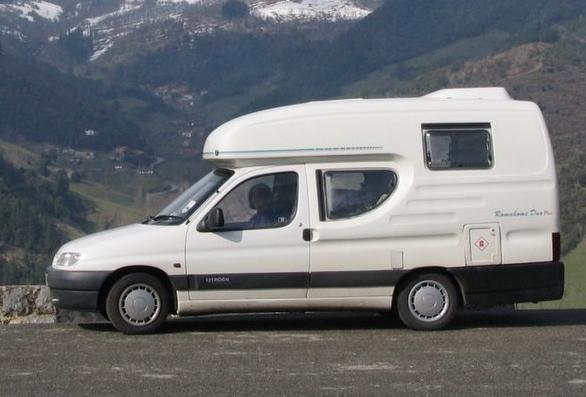
Can anyone imagine just how grateful we are to be back here in a warm kitchen having just enjoyed a properly cooked meal and with the prospect of hot showers, a library of books to choose from and a warm comfortable bed? That is not to say that we have not enjoyed every minute of our time travelling over the past 12 days, but in view of the weather we have suffered, the shortness of the days and the dark isolation of deserted campsites in the depths of winter, we are surely entitled to wallow in a little luxury for a bit!
Last night, totally alone on the campsite, in pitch darkness beneath the chestnut trees, we were again subjected to thunder, lightening and torrential rain. Modestine was brilliant as ever and we were perfectly snug in our tiny capsule of warmth and light. Here we spent the evening working on our photos and the blog site – just in case you wondered how we passed the long winter hours in such primitive conditions. There was something rather surreal about it all. Outside it was dark, spooky and cold while inside it was exactly the same as it has been every night that we have been travelling so we knew exactly where everything was to be found. Jill was too scared to venture out into the windy, rainy woodland alone to find the toilet block so Ian gallantly led the way with his bicycle torch! That’s what partnership is all about really, especially in the middle of the night in pyjamas!
This morning the wind was howling mournfully in the trees as we left the wood and continued along near deserted winding roads through delightful wet scenery, passing a few isolated farms, our route permanently bordered by chestnut and beech trees that still retained much of their rust-brown foliage. The landscape became more rugged and hilly, the road more twisting. We passed through several dark little towns that reminded us more than a little of Welsh mining towns. At Lacaune we parked to explore this quite lively little town. By now we were high in the Haut Languedoc and our breath was quite taken away by the freezing cold wind and driving rain that greeted us as we left Modestine’s warm interior. We fear we may be becoming soft! A quick scamper around the town, enough to convince us that it is a very pleasant little place, was quite enough. We continued up towards the Col de Piquotalen (1,004 metres) through driving icy rain with snow lining the roadside – fortunately for us the ploughs had been out and cleared the route. The road was almost totally deserted and the pine forests and snowy wayside gave the impression of a monochrome landscape. Jill saw little however as her attention was riveted to the road ahead, which was permanently twisting with hairpin bends, patches of unmelted snow, icy rain and the risk of encountering oncoming vehicles on narrow roads. The French don’t maintain the edges of their roads and there is also the very real risk of misjudging a bend and ending in an icy ditch, as nearly happened at one point.
At La Salvetat we decided, mad as it seems, to drive around one of the lakes. In summer it must be truly lovely but today it was bleak, deserted, snowy and hidden from the road by pine forests. It wasn’t really worth the 20 mile detour to end up where we started from, though we were able to ascertain that it was rather like driving around Fernworthy reservoir on Dartmoor in the depths of winter. Very attractive in its own way, but not where we wanted to be today.
The distance across the Haut Languedoc between Albi and St. Chinian is not very great but if you find it on the map you will appreciate why it took us so long to wind our way up into the hills and down again on the Mediterranean side. And the transition between the two climates is quite abrupt. At the Col de Fontfroide (971 metres) in the Monts de l’Espinouse, we started to zig-zag down one hairpin bend after another. Immediately over the top of the pass the weather, landscape and vegetation changed from wet snowy pines and chestnuts to arid Mediterranean outcrops with deep valleys, sparse, low-level vegetation and bright sunshine with a beautiful rainbow! The wind however continued to howl, banshee-like, with renewed vigour. We pulled in to admire the rainbow and the little village of Mauroul, nestling amidst the scrub and the mountains. Just a few seconds outside Modestine and we were frozen and windblown. As we continued our descent down towards Olargues, scrubland gave way to woodland and then to vines. By the time we were back at Ambre again the wind had dropped and the sun actually had warmth in it! We were so delighted to find our borrowed home just as we had left it. Seeing a place for the second time is different. When we first arrived everything was new to us and had to be investigated. Now we were able to greet the house as an old friend, turn on the electrics, warm up the kitchen, unpack and feel home and comfortable in no time. Winter is not a time to be homeless, even with such a wonderful travelling companion as Modestine.
 Rainbow over the Monts de l’Espinouse
 The little village of Mauroul
 Impressive skies over Vieussan in the Vallée de l’Orb
This afternoon we went into St. Chinian where we spent the afternoon at the mairie on the library computers, catching-up on emails, and replenishing our food supplies. The mairie now has a huge Christmas tree in its stairwell, weighed down with gold tinsel and scarlet baubles. Then we went to the town square where the band of local Sapeurs-Pompiers were doing their bit to raise money for the national Telethon – France’s version of Red Nose Day. They were great! Dressed in their firemen’s uniforms, complete with chic kepis, they blew away on their cornets and bugles for all they were worth, directed by a very red-cheeked bugler who seemed to find no difficulty in conducted and playing at the same time!
As dusk was falling we drove back to our village, where the Christmas lights have been turned on. Modestine stands beside a permanently flashing neon-lit mairie and in the main street of the village, a bright star shines above the retail outlet of one nearby wine merchant while an illuminated inflatable Santa attempts to climb up into the loft above the barn of another. Christmas is fast approaching, even in this quiet little area of France!
Sunday 4th December 2005, Ambre-les-Espagnolettes
Today we have wallowed in doing very little. The sun has been wonderfully bright and warm and we were able to eat lunch on the roof terrace with views across the vines to the blue hills beyond.
First though we went into St. Chinian to the Sunday market. So did everyone for miles around. The sunshine meant it was a social occasion and there was a great deal of back patting and cheek kissing going on. We bought bread, various vegetables and a few olives- having sampled several different ones first. We are sure market traders dispose of more stock in free samples than they do in sales! French traders are as amusing as British ones with their lively street banter and there are some very original characters there – like the cheese vendor with an expression of ecstasy on his face as he halves a huge morbier cheese, only to apologise to everyone afterwards saying it must have been his armpits! We bought rotisseried chicken legs as we were too lazy to cook lunch. The lady behind asked the vendor if they were chickens legs or ducks legs. Neither, he replied. They are flies legs. Another trader sold nothing but custard apples and everyone purchasing got a free hug and a kiss as well! Ian got tempted by chocolate pancakes being sold in aid of the Telethon – it made a good excuse for him.
We then crossed to the local bar for coffee. The terrace was full but we’ve become addicted to people watching and the locals are all inside. Faces are becoming familiar now from previous visits. The same little groups with their beers and absinthes. Have they been there like that the whole time we have been away? We also took the opportunity to read the newspaper provided – Midi Libre. It’s the regional paper and very boring generally with virtually no national or international news. Today the front page was devoted to Mlle Languedoc becoming Miss France, two reports of fatalities with drivers crashing into plane trees, a phenomenon mentioned earlier in this blog, and, something more unusual, Napoleon Bonaparte keeping his mobile phone in his hat during a recent re-enactment of the battle of Austerlitz!
On our way out of the bar we recognised a couple of Dutch people we have seen around Ambre and stopped to chat – in English. Ian’s quite good at double Dutch as our friend Marlies can verify, but they didn’t seem to understand him the way she can! They find English easier than French it seems. They had cycled in to St. Chinian just to sit on the sunny terrace with a glass of wine – how civilised. They are apparently not finding it easy to integrate here and cannot make up their minds whether to stay or return to Utrecht.
Back in Ambre the sun was so warm after lunch we decided to take buckets and mops up to the mairie car park and give Modestine a much needed bath after her 1000 mile trip around south west France. She is now gleaming inside and out. It turned out to be quite a sociable affair with a couple using the petanque pitch alongside us and a family returning from a hike stopping to chat about Modestine and the joys of travelling around France where every department is different.
A few thoughts on French graffiti…
While no more excessive than in most countries, in its crudest form graffiti uses the usual four-lettered words as the English speaking world. Is the French language not rich enough to have words of its own? Shouldn’t the Académie Française make a ruling on acceptable French alternatives? Generally there seems far less graffiti on town walls down in the south than is found in Northern France but we don’t have an explanation for this.
The majority of graffiti here though is political. It is a weapon in the armoury of dissenters and activists. The French love to protest, demonstrate and strike. And why not? The difference between France and Britain though, is that here they will go to pretty well any lengths to protest. The Basques and Bretons deface signboards at the entrances to villages, blocking out the French names. This led to us getting lost in Pays Basque more than once. In mountainous areas any accessible flat rock can be subject to painted slogans. Most of those we saw were protesting against the proposed introduction of windfarms with “NON A L’EOLIENNE” painted up. Toulouse is planning to build a new airport. There were very many protest signs up in the surrounding countryside, and painting slogans on the roads is very common. On some routes huge white letters “NON A L’AEROGARE” accompany you in huge horizontal letters at every bend. (This would be impossible in Britain of course as there would be no time for the paint to dry between cars passing!) The mayors of the little towns lead the protests with huge banners proclaiming the same message hung across the street in front of the mairie. We even saw one protest up the side of a large chimney. There was space only for a vertical NON so we are not sure whether it concerned the airport or was simply a message for Father Christmas!
The protests frequently centre around environmental issues and the damaging effects on the landscape. Of course the signs remain for many years, long after the windfarms and airports will have been built, adding yet more ugliness to the landscape!
France has a very long tradition of painting grafitti on rocks. Some, fortunately deep inside caves in the Perigord where they do not intrude on modern-day life, have defaced the walls for so long that the animals they represent are now extinct!
Back around St.Chinian there are plans to build a huge waste disposal unit. We’ve not yet worked out what SITA stands for but there are signs scrawled up and painted on the roads protesting to this. Of course the intellectual level of such protest is sometimes limited. The one near the supermarket simply states “PIPI KAKA SITA”
Monday 5th December 2005, Ambre-les-Espagnolettes
This afternoon we took a chilly but dry ten kilometre walk in the garrigue near Fontcaude Abbey. We passed nobody at all during the afternoon but, as on a previous walk to Cessenon, we discovered recent prints of a wild pig amongst the muddy soil of a vineyard. The pig no doubt was somewhere in the undergrowth well hidden from our view. Very wise of him as there were numerous gun cartridges lying around and the distant sound of firing. Beside the stony, uneven tracks through the garrigue there were tiny white and yellow flowers in bloom even in December. Huge bushes of scented thyme were still covered in pale blue flowers and the smell crushed between fingers was sharp and strong.
 Sanglier footprints in a muddy vinyard
Our book of guided walks took us across little rivers that probably only exist in winter. Here we ascertained that our hiking books are not completely watertight! It was worth the inconvenience though to pass close beside tumbling waterfalls falling through grey-green bushes and dwarf oaks from a ridge of grey rock. With nothing to jar this wonderful landscape of scrubland and scattered vines we were very aware of how privileged we are to be here.
The stones and rocks are so abundant that they have often been gathered together into enormous mounds, known as pierriers or clapas to clear enough space to create a pocket vineyard. In a corner of one of these we discovered a little hut used to store tools and equipment, created from this field debris and looking very like a stone igloo. Known locally as capitelles, they are a typical feature of the Languedoc region but are more often used to provide shelter for shepherds tending their flocks.
 Capitelle
Dusk falls early of course so we made the last scramble down a steep, rocky and very muddy track to return to Modestine just as the light started to fade.
Wednesday 7th December 2005, Ambre-les-Espagnolettes
Yesterday we pottered with web pages and travel books, visiting the internet shop in Cessenons during the afternoon. It proved to be useless to us as their only available computer was virus ridden. The staff were very friendly however, giving us free cups of coffee as consolation. They didn’t seem bothered to fix their machine though! So we abandoned ourselves to the luxury of chocolate éclairs, mugs of tea and a warm kitchen until it was a respectable time to move onto the red wine.
Today, returning from a morning spent in the library at St. Chinian Ian noticed a goat scampering around on the roof of a village house! Seeing us outside the owner came to investigate the source of our merriment. “Oh yes, she’s always getting up there. She likes it. There’s a little one too who joins her. They go up there for some peace from my dog who wants to eat them!” Indeed the goat seemed really happy skipping around on the tiles and the massive mastiff down below would have had us scrambling onto the roof as well if it had turned nasty, though it seemed docile enough. We never worked out how the goats got up there.
 Silly Billy
As we left the library an American lady had asked us to translate between her and the librarian as she had come to live in the town for a few months and wanted to use the resources. She had just retired and with her husband had decided to come to Europe for the first time. She said they found their rented house on the internet, located St. Chinian in an atlas and off they came. Neither can speak French and they have no transport! They have been here four weeks now, facing and overcoming difficulties on a daily basis. How brave some people are! We pensioners are not what we used to be!
We decided to investigate the route of the old Abbey canal through the town. It’s really only used for water drainage and to irrigate vegetable gardens but it took us very nicely around yet more unknown areas of St. Chinian. We discovered a dyke to hold back the river in times of flood and a huge cross erected in memory of a large family who all drowned nearby when the river flooded their home in 1875, killing around 100 people.
Seeing the main church door open we went inside. Suddenly the door was slammed shut behind us and we heard the sickening sound of the iron espagnolette grating into position. We are already sensitive about being incarcerated in large French buildings after our escapade in the castle at Monastier. So we hurled ourselves at the door, shouting loudly to be let out! No response! Just the sound of voices receding. The church was freezing and we had visions of being there all night! Never can the church have been subjected to so much shouting and banging!
Suddenly a little side door opened and two diminutive ladies appeared armed with pine fronds and Christmas baubles. “Oh did you think we had locked you in? We just closed the main door to keep out the draft while we decorate the church for the concert. This little side door is still open for you!” Relief from us, laughter from them, even hugs of relief! Never a dull moment!
Thursday 8th December 2005, Ambre-les-Espagnolettes
Today we went to the market in St. Chinian to buy Jill some replacement gloves as the others had been lost somewhere in the library. The Thursday market is much smaller than the one on Sunday but fortunately there was an itinerant glove seller present. Around the stalls we met our American acquaintance from yesterday, Karen with her husband Doug. We all crossed to the Café des Balcons together where we spent a pleasant couple of hours getting to know each other and swapping experiences of our time here in the Languedoc. They too have recently retired and decided there was more to life than watching American television throughout a snowy Montana winter. They find the weather here very mild after home but we have to admit that it is at least as cold as we would find it in Exeter in December. Generally they are enjoying their time here but have found great difficulty in making contacts. Really, it’s not surprising the British, Dutch and Americans have this problem if they don’t speak the language. The local people really do try to make them welcome but they cannot be expected to speak English and Dutch. If the French settled in Britain without any real knowledge of the language, how welcome would we be able to make them feel? When we start travelling in countries where we don’t understand the language we will no doubt feel equally lost. Americans don’t have the same tradition of learning European languages at school and it must be a complete culture shock for them here. They have been horrified at the insanitary condition of the streets and general standards of public cleanliness but we have assured them the rest of France is a good deal cleaner than here. So it is not just us being fastidious!
We returned home and after lunch went for a walk through the mizzling rain amongst the hills and garrigue around Ambre. It was very pleasant if somewhat muddy and we learned the hard way that a ford across a river is un gué. We didn’t understand the word on our local map and ended up with rather wet feet! The wide river bed of the Venezobre was a mass of rocks and boulders where white storks and grey herons stood motionless in the shallows. In times of flood the river would be maybe six times as wide.
 House with towers seen on the garrigue
 The river Venezobre
Friday 9th December 2005, Ambre-les-Espagnolettes
A trip into Béziers was required today. We found Modestine outside the mairie in Ambre as usual, but today the smart Herault Bibliobus was parked beside her. The staff explained they called every six months to swap a collection of books that is held in the mairie for residents of Ambre to borrow. They were very friendly, explaining how the service operates in France and showing us the collections they were changing. They were mainly comic books - bandes dessinées such as Asterix and Tin Tin, or light fiction. However, until today, we had no idea that French mairies in little villages had secret lending libraries and we are rather impressed.
Near Cessenon we passed the ruins of the 13th century chapel of Ste. Anne amongst the vineyards.
 Chapel of Ste. Anne
In Béziers we ran the gauntlet of unpleasant smells, missing manhole covers, unexpected pavement bollards and the inevitable dog turds as we made our way to the Christmas market and the flower stalls. This was quite fun with stall holders wearing Aveyron traditional costume – mainly black berets, bright blousons and red neckerchiefs. We tried lots of free samples and bought hot vegetable fritters which were really nice.
We were on a mission to find Emmaüs as we have been requested to seek out a specific piece of furniture for one of the rooms here that would be in keeping with the age of the house.
Emmaüs was founded in 1949 by a priest, Abbé Pierre who had formerly been in the French Resistance. His aim was to provide practical help to those who suffered social deprivation, particularly homelessness. The movement spread to cover the whole of France and is today international. A major proportion of the funding comes from recycling second-hand furniture and clothing. Visiting one of the centres is a paradise for book browsers and those seeking the unexpected.
Unfortunately we didn’t find quite what we wanted but the walk took us through some more agreeable residential areas of the town. It also took us past the huge bull ring which is still very much in active use. Incidentally, we recently read somewhere that all the French towns with bull rings are convening a meeting to discuss the future acquisition of fighting bulls. Traditionally they have been imported from Spain but there are rumours that the Spanish have been tampering with their horns. (What they actually do and what it achieves we have no idea.)
We also discovered a street that proudly announces that as the Bastille was stormed in Paris in 1789, absolutely nothing was going on that particular area of Béziers.
 A lack of revolutionary zeal in Béziers
This evening we attended a meeting at the mairie in St. Chinion. We thought it would be in occitan but decided it would be interesting to hear the sound of the language anyway and an excuse to get to meet a few local French people. In the event it was in French and was quite brilliant! The raconteur, Fabien Bages told local folk legends in his own very vivid and engaging manner to an audience of a mere 17 people. We were delighted to find we understood everything with no difficulty, even the humorous bits and were quite enthralled by the story-telling. Afterwards we joined the rest of the audience for a glass of Muscat and chocolate biscuits, courtesy of the town council, where we found ourselves very naturally accepted and invited to attend a slide show on the history of the town next week in the adjacent abbey buildings. We are delighted with the easy way people accepted us and we are gradually getting to know a lot more faces around the town.
Saturday 10th December 2005, Ambre-les-Espagnolettes
The sun was brilliant today and it was mild enough to eat on the terrace at lunchtime. Even the wall lizards were out absorbing the warmth of the sun. It was while drinking coffee here, casting a casual eye over the tubs and containers of cactuses and herbs surrounding us, that it gradually dawned on us that several of the containers had obviously been intended for an entirely different use in a former existence! It really is the first, and probably the last, time we have seen contraceptive douches containing flowering shrubs!
During the afternoon we cycled along the former railway track into St. Chinian. On the way we overtook a cheerful old man and peddled along beside him. His two friends were waiting for him at the bridge and were intrigued by our folding bikes. Jill ended up folding hers up so they could see how it worked! They were as mischievous as kids, trying out our bikes and saying how much easier they where to get on to than their own ones.
By the time we returned to Ambre around 5pm it was already freezing and we were more than happy to spend the evening in the warm kitchen with a bottle of the local wine and a DVD on the computer.
Sunday 11th December 2005, Ambre-les-Espagnolettes
Today Modestine was covered in a thick coating of ice. Although the sun was soon a bright as yesterday, in the shadows the ground was white and frozen hard.
We had invited our new American friends to meet us at the market and return for lunch with us to Ambre. We took the easy option and bought a rotisseried chicken and roasted vegetables at the usual market stall to avoid unnecessary work.
We had a really pleasant day, showing off the village and the surrounding countryside, drinking wine on the terrace once the sun had warmed it up, and making them feel very envious of our lovely big old kitchen with its marble sink, original fireplace and old pine furnishings.
In the late afternoon we drove them back to St. Chinian. At 5pm there was a Christmas concert at the church there. The heating was on and the place full. It was all very enjoyable with the choir singing various arrangements during the first half and the St. Chinian brass band playing during the second. Music ranged from Mozart, Bach and Handel to Glenn Millar and Charles Trenet. It was very good and enjoyed by everyone. It was not though, a Christmas concert as we, or our American friends, know it. Christmas concerts in churches are for lifting the roof off with “Come all ye Faithful”and “Royal David’s City”, not “Moonlight Serenade” and “Douce France”! That’s something we are missing just at the moment.


 The wood-burning stove in the kitchen
 Blogger at work at the kitchen table
 Original sink in local marble
 View down the stone stairwell
 Halloween in the village
 The cathedral of St. Pons and surrounding houses
 Façade of St. Pons cathedral
 Ready for battle
 Mediaeval life at St. Pons chestnut fair
 On the banks of the Jaur
 Cooking the chestnuts
 Hollowing out a bee-hive
 Girls in the local costume
 Béziers from across the river Orb
 The façade of the Cathedral of St. Nazaire
 View back towards the hills around Ambre from the Cathedral parvis
 From Russia with Love.
 The marina at Cap d’Agde
 The dunes and beach
 No, the camera does not lie!
 Jetty beside the river Herault
 View back from the end of the jetty