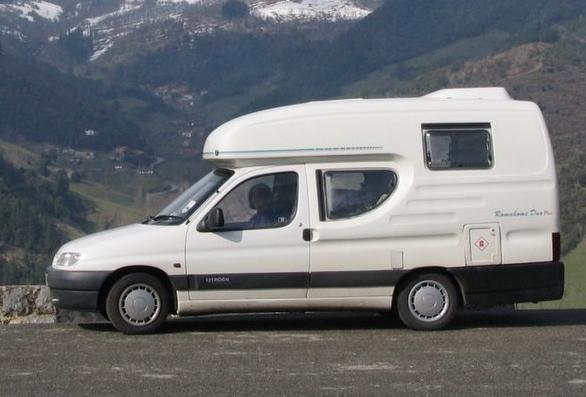
We find the weather here at present absolutely icy. Washing is coming in from the terrace upstairs freeze dried. Yet at times in the middle of the day it warms up sufficiently to sit out in reasonable comfort. Generally temperatures seem little different here from previous winters back in Exeter, but having been sent a photo of the recent snows in Devon perhaps we should count our blessings. According to today’s Times though, for which we had to pay £2.10 here, temperatures in Britain are several degrees warmer than here!
This afternoon we explored the area around Capestang at the head of a lake that was once a salt-water lagoon. The name Capestang actually means “head of the saltwater lake”.) The town is larger than we expected being at least the size of St. Chinian. Today the streets were deserted. It was far too cold for local people to stand chatting. Most of the shops were closed too, though there were a couple of bars open and also the Collegiate church of St. Etienne. This is a huge and impressive 13th century building towering above the town, yet it is only partially constructed. Presumably time, money and enthusiasm ran out. Inside it was several degrees warmer than the street so we lingered, admiring the colourful 19th century stained glass windows and peering at the dimly lit French text recording the history of the town and the draining of the brackish lake, referred to locally as the petit Camarge. There were a number of paintings in the side chapels but the lighting was so bad it was impossible to appreciate them.
Back in the icy street we discovered a plaque in the square commemorating an event in June 1944 when the German forces took reprisals on the town for action taken against them by the local division of the Resistance movement.
 On this spot, on the 9th of June 1944, 179 men between the ages of 18 and 40 were gathered together for transportation to Germany by the SS who had taken over the village as a reprisal and had already killed Pierre Marty near the low road to Poilhes. Amongst those taken, Joseph Leibowitz did not return. On the 6th, a convoy of Resistance fighters from the Poilhes-Capestagne division had been intercepted at Fontjun where 5 had been killed and five injured on the French side. On the 7th June, 18 resistance fighters, arrested, interrogated and tortured, were shot on the Champs de Mars in Béziers.
 St. Etienne at Capestagne
 The unfinished wall of the collegiate church of St. Etienne. The longest French lunch-break in history?
In summer we are sure the town would be a welcoming place for visitors but today its attractions were few. We walked up to the Canal du Midi which passes to the north of the town. Here a few boats were moored up, presumably over-wintering. It was rather like a camp site for boats with electric hook-ups, water and toilets. After a brief scamper along the canal, through an avenue of wintry plane trees lining the banks – hopefully the barge owners are less prone to close encounters with them than car drivers appear to be – we returned to Modestine, tethered outside the gendarmerie nationale and headed back to Ambre in the gathering gloom, eager for mugs of steaming Earl Grey tea and some bottled sunshine from or neighbour’s vineyard.
 Camping for boats on the Canal du Midi
 Winter on the Canal du Midi
Tuesday 13th December 2005, Ambre-les-Espagnolettes
Shortly after we arrived here we visited Narbonne in pouring rain that rapidly caused the roads to flood. Today we decided to revisit the town in cold but dry and sunny weather. We have already described the main sites on 14th November.
Our initial impression was confirmed. Narbonne is a very pleasant and attractive town with a great deal going for it though it has to rank second only to Béziers for the dirty state of its streets with dog filth everywhere. One is tempted to blame the “Crusties” sitting around the war memorial, each with a couple of large dogs. Certainly the town tries to minimise the problem by leaving free disposal bags at street corners, but they are simply ignored. We suspect there are certain benefits paid to the unemployed if they has responsibility for a dog. We’ve seen some with up to five dogs following them, not one ever on a lead! Sorry, we don’t really want to keep harping on but it certainly does limit our enjoyment of the major towns around here.
Today the town centre was lined with Christmas trees and there was a Canadian Christmas market. Basically that means the stall holders were all in little wooden shacks with electric fires, artificial snow on the roof and an annoying tanoy system playing English Christmas tunes as they have none of their own here. They still sold nothing but Christmas stockings filled with tins of comfit de canard, packets of foie gras and saucisses d’Aveyron. There were very few customers and it all seemed rather dead.
We strolled by the river Robine in the sunshine, looking at the moored boats and the Roman bridge, still in daily use with houses and shops built across. We explored the back streets with several beautiful churches and warmed up a little in the indoor market with its many stalls of fish and seafood, dairy produce, meat – including massive hunks of horsemeat, and vegetables. As we returned to Modestine we discovered the town’s Mediathèque, a magnificent building opened less than two years ago. It is certainly the most sophisticated and well developed library service we have seen anywhere in this part of France and we would be very fortunate to have something similar in Exeter. When a public building project is undertaken, there are no half measures and money is lavishly spent. Unfortunately this leads to other areas being totally neglected, so French cities seems to be a places of permanent contrast exhibiting both the best and the worst of town planning.
 The market hall in Narbonne
 Castle and Cathedral at Narbonne from across the river
 Roman bridge with houses and shops
We struggled our way through the busy lunch-time traffic, narrow streets and one-way systems to make our way down to the coast, some eight kilometres way. Narbonne used to be a coastal port until the estuary of the river Aude changed its course and Narbonne’s port silted up around the 14th century. The area between the town and the coast therefore is a flat, boring wasteland of brackish ponds, scrub and a few vines. There is also an impressive range of grey rocky hills supporting coniferous pines. This would have been the edge of the bay in earlier times.
When we reached the sea we discovered miles of deserted sandy beaches and a hinterland of low-level holiday accommodation all with shutters tight closed. It appeared very desolate and uninviting in winter and during summer it would almost certainly be suffocatingly hot with burning sunshine and very little shade.
We did not feel encouraged to linger as the wind buffeted against Modestine’s sides along the sea front. So we turned back inland along a route marked as picturesque on our atlas. This took us through the dry grey desert of hills we had seen on our outward journey with nothing but pine trees, low bushes and bare rock. Further inland we passed through several little villages, none remarkable, all pleasant.
As we headed for home we passed three men wearing the blue overalls so typical of French paysans. They were beating an old olive tree beside the road with sticks, knocking down the fruits onto a cloth spread out on the ground beneath. It’s the first time we have witnessed olive harvesting.
We stopped at the little town of Cruzy which will merit a second visit when we have more daylight. Here amongst the mediaeval backstreets we discovered the free local museum with its fascinating local archaeological collections and extraordinary protest banners from the wine riots held in the region back in 1907 when crop diseases, imports of Algerian wine and the adulteration of quality wines with sugar and cheap grapes from the eastern Mediterranean as well as falling prices led to despair and poverty amongst wine producers throughout Languedoc. The original banners, painted by a local artist and used at the time by protesters, have been restored and are displayed here. They are unique survivors and have been declared a national monument by the French government.
 1907 – Banner 1
 1907 – Banner 2
 1907 – Banner 3
 1907 – Banner 4
 1907 – Banner in Occitan
 1907 – Banner in French
The curator was proud to show us around and explained that the main archaeological finds came from local fossil beds where excavations are carried out twice yearly and attract researchers world-wide. Fossils discovered during these excavations include dinosaur nests with their eggs, but the most scientifically important items are the breast-bone of a fossil bird and the remains of a freshwater coelacanth.
The archaeological collections are rich in roman remains. Currently the museum is busy cleaning and listing tens of thousands of objects excavated from the well by the mediaeval church. They still have a long way to excavate and the most exciting thing for them is that the further down they excavate, the further back in time they go.
 Typical house in Cruzy. 15th century
Wednesday 14th December 2005, Ambre-les-Espagnolettes
Today has been bright, sunny and very enjoyable. We spent most of the morning in St. Chinian library reading cheerful Christmas email messages from friends before returning home for lunch. Later we took a walk up into the hills behind the village, starting off well wrapped up with scarves, hats and gloves. The route rose steadily for an hour, until we were overlooking the surrounding hills and woodland, the path frequently open to the sunshine which had real warmth in it. Soon we became really warm and started shedding outer garments. In the shade however, the muddy tracks and puddles were frozen hard with ice.
Ian had unfortunately (for Jill) read somewhere that there were the remains of a 6th century Visigothic chapel near the village and being unable to find it on any maps had sought the assistance of the local wine growers. They marked a wide cross, covering a vague area of the garrigue on our map telling us we’d need to search around in the bushes for it. As we climbed, wonderful views of the grey, pine-covered mountains of the Haut Langedoc came into sight above the nearer treetops of the forest through which we cautiously made our way. Being a Wednesday the hunters had the right to shoot wild boar here and we had no wish to become a mistaken target. Jill’s hopeful suggestion that a nice level stroll by the river might be safer was swept aside in the interests of history and seeking out an overgrown pile of old stones that could just as easily have been a nineteenth century shepherd’s dwelling when we finally found it amongst the arbusier bushes and wild sage right on the summit of the hill. Ian seemed delighted, so it was worth the climb but Jill still doesn’t really understand where or how the Visigoths fit into the history of France.
 Remains of Visigothic chapel in the garrigue
 View to the arid hills behind Ambre
 View across the plains of lower Languedoc from behind Ambre
As soon as we stopped climbing we became really cold and needed to wrap up again. We scrambled down to the village and after buying some more local wine at the special request of our new American friends Doug and Karen, we returned to St. Chinian where we had been invited for pizzas with them.
There was a concert of English Christmas carols and readings at the 12th century Fontcaude Abbey which we all wished to attend. (For photos and information about the Abbey see our entry for 8th November.) This proved to be a wonderful experience for all of us. Isolated out on the garrigue, the setting was quite magical. The English speaking community for miles around attended but there were also many French participants. Of course there were all the popular British carols, readings from A Christmas Carol and John Betjeman’s Christmas poem, so we are well set up now for Christmas. In addition though, and this must have really seemed magic for Karen and Doug, we had the pleasure of hearing the Choeur Occitania Sacra et Confrérie singing 12th century Gregorian chant according to the rite of the Cathedral at Narbonne, in a 12th century abbey! They were ceremonially dressed in dark cloaks bearing a large red cross on the shoulder and wore wide black pilgrims hats decorated with a scallop shell, the emblem of St. Jacques de Compostelle. (Fontcaude is one of the places on the pilgrim route.) They were directed by the professor of Archaeology at the University of Montpellier, Jacques Michaud. They entered the abbey in procession supporting a colourful pilgrims’ banner. At the end of the concert, the abbey bells were rung, out in the blackness of the night, far from any habitation.
Then, being France, the fun began with all nationalities present squeezing into the little museum of ancient sculptures where huge tables were loaded with salvers of meats, cheeses, grapes and salad, apparently a gift from the Carrefour supermarket in Narbonne, and maybe a hundred bottles of wine, donated by local winegrowers as goodwill and publicity. It is astonishing the number of British people that can be discovered around this area, each with their own tale to tell as to how they ended up living here. One couple had seen Modestine arriving and came to speak. They have lived here a year now and have recently purchased a specially produced left-hand drive Romahome! They agree completely that Europe could be taken by storm if the company started producing them for the Continental market. Like us, they get stopped all the time by people amazed at their size and versatility.
It was nearly 11pm by the time we returned to Ambre after such a wonderful, Christmassy evening in which French and English speakers mixed in so happily together.
Thursday 15th December 2005, Ambre-les-Espagnolettes
The sun was bright and warm today. Out of the direct wind it was delightful and far warmer than we could ever hope to make ourselves indoors where the thick stone walls and tiny windows are designed more for summer’s heat than winter’s chill.
So we decided we should visit Sète, on the coast between here and Montpellier. We absolute hate the trading hinterland around Béziers but today we managed to find a southern route with very little traffic. It also afforded us the opportunity to stop at a roadside brocante (someone who buys junk and sells antiques) searching for a bedside cupboard. It is astonishing how many awful such specimens are to be found and the ludicrous prices dealers hope to ask. Even having beaten this one down by 30% and been offered a free chamber pot to go in it we decided it needed so much work on it we made a feeble excuse and scampered.
Beyond Agde (for description and photos see 15th November) the road becomes a long sandspit with the Mediterranean on one side and a huge brackish lake, the Étang de Thau, on the other, edged by sand dunes and marram grass. The sea was a wonderful deep blue fringed by the endless beach of golden sand onto which it tumbled in gentle white waves. In the distance the town of Sète rose up on a boss of rock amidst the flat salt marshes and silted river estuary.
 The causeway with Sète in the distance
On arriving we followed the Corniche or coast road around the headland and parked on the seafront near the old fort from where we could see the many fishing boats leaving and entering the port. Those returning were followed by huge mobs of seabirds screaming and diving for the remains of the catch which had presumably been gutted on board, the entrails being thrown into the sea as they went.
Sète proved to be a delightful town, full of large attractive old buildings lining the streets and the sides of the canals. The quaysides were bright, sunny and sheltered with people lunching outside on the terraces and pavements of the many seafood restaurants. Even in mid-December people were eager for huge trays of fruits de mer – mussels, prawns, lobster, octopus, oysters and scallops served with lemon and chilled white wine. Others opted for warmer fish dishes inside – baked tuna, grilled sardines, hake, sea bream (dorade), sea bass (loup de mer) and the ever popular paella.
The town’s economy is highly dependent on its seafood industry. Even the fountain in the main, tree-lined square is a reminder of this!
 Octopus fountain at Sète
The Canal du Midi crosses southern France from the Atlantic to the Meditteranean, exiting at Sète where it has a very different character as it flows through the town.
 The canal at Sète
The afternoon passed all too quickly wandering the delightful streets and the sunny sea front in the warm sunshine before making our way up to the famous maritime cemetery near the fort above the old town. We were astonished at just how large and crowded the cemetery is. Generally French cemeteries are rather claustrophobic places, unless, like Père la Chaise in Paris, they have become cities of the dead complete with streets and little houses. Then they hold a macabre fascination for us. Le cimitière marin at Sète falls very much into this category. Although called the sailors’ cemetery, where many who had lost their lives at sea are interred, it also houses the tombs of affluent local families. The cemetery covers three distinct sites as it rises up the hillside with grey gravelled paths between the grey granite and marble tombs. Colour comes from the numerous thin dark cypress trees and the rather gaudy and unpleasant artificial silk flowers, glazed ceramic wreaths and countless photos of departed loved ones set in stone, decorating most of the tombs.
There are also entire “streets” of little detached “houses” which presumably have family vaults beneath. Through the painted metal grills of the doors we could see stone altars with flowers, crosses, photos and marble plaques. Some of these vaults had highly decorated stone work and even wrought iron railings like garden fences!
 Desirable detached residences?
The views across the cemetery out towards the bright blue of the sea with the little fishing boats still plying back and forth to the port were stunning.
 View from the sailors’ cemetery
We were actually seeking out, amongst these thousands of tombs, that of the poet Paul Valéry who came from Sète and was buried here in 1945. We had given it up as impossible when by chance when we stumbled across it, almost literally, on the steep steps up to the higher level.
 Grave of Paul Valéry at Sète
 View from the sailors’ cemetery showing the fort, now a theatre where Valéry’s works are recited
Valéry is greatly honoured in the town with a special museum named after him and partly dedicated to his works. He used to spend much time thinking, writing and reading in the cemetery when he was alive so it is very fitting that he should be buried there. His poetry is full of symbolism and philosophy - and pretty well incomprehensible to Jill - but many have found it moving. One of his best know poems is actually about the marine cemetery (a French version of Gray’s Elegy in a Country Churchyard?) where he describes it far more eloquently - certainly less prosaically - than Jill has done above!
Ce toit tranquille, où marchent les colombes,
Entre les pins palpate, entre les tombes;
Midi le juste y compose les feux
La mer, la mer toujours recommencée!
O recompense après une pensée
Qu’un long regard sur le calme des dieux!
I could go on …. I could also give you a translation as incomprehensible to English ears as Valéry’s French. Instead I will give you Cecil Day Lewis’s translation which is infinitely better and hopefully more understandable.
This quiet roof where dove-tails saunter by
Between the pines the tombs throb visibly.
Impartial noon patterns the sea in flames –
That sea for ever starting and re-starting.
Where thought has had its hour, oh how rewarding
Are the long vistas of celestial calm!
Just in case anyone was wondering, this was not tucked in a forgotten corner of Ian’s brain but in a helpful book about French writers he insisted we brought with us!
Leaving Sète with reluctance, knowing we had merely scratched its surface, we returned home along the sandspit directly into the brilliant scarlet orb of the sunset. Near the further end we took a side route around the edge of the vast inland lake to the port of Marseillan, a very pleasant place, popular as a holiday resort with an active little harbour. Presumably there must be ways for fishing boats to pass from the brackish lake to the open sea. Across the lake we had lovely views back to Sète.
 Fishing boat at Marseillan
 The headland of Sète seen across the marshy lake from Marseillan
Friday 16th December 2005, Ambre-les-Espagnolettes
After shopping at the nearby supermarket we called briefly on our American friends in St. Chinian where Karen gave us a colourful plate filled with American Christmas cookies she has been baking for neighbours and people they have met locally since they arrived. They are festively decorated but taste so nice they will not last until Christmas!
This evening we attended a talk in the Abbatiale, a seventeenth century monastic church building, in St. Chinian. It was the launch of the inventory of listed buildings of St. Chinian produced by the Département for the French equivalent of the National Monuments Record. The meeting was attended by at least 250 people, which represented about 10% of the population, and the room was packed! The presentation was excellent and we learned a great deal about the local geology of the area, the town’s past industries, and the history of its architecture from the 15th to the 20th centuries. A Powerpoint presentation helped us greatly in following the language and we learned quite a few new French technical terms. There was far too much to take in at one presentation. While we had the advantage over many of those present in understanding the concept of recording buildings of architectural importance and the methods employed, the rest of those present had the advantage in understanding the language and a thorough knowledge of the town.
After an hour or two, the audience began to get restless. Shuffling and muttering spread rapidly. Several people suddenly had their mobile phones ring. The presenter began to speak faster and faster as he sensed time was running out. As soon as he drew to a close the audience rose as one, cleared away all the chairs and got down to the serious business of the evening. Six deep they crowded around the tables set back in the stone arched alcoves, helping themselves to glasses of wine, canapés of toasted goat’s cheese, paté and salmon, tiny boudins (blood sausages), brochets of roast duck with mango, slices of dried sausage and olive and tomato bread. It became obvious that many in the audience were there for the social event following and had only a limited interest in the main event! Everyone was sociable and friendly and we ended up talking mainly with the young staff from the library as the only familiar faces in the room. They also have responsibility for the archives and were involved in assisting the researchers gathering their material over a three year period. The report has just been published in two massive volumes, one covering the thematic history of the town’s architecture and development, and the other a street by street inventory of the buildings. We will take the opportunity to examine these at leisure on a future visit to the Médiathèque.


 The wood-burning stove in the kitchen
 Blogger at work at the kitchen table
 Original sink in local marble
 View down the stone stairwell
 Halloween in the village
 The cathedral of St. Pons and surrounding houses
 Façade of St. Pons cathedral
 Ready for battle
 Mediaeval life at St. Pons chestnut fair
 On the banks of the Jaur
 Cooking the chestnuts
 Hollowing out a bee-hive
 Girls in the local costume
 Béziers from across the river Orb
 The façade of the Cathedral of St. Nazaire
 View back towards the hills around Ambre from the Cathedral parvis
 From Russia with Love.
 The marina at Cap d’Agde
 The dunes and beach
 No, the camera does not lie!
 Jetty beside the river Herault
 View back from the end of the jetty