This morning we woke refreshed. After setting the washing machine going we drove down to Arc et Senans to join the rest of the local population in the popular Sunday morning activity of shopping in the local supermarket. The rest of the day we have spent sorting ourselves out while the rain has teamed down ceaselessly. Hugues and Thibault have been over from Dôle and stopped by to ask about our visit to Germany. Otherwise, until this evening when the weather started to improve, we have been happily housebound, catching up on reading and computing. Around 5pm we took a walk to the bridge over the Loue which is now huge and very fast flowing. It seems unbelievable that just three weeks ago Jill was swimming lazily around in it. The happy holiday families have disappeared and the campsite on the river bank has now closed for the season. As we gathered fallen walnuts along the roadside we fell into conversation with a barefooted dog walker from nearby Buffard. He told us he came here from Italy thirty years ago and as he liked the cold winters and the place pleased him, he’d been here ever since.
Monday 3rd October 2005, Champagne-sur-Loue
It’s really good to spend a bit of time in the same place, watching village life and passing the time of day with the local people. Being Monday, and the holiday season officially ended, shops were closed and the countryside deserted. There is a definite chill in the air now and the leaves are turning colour. Along the roadside they have started to fall and gather in soft, wet, yellow drifts. Children here show absolutely no interest in conkers so thousands of then lie shining in the roads until crushed by passing tractors. The maize is steadily being cut for silage and the cattle are gradually being brought in from the fields. The landscape is starting to look bare and empty.
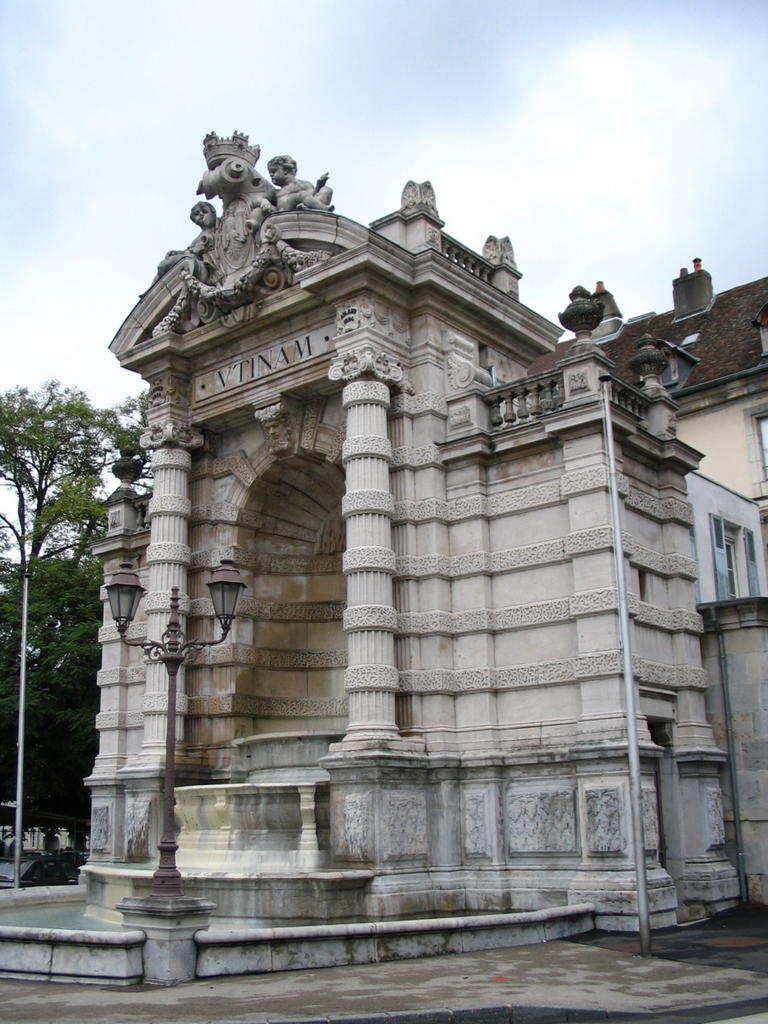
After lunch we drove to Dôle. Last time we were there, only four weeks ago, it was so hot all we could do was seek the shade. Today we shivered in our coats but it was certainly more comfortable for walking around. Dôle is a very attractive old town, filled with tiny cobbled passageways between imposing white stone buildings. There is a lovely park above the River and a very nice fountain in the main square symbolising the two main rivers of this region, the Doubs and the Loue. Of course its main claim to fame is as the birthplace of Louis Pasteur and all roads seem to lead to the museum that was his home. We still haven’t found time to visit but hopefully it won’t shut just yet for the season.
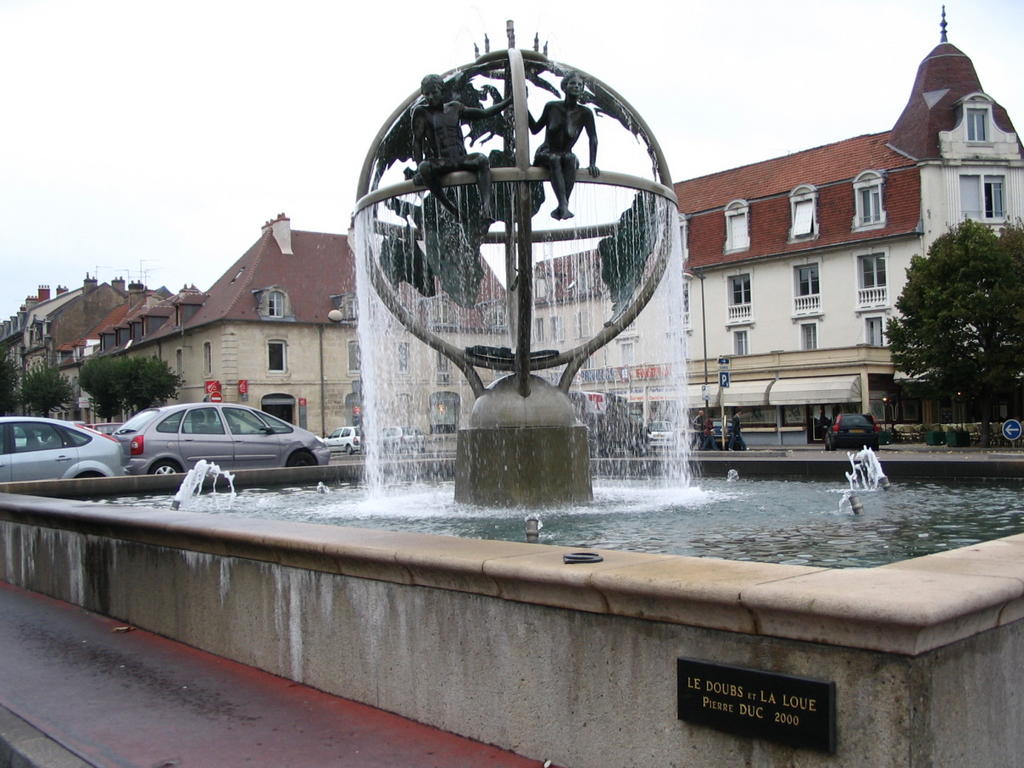 Fontaine du Doubs et de la Loue
There are more wonderful buildings in the town than can be put to good use. The beautiful former Hôtel Dieu or religious hospital with its cloistered courtyard has been turned into the town’s Médiathèque housing the public library and municipal archives. A truly stunning building for a library in a town of only 30,000 inhabitants!
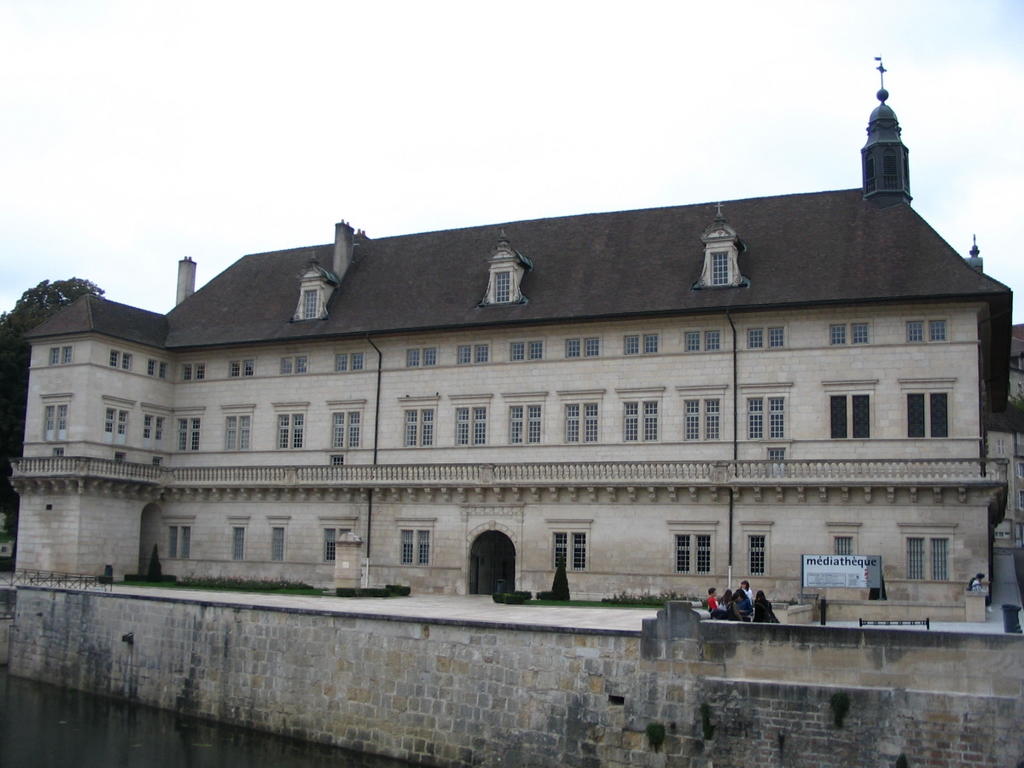 The Médiathèque in the former Hôtel Dieu
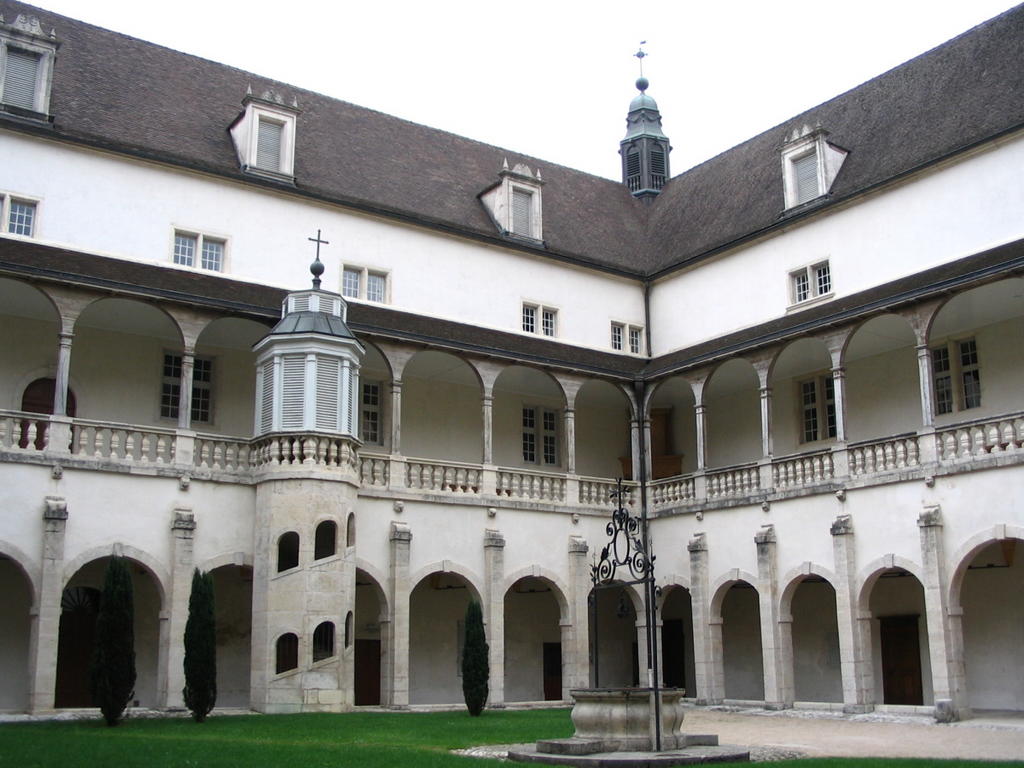 The courtyard of the Médiathèque
 As dusk now falls around 6.30pm we did not linger too long, returning around the massive Forêt de Chaux rather than through the middle as it provided the chance to visit the rather dilapidated little town of Orchamps. It was here that for several years Jill’s late friend Soeur Martine was responsible for a small Dominican convent. As we had never visited her during her time here we were interested to see what it was like. It was rather a disappointment however and we continued on to Arc et Senans and home.
Tuesday 4th October 2005, Champagne-sur-Loue
Today France was enjoying one of its many strikes with at least 150 manifestions taking place across the country and Paris apparently bought to its knees with trains and buses running greatly restricted services. The most obvious effect of the strikes here was that the schools were closed. One young pupil was passing his unexpected day off helping customers in the internet shop in Salins where he seemed far more capable than the normal staff! We spent the entire morning there sorting out a backlog of emails and loading some of our recent pictures onto our website. By the time we came out everywhere had closed for lunch!
So we drove up into the hills above Salins to the Pont du Diable, (Devil’s Bridge) a narrow bridge linking the two sides of the valley across the deep ravine of a little river that later disappears into the limestone rocks to flow through subterranean caverns to reappear at the source of the River Lison.
The name of the bridge, according to local legend, relates to a pact made between the builder and the Devil that in exchange for the soul of the first person to cross, the Devil would complete the bridge overnight, otherwise he would put a curse on the bridge so that it would never be built. Once completed the builder sent the local priest across carrying the sacrament. The Devil was so horrified he jumped over the bridge into the river far below, where if you look carefully you can just see his tail disappearing into the water to this very day!!
It was certainly very impressive and quite deserted with the river flowing far below the parapet amongst the brightly coloured autumn trees. We were astonished to see a sign forbidding bungee-jumping. You’d need to be stark crazy to even consider it!
 The Pont du Diable
 You’d need to be stark crazy to even consider it!
The Jura is a karstic landscape. As already mentioned elsewhere, most rivers here come out of the limestone cliff face as waterfalls from subterranean water courses that may well have flowed underground for many miles and gathered water from a variety of different sources. Rivers may emerge and then disappear again, or only appear at all during periods of heavy rain or melting snow. After the recent rains the source of the River Lison is most impressive as it cascades out of the rocks in a white torrent wreathed in a haze of spray where it swirls and swishes violently along to eventually join up with the River Loue.
Having seen the cascade from below we scrambled up through wet woodland to the entrance to the cave and up a dark, slippery, rocky tunnel to emerge above the cascade well inside the cave where we could look down on the black waters as they flowed silently “through caverns measureless to man” to drop suddenly over the edge in a crescendo of sound. It was an awesome experience, the more so as the area was quite deserted.
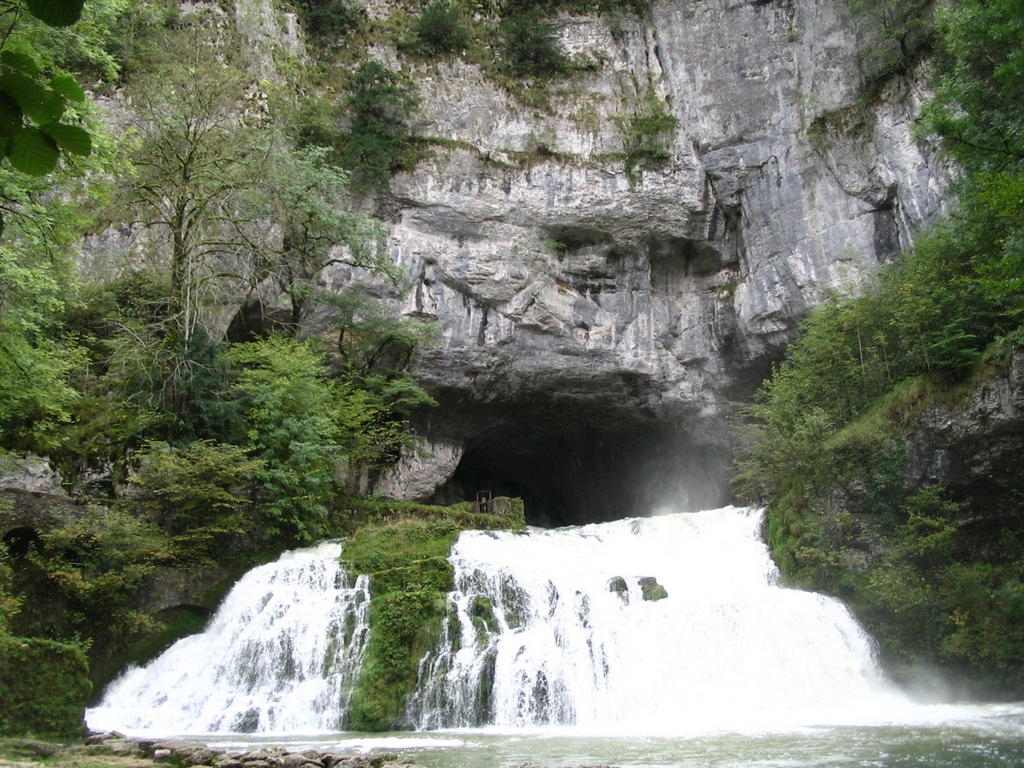 The Source du Lison
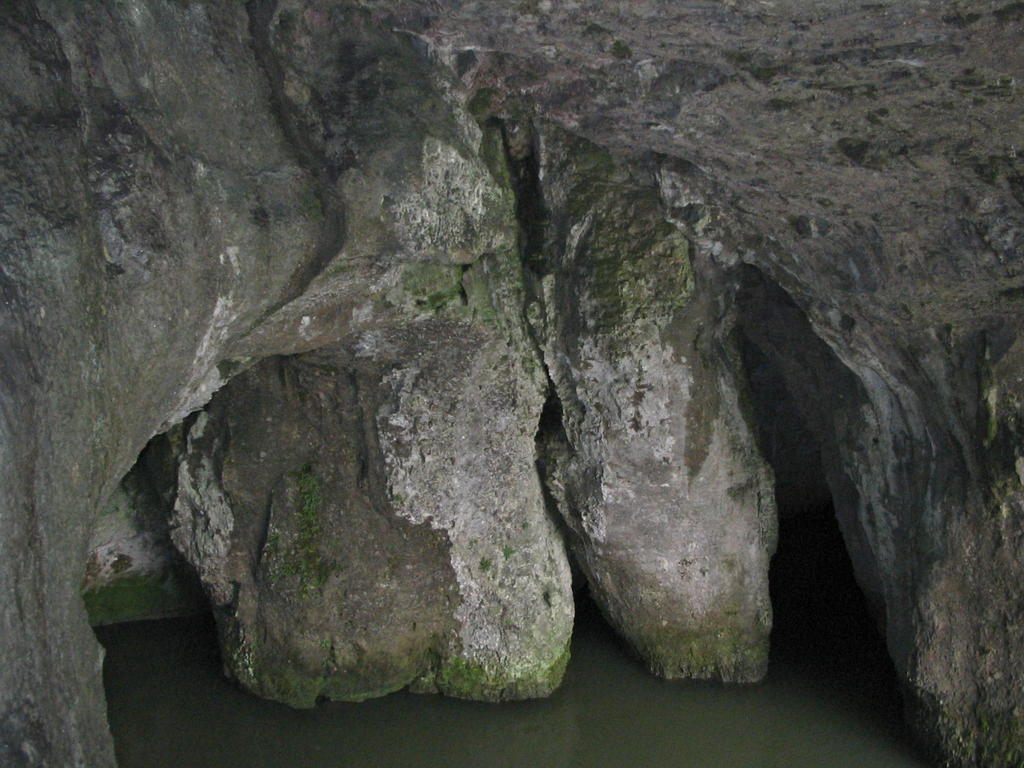 ”Caverns measureless to man”
Returning to the woodland we followed a steep, narrow track up through bushes and wet grass, where a few pink flowers still added spots of colour. Here we found ourselves in the Creux Billard, a huge grey limestone hole about 50 metres deep which was originally a massive underground cavern before the roof collapsed. At the bottom is a lake formed from the outfall of the several water courses that emerge on the rockface. The waters of the lake then continue underground to feed the Lison.
 The Creux Billard
Feeling very small and insignificant we returned through the woods to see yet another wonder. The Grotte Sarrazine is a natural cave 90 metres high at the back of which is a small cave from which, in times of extreme flood, the river flows. The rest of the time it is dry. The flow can be sudden and unpredictable and although the passage continues way back into the cliff, its dangers mean only very experienced speleologists attempt to explore it. The arch itself is stunning in size and grandeur. St.Paul’s Cathedral would fit comfortably inside.
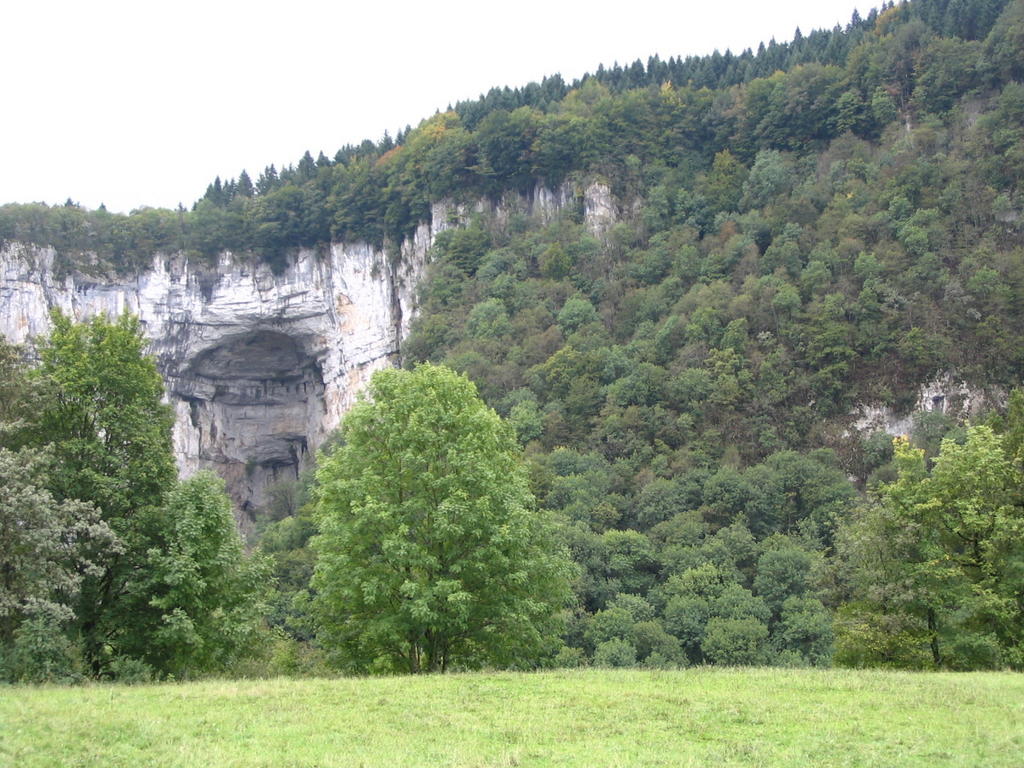 The Grotte Sarrazine
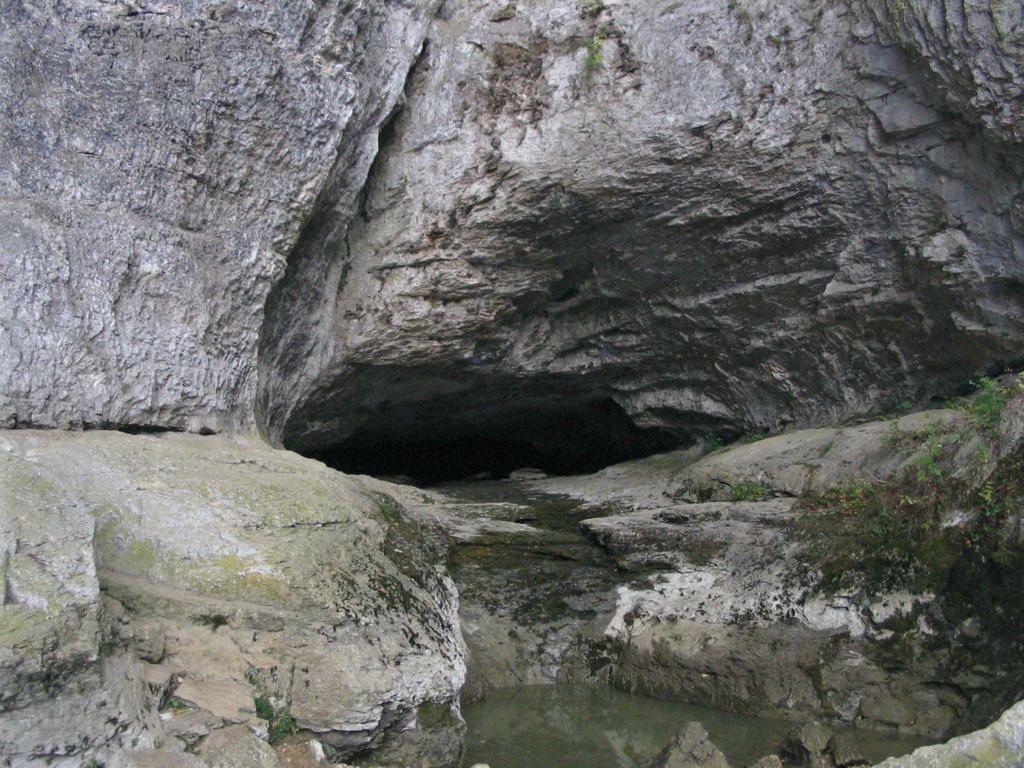 Bief (occasional source) of the Sarrazine
 Finally we walked a kilometre along beside the Lison to the Taillanderie, a 19th century water-powered metal factory specialising in edge-tools for farming and agriculture. It survived until the 1960s and has now been restored as a working museum.
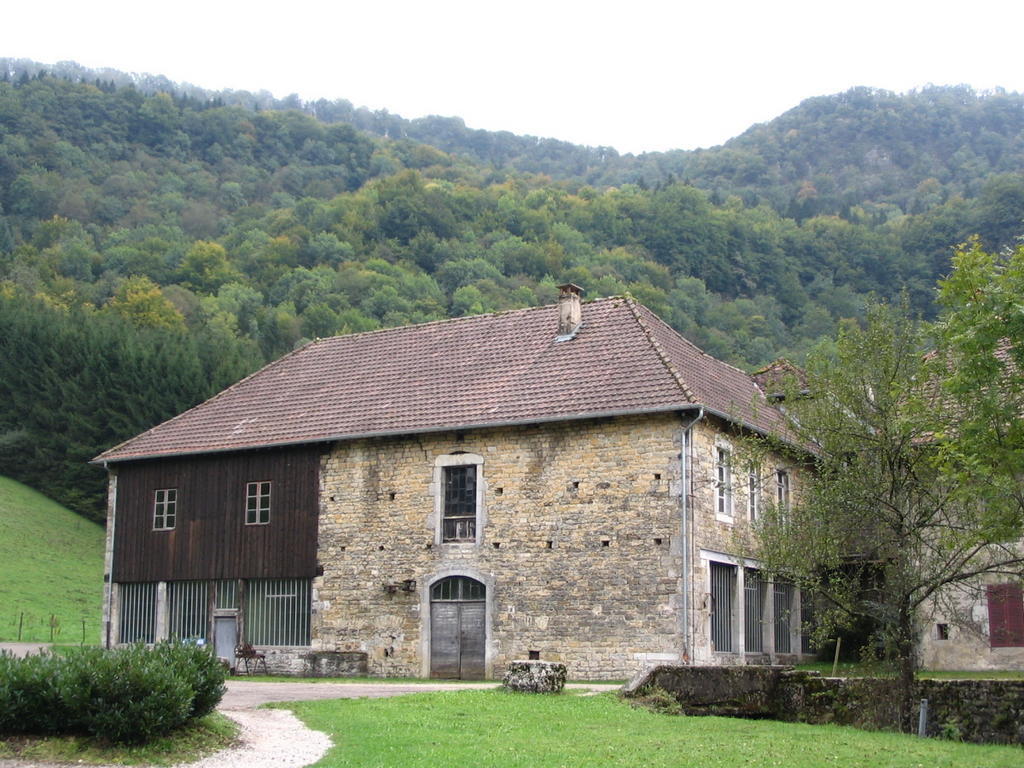 La Taillanderie
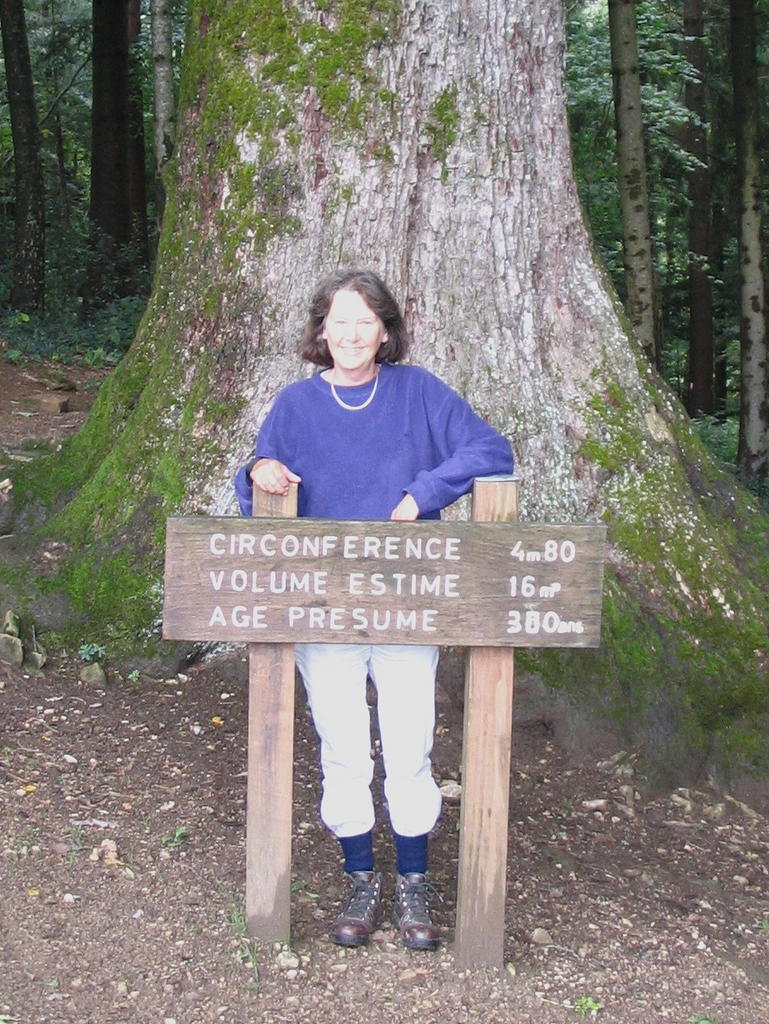 Jill measures the effects of too much German food
Wednesday 5th October 2005, Champagne-sur-Loue
Jill’s shoes having worn right through we decided a trip to Besançon was called for but the hassle of driving to Besançon and finding somewhere to park did not appeal. So we cycled to Arc et Senans, chained the bikes to the railings and climbed aboard the local train which skimmed us along the valley to reach Besançon a mere 20 minutes later. The on-board guard/ticket man even gave us 25% discount because we were poor old pensioners. (Fortunately he’s not observed us peddling furiously through Arc et Senans to catch the train or he may not have been so kind.)
Once in Besançon our plans to buy shoes gradually faded as we explored libraries, bookshops, churches and fascinating back streets and courtyards. We have returned with a couple of books and a copy of the Times, but no new shoes.
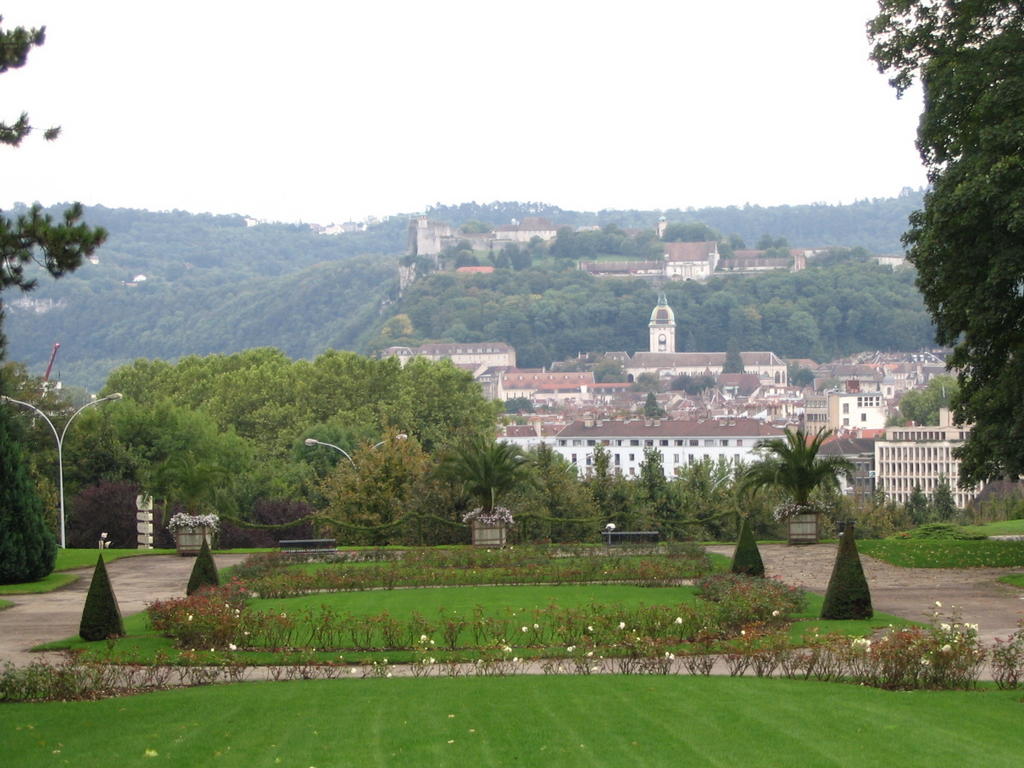 Besançon with the citadelle viewed from the station
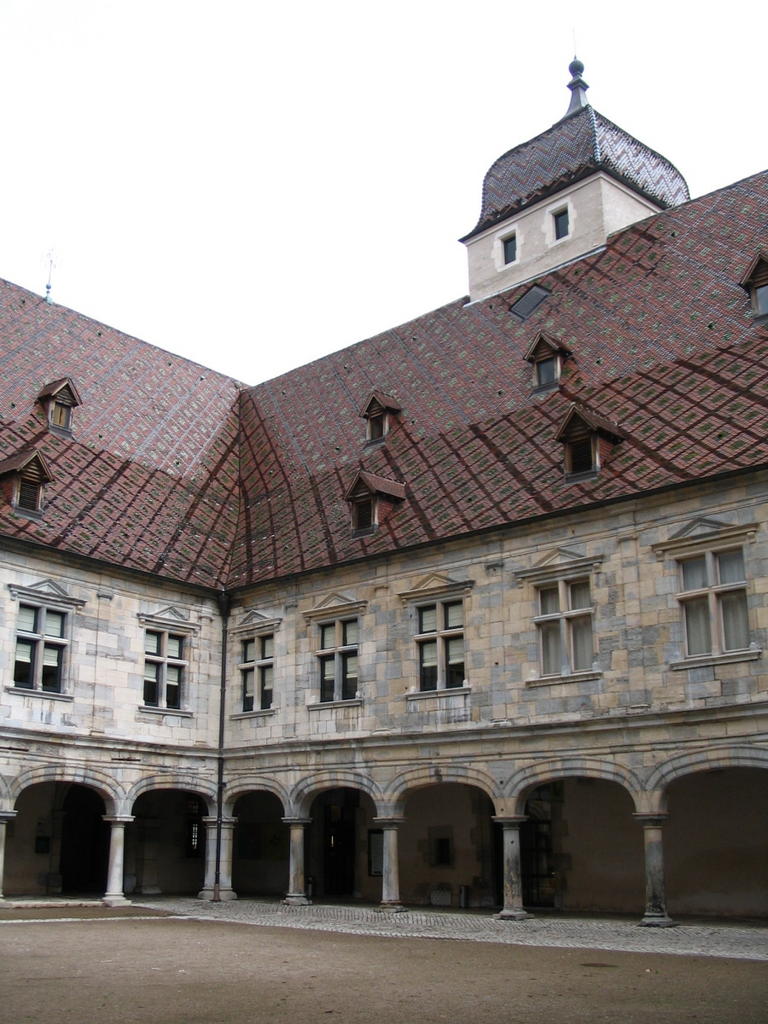 The Palais Granvelle
 One of the many fountains in Besançon
We visited an excellent exhibition of early botanical books at the Bibliothèque Municipale with beautifully illustrated, hand coloured prints and herbals from the collections. The library is one of the oldest public libraries in France the present building dating from 1818, many of its collections coming from works confiscated by the State following the French Revolution. (Even many of the smaller towns in France have wonderful collections of early printed materials acquired during the Revolution that major libraries in Britain could never aspire to own.) In the case of Besançon there had been a public library since 1694 when Jean-Baptiste Boisot bequeathed his collections to the town. Boisot had saved much of the collections of the Granvelle family, leading figures and patrons of the arts in the 16th century, and many of their specially commissioned bindings are included among the library’s 500,000 items. The library suffers from the problem of having to live in the straightjacket of the original building of 1818. Despite having an out-store, the reading room is cramped with no space even for an adequate working collection of open access books. Most items are on an on-line union catalogue of all the main libraries in the town, covering public, university and museum collections. Exhibitions have to be held in one of the store rooms, with leather-bound books piled high in bays to the ceiling, reachable by ladder. Ian got reprimanded for touching a volume of correspondence between Diderot and Grimm which intrigued him. Having apologised and explained our interest in early printed material we were introduced to the charming and knowledgeable conservatrice who was delighted to discuss her work and the exhibitions for which she has responsibility.
There is a changing series of exhibitions, often with catalogues. The present exhibition formed part of the annual “Month of written heritage” for which the Ministry of Culture suggests a theme each year. This year’s is entitled “Se réunir et se distraire”, revolving around leisure and social life. The library had departed from this theme as it had been working cooperatively to produce a DVD of treasures of botanical literature in the region. Items exhibited included the work of Maria Sybilla Merian, represented by Metamorphosis insectorum Surinamiensium (Amsterdam, 1705), Pierre-Joseph Redouté Choix des plus belles fleurs (Paris, 1827) and the remarkable six volume work of Elisabeth Blackwell Collectio stirpium … (Nuremberg, 1750). English imprints included Mark Catesby’s Natural history of Carolina (London, 1731-43) and John Martyn’s Historia plantarum rariorum (London, 1728). There were also interesting collections of pressed specimens of local lichens with printed labels, reminiscent of the specimens of local seaweeds published as Algae damnonienses, exhibited in Exeter in 2004 as part of the “Picturing plants” exhibition which Ian worked on together with the Royal Albert Museum.
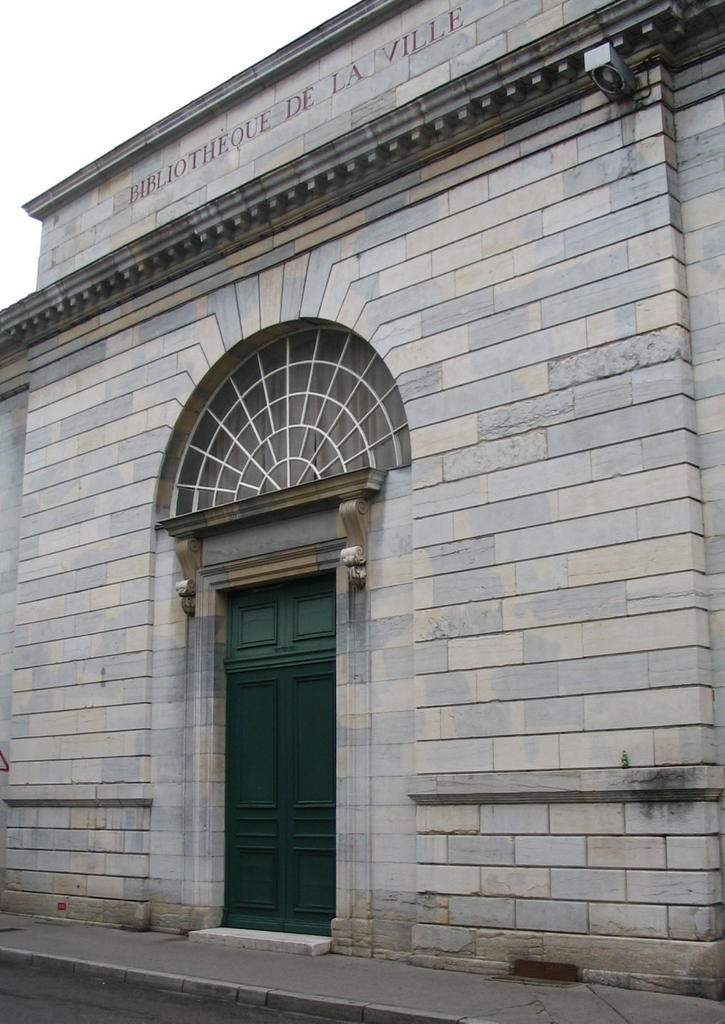 The Bibliothèque Municipale
 Some of the items exhibited
Around 5pm we returned to Arc et Senans and collected our bikes for the ride back home where after supper we entertained/bored Susanne with pictures and accounts of our recent visit to Germany.
Thursday 6th October 2005, Champagne-sur-Loue
After a morning on the internet in Salins-les-Bains we had a picnic lunch by the River Lison at Nans-sous-Sainte-Anne before continuing along wooded canyons and across grassy plateaux to the little town of Ornans, charmingly located higher up the River Loue which is placid at that point, offering picturesque reflections of the old houses on stilts beside the river. Photographs in the town hall, located in a limestone Renaissance building, showed that the stilts were not always sufficient to protect the houses from flooding and there were dramatic views of the main street awash in the 1950s – there were also floods earlier this year. The town is perhaps best known as the birthplace of the painter Gustave Courbet (1819-1877), the leading light of the realist school in Paris in the mid-nineteenth century. We visited the house where he was born, now a museum, which included a special exhibition of other artists from Franche Comté during the 19th and 20th centuries. Courbet took much of his inspiration from his home town and region. His landscapes seemed in many instances to foreshadow the impressionists and his portraits are penetrating studies of their subjects. Scenes included the Castle at Chillon and the Ornans “mirror” or view of the river with reflections of houses. Courbet was a controversial figure, both artistically and as a socialist. Involved in the Paris commune of 1870, he was accused of toppling the Vendôme column and, after having served a term in prison, was ordered to meet the enormous costs of re-erecting the column. Ruined, he sought exile in Switzerland in 1873 – his sculpture “Helvetia or Liberty” dates from this period – and he died near Vevey in 1877. Unfortunately the museum shows the difficulties of maintaining an important piece of national heritage in a small town of only 5,000 people. The house is rambling and the displays somewhat formless. Also the originals of many key paintings are in the Musée d’Orsay and other collections in Paris. Still, we understand that there are plans to redevelop the museum.
 The view from the bridge at Ornans
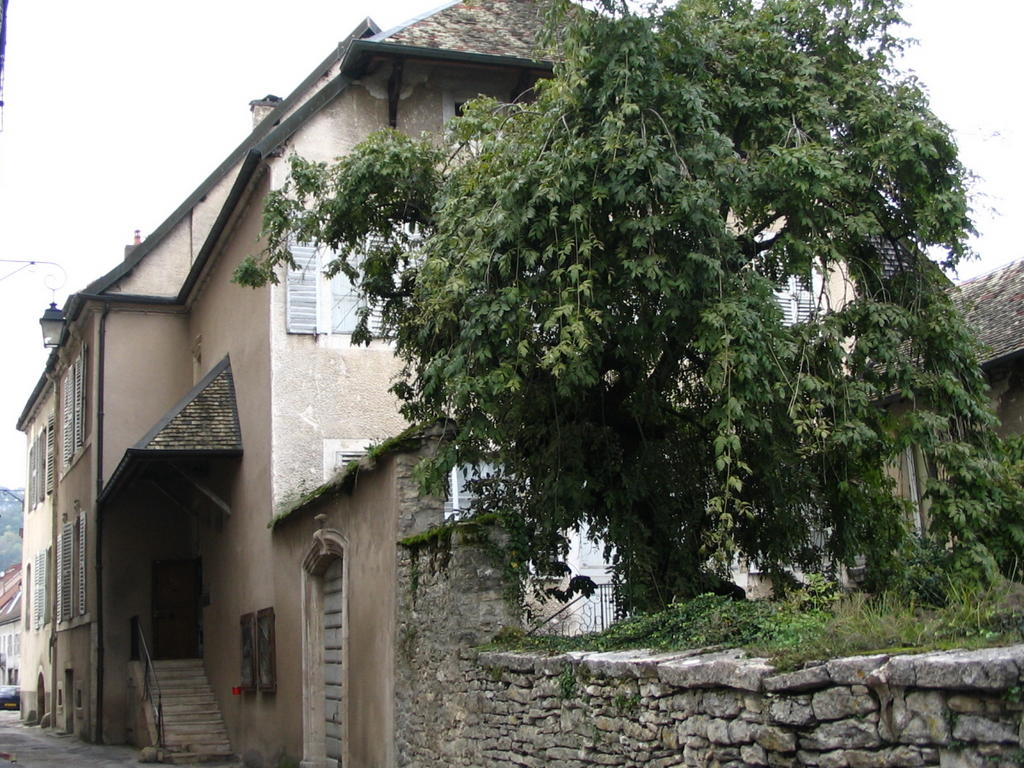 The birthplace of Courbet
We ended our visit to Ornans by driving up the very steep, spiralling road to the castle ruins above the town with views down onto the river and the rooftops.
 The Castle above Ornans
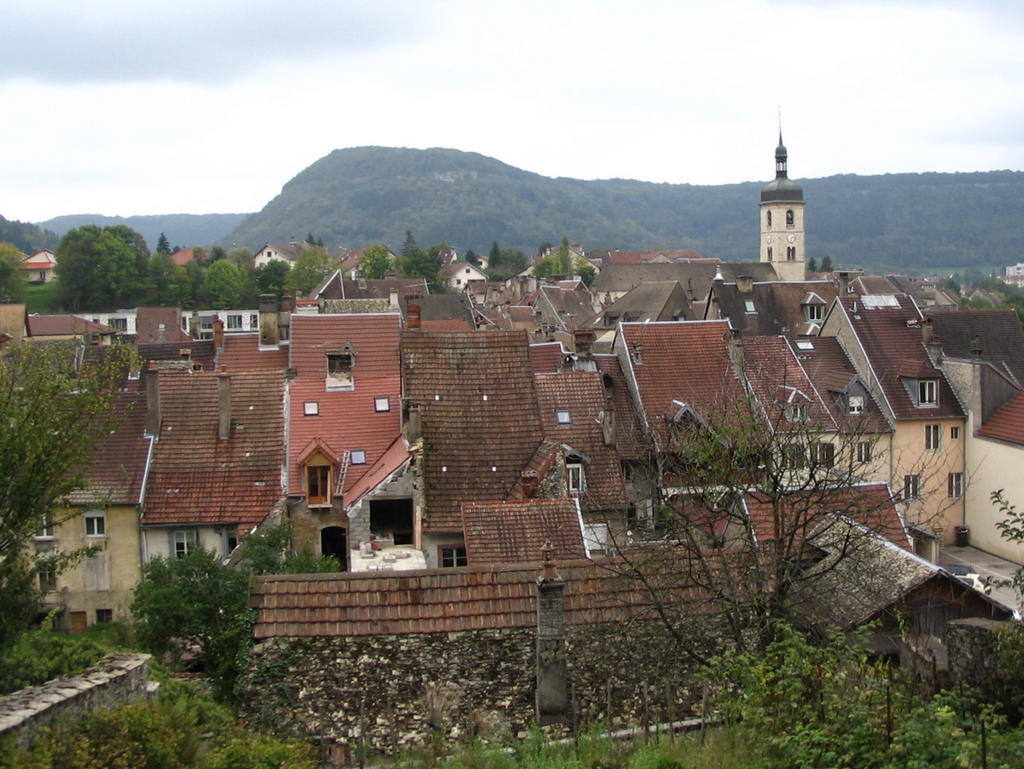 Ornans from above the town
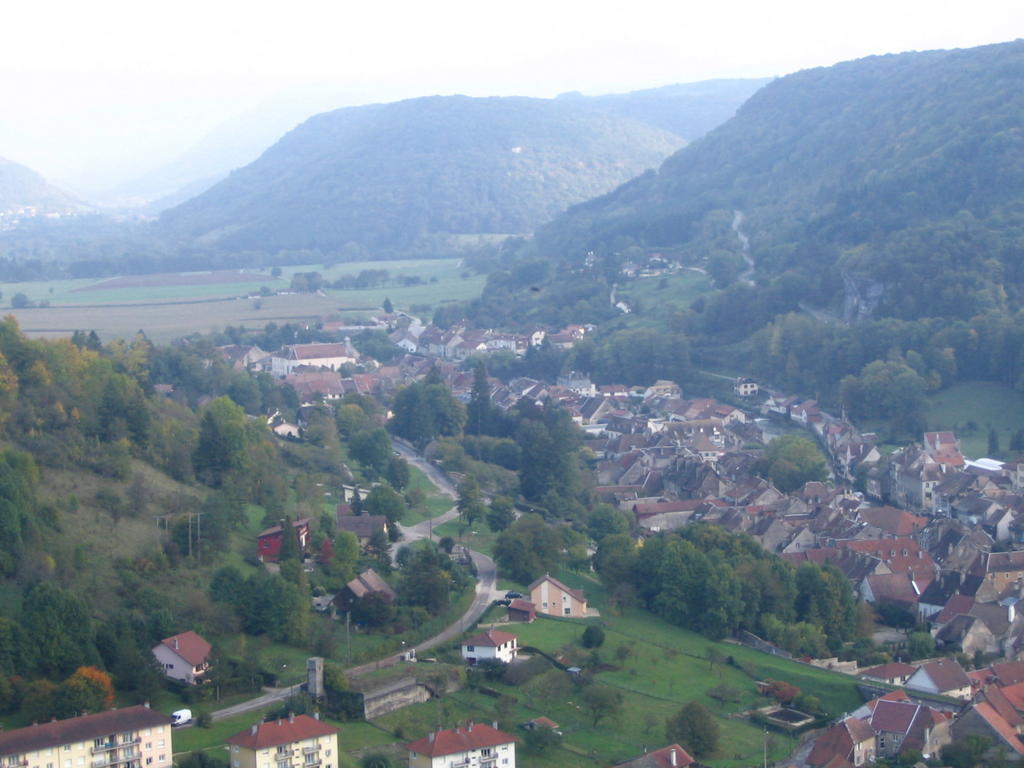 Ornans from the castle
Friday 7th October 2005, Champagne-sur-Loue
The day dawned misty with poor visibility but the promise of a warm day once it lifted. We passed the time of day in Susanne’s kitchen upstairs for an hour where she told us tales of village life in the this part of rural France before and during the war and we added several new words to our vocabulary. By 10.30 the sun had dispelled the mist and the temperature had risen making it by far the nicest day since we returned from Germany.
We drove to Arbois on yet another fruitless mission for shoes. This time we were seduced by the weekly market with its stalls of cheeses and dairy produce, vegetables and flowers, local wines and beers, clothing and footwear, meat and charcuterie. There was a pleasant, friendly atmosphere and most people seemed to know each other. We queued with the locals for spit-roasted meat and for 3.50 euros we took home for lunch half a cooked chicken in its own sauce with roast potatoes. We also bought a bunch of bright blue and red anemones as a little present for Susanne. On the way back to Modestine we noticed different little groups of people converging on a small restaurant on the banks of the Cuissance and decided it merited further investigation. It looks delightful with several set menus that include local terrines, game, cheeses and wine. It would be good to try it before we move on from here.
Back in Champagne it was so warm that after lunch we sat in the garden watching the lizards enjoying the unexpected sunshine on the old stone wall as we drank our coffee. Susanne’s niece lives in nearby Chissey and arrived to take an afternoon walk with Susanne. They invited us to join them and we have spent a very pleasant afternoon on a local ramble beside the Loue, crossing from the Jura into the Doubs and continuing through the neighbouring village of Buffard. Beyond this we climbed up through the woodland to the wooden cabin where the local huntsmen gather for their lunch when they are out together searching for deer or sangliers (wild boar.) They have the right to hunt six days out of seven during the season and last week they shot a sanglier here. Fortunately we saw no sign of any wild animals and the only evidence of the huntsmen was the table inside the cabin covered in used wine glasses, several pruning knives used for cutting their lunchtime bread and cheese, and an assortment of half empty wine bottles. We suspect that probably the hunting is little more than an excuse to get together in the woods for a drink and to avoid being given tasks to do by their long-suffering wives!
After a brief rest in the cabin on one of the long wooden benches, the walls covered in pictures of pheasants, hares, deer, sangliers and other wild game, we continued along the ridge of the hill with pretty views back down to Buffard and the Loue until we reached a statue of the Virgin, placed there to watch over the village in 1946. It is not a wonderful work of art but is dedicated to the memory of the Abbé Coutteret, the priest of Buffard and Champagne who died in Germany after being deported. (See entry for 4th September, “A local hero.”)
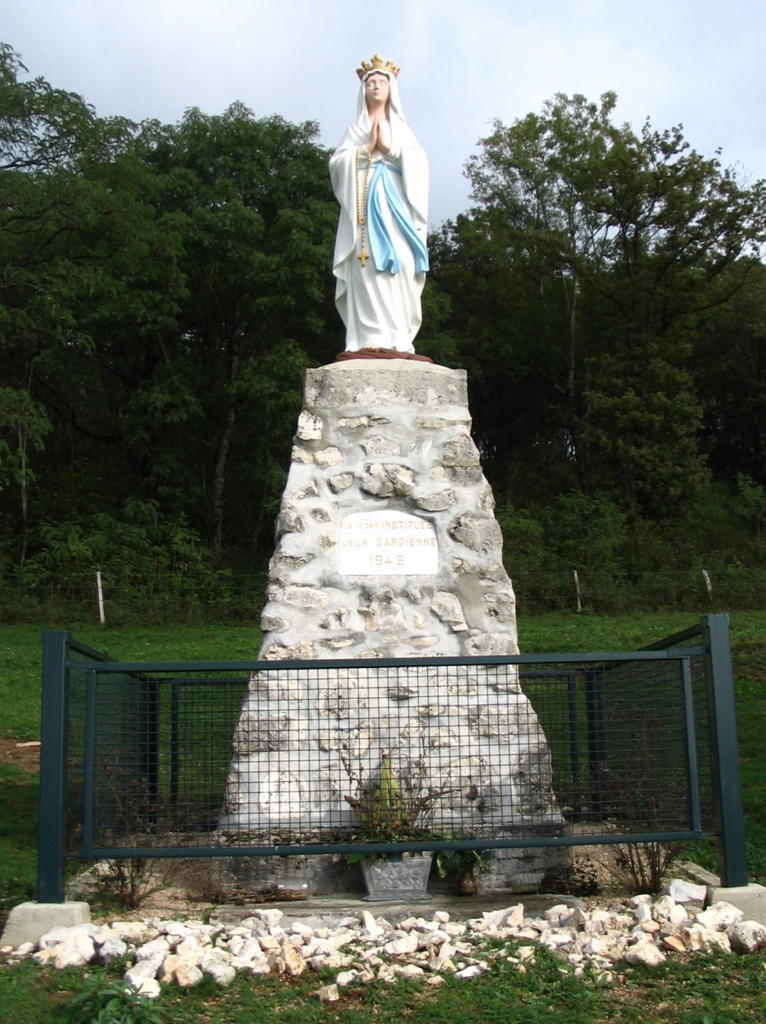 The Virgin of Buffard
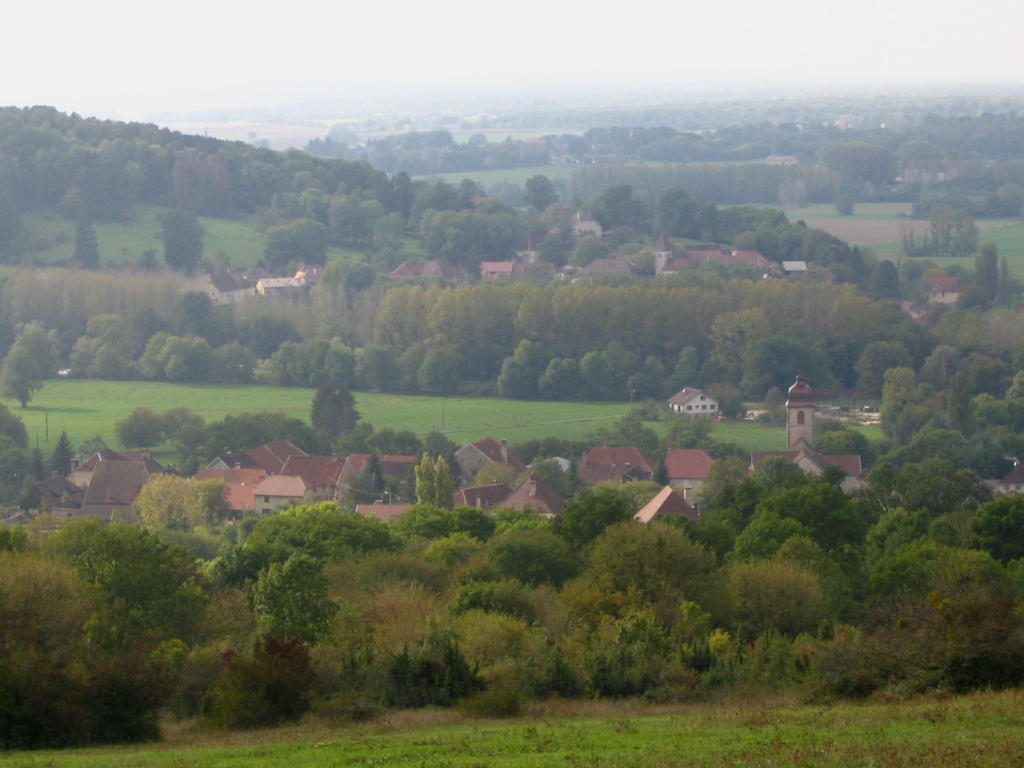 View from the statue, Buffard in front, Champagne beyond
Here we gathered wild mushrooms before returning to the village through an area of woodland where horses roamed free. They quickly discovered our presence and within minutes ten of them emerged onto the path from the surrounding bushes. There is little for them to eat here and they seemed thinner than they should be. They eagerly searched us for food but sadly we had nothing for them. Ever hopeful they accompanied us on our way until we reached the gate half a mile further on. Some were really very tall and they completely surrounded us but were not at all aggressive though their noses were permanently in our hands and pockets.
 Some of our walking companions
Our way then took us through the vineyards, now robbed of their grapes and with the leaves turning colour from green to gold and bright scarlet. Finally we returned to the pretty village with its traditional farmhouses where the roads are lined with walnut trees. The nuts have now burst out of their protective coverings and lie on the verge waiting to be gathered. Soon we had a big bagful which we shared out between the four of us while chatting about French bureaucracy and the incomprehensible tax laws over cold drinks once we reached home.
 Changing colours in the vineyard
 A typical farmhouse in Buffard
Susanne is either related to or knows everyone locally so whenever we passed people we stopped to chat and to be introduced, so it has been excellent language practice for us. It really has been a lovely day.
 For old time’s sake – Jill was photographed exactly here in 1962.
Incidentally, we forgot to mention that Roland’s vendange, (grape harvest) which took place while we were in Germany, was a great success and it is reckoned to be an excellent year. Certainly the remaining grapes we tasted in Susanne’s kitchen this morning were wonderfully sweet and juicy. Nineteen members of the family turned up from as far away as Paris and they all worked solidly on the hillside for the weekend. Now everything is fermenting happily in the large wooded vats down in the cellar. We’ve been warned that this might smell a bit but as yet we’ve noticed nothing. The neighbours cultivate a different strain of grape which is harvested later so they were out gathering theirs today. We watched them at lunchtime loading huge round barrels onto their tractor and driving off with them to the vineyard.


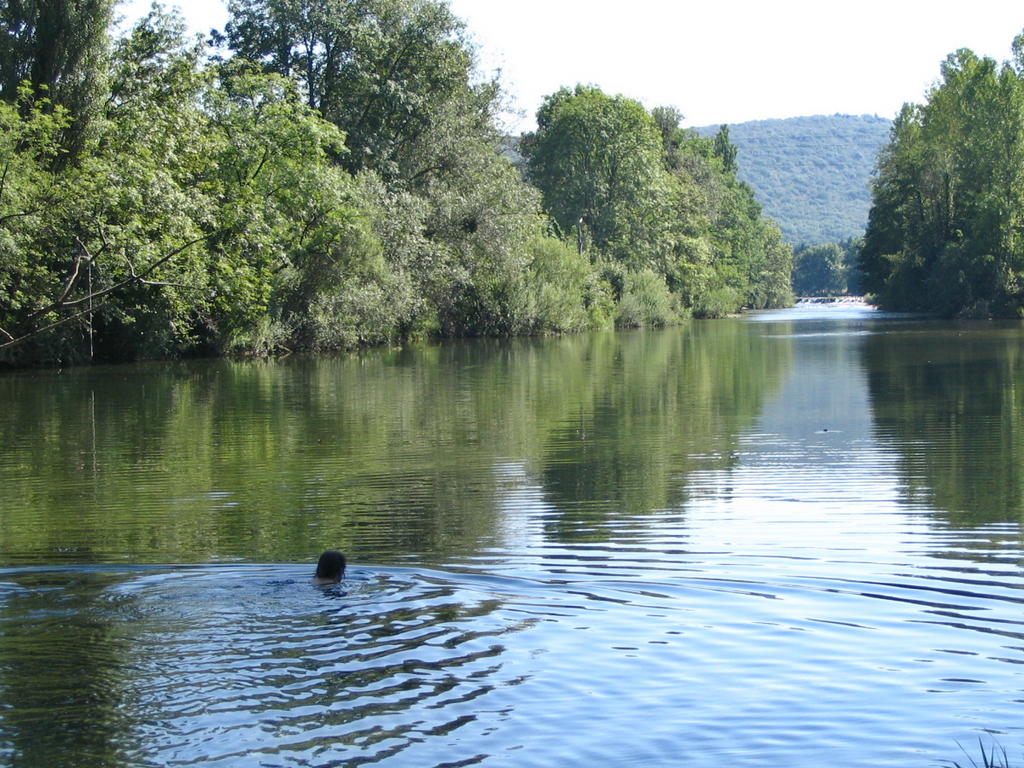 View of the Loue at Port Lesney with Jill’s head
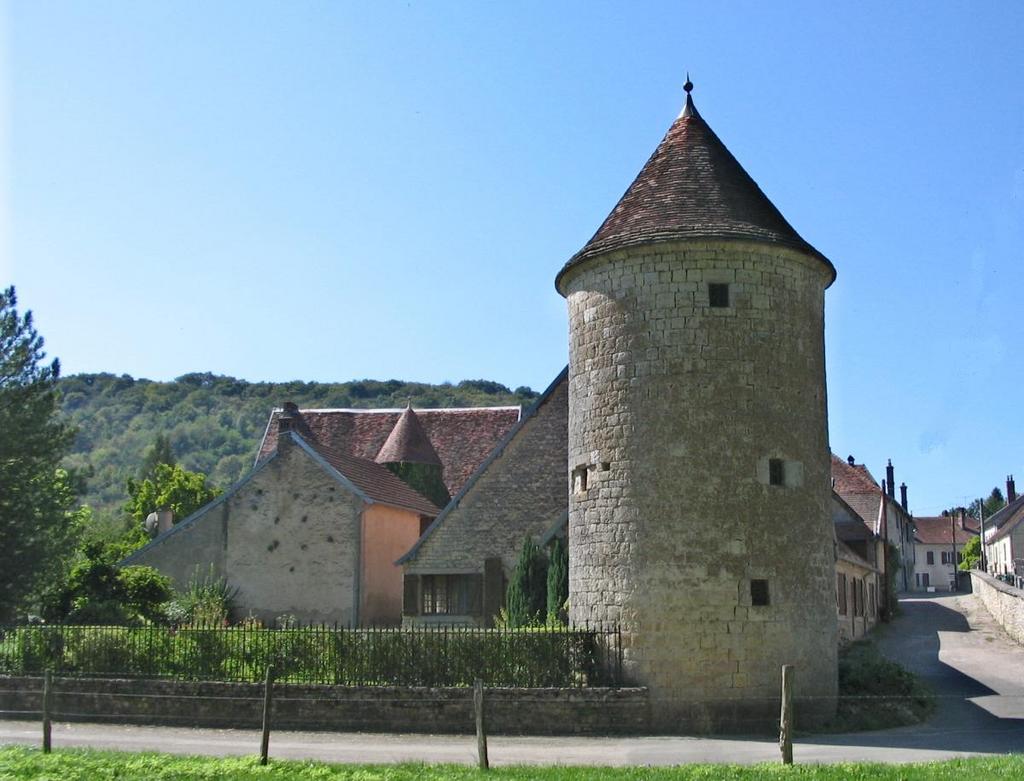 Tower beside the river at the end of the rue du Moulin
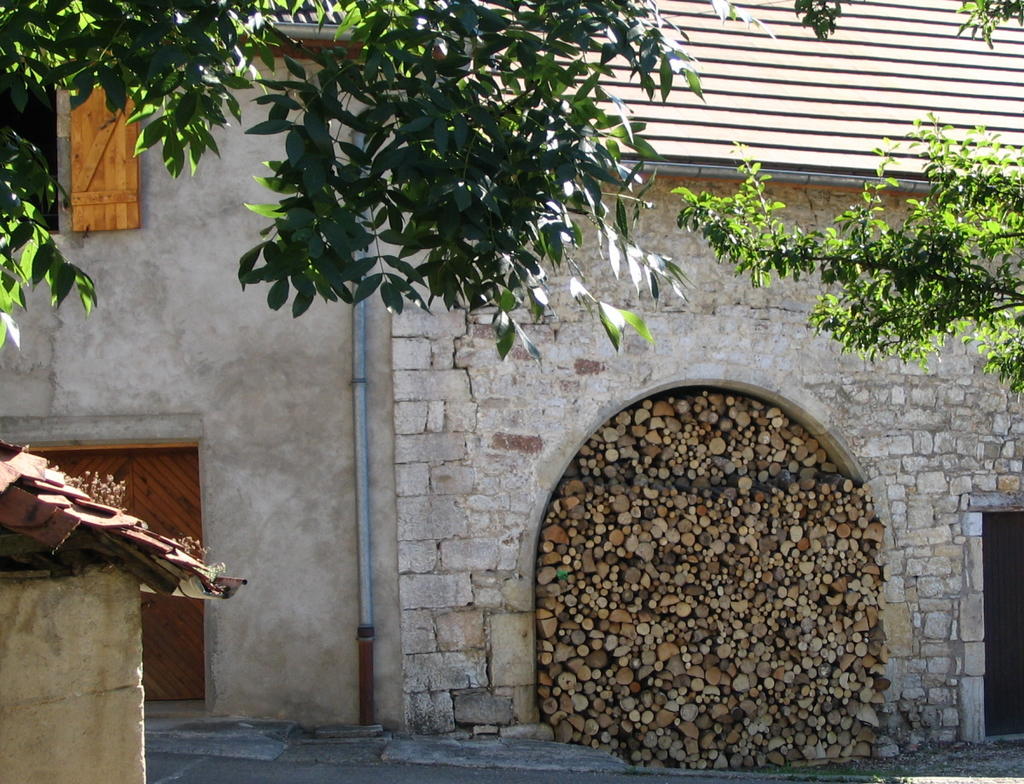 Winter fuel store
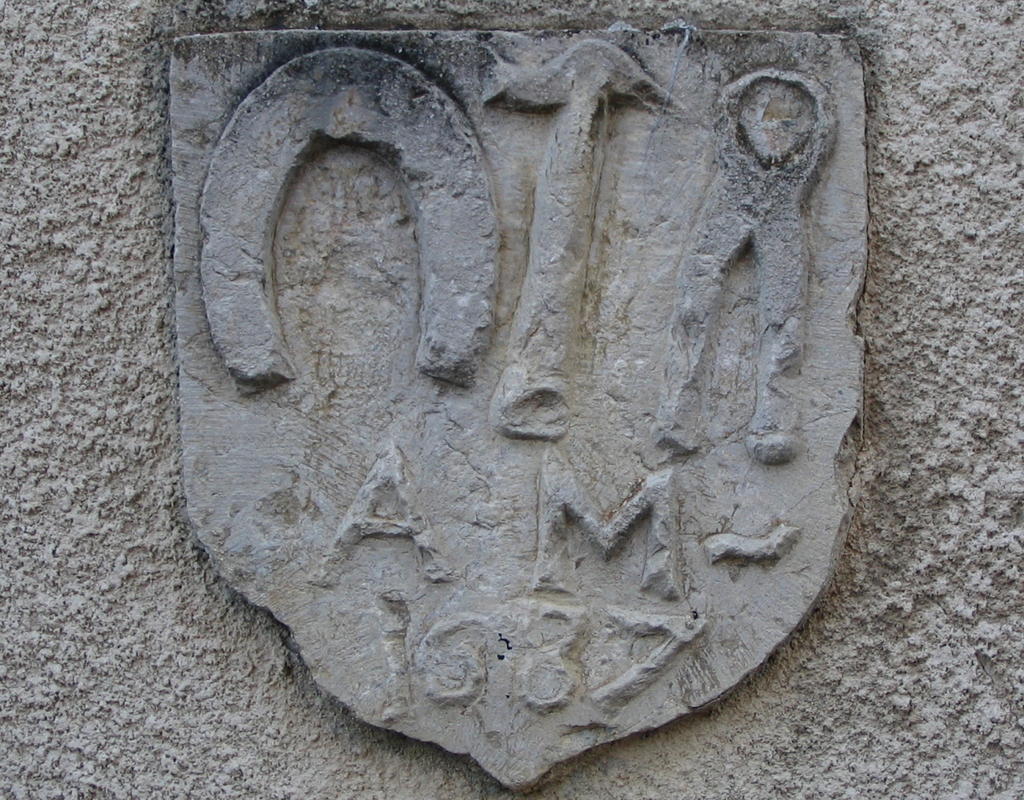 Blacksmith’s sign
 View from Mont d’Or towards Vallorbe
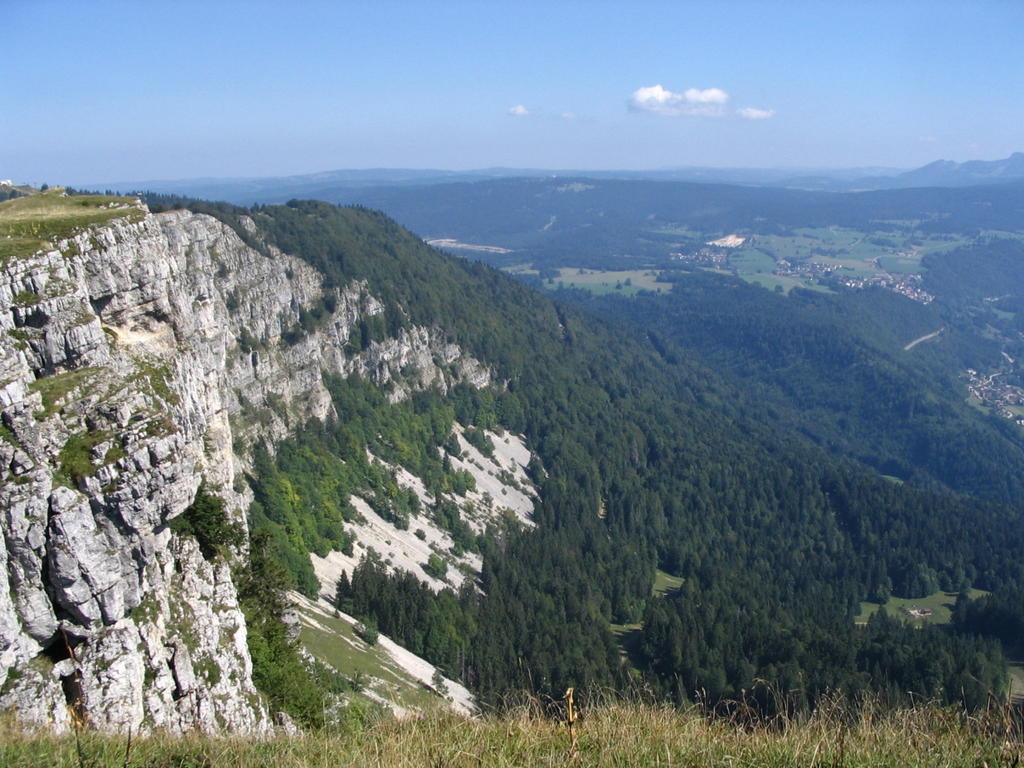 Limestone cliffs of Mont d’Or
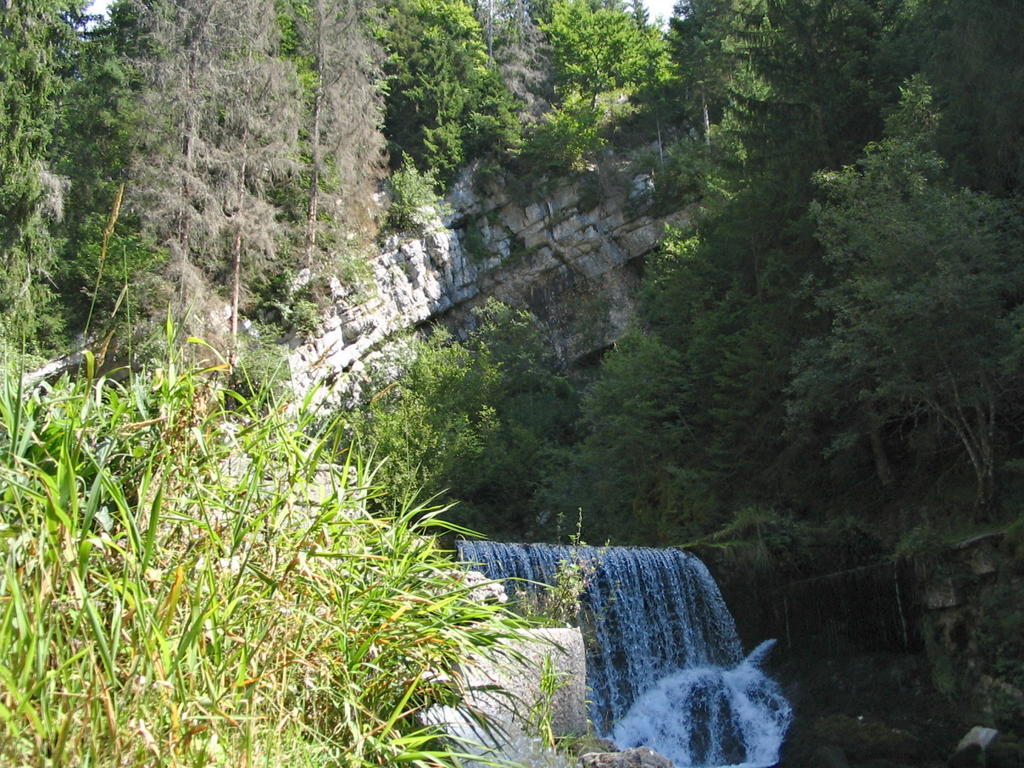 Limestone strata at the source of the Doubs
 The bell tower of Rochejean
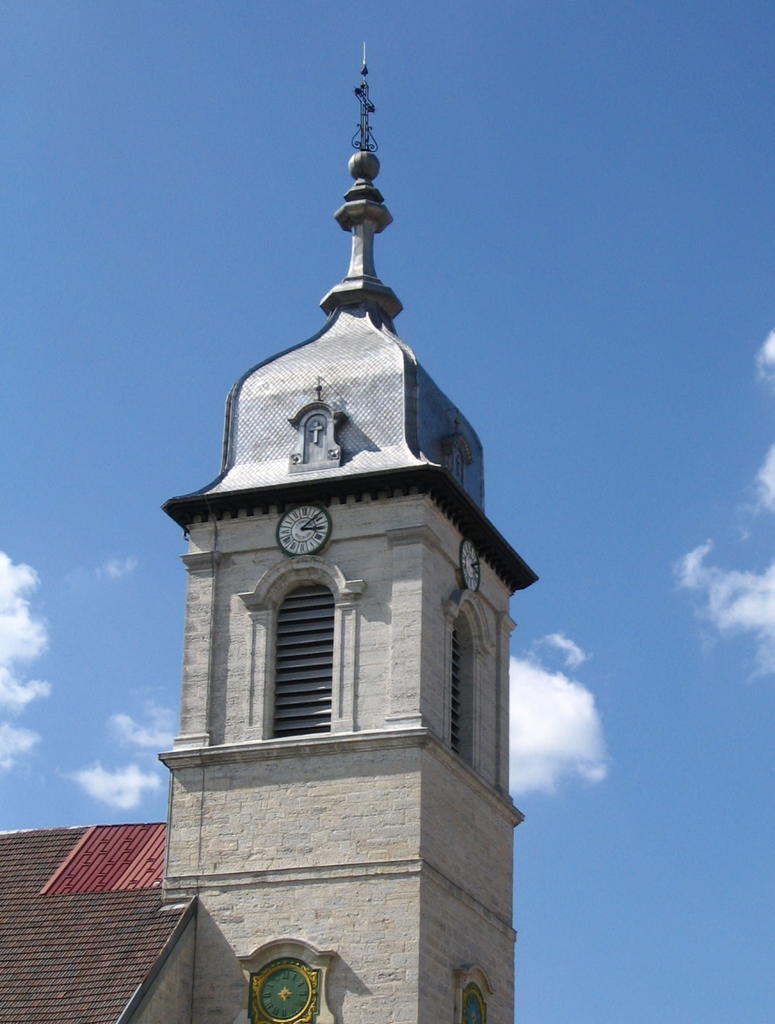 The bell tower of Mouthe
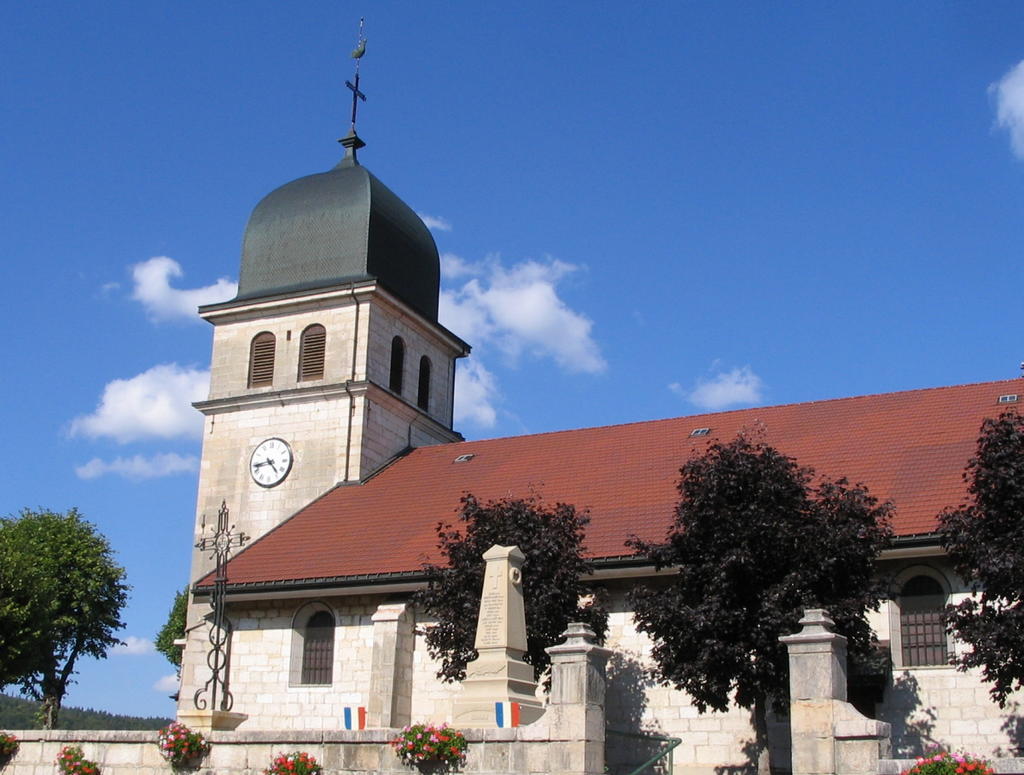 The watershed church at Les Rousses
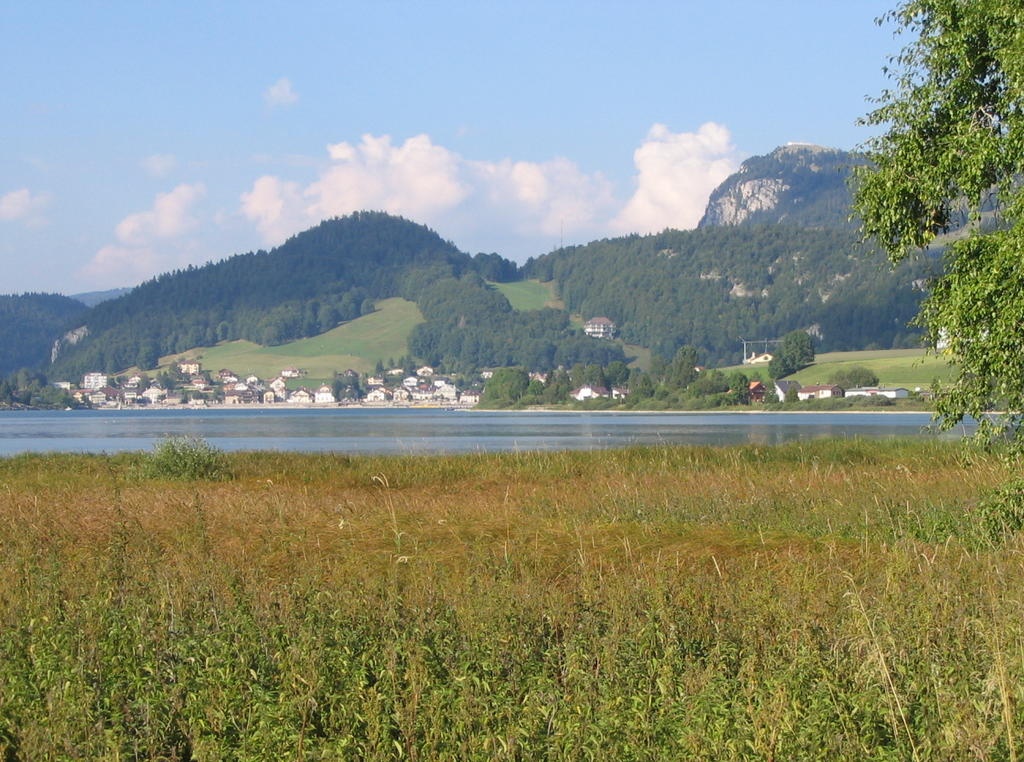 The village of Le Pont at the north end of the Lac de Joux
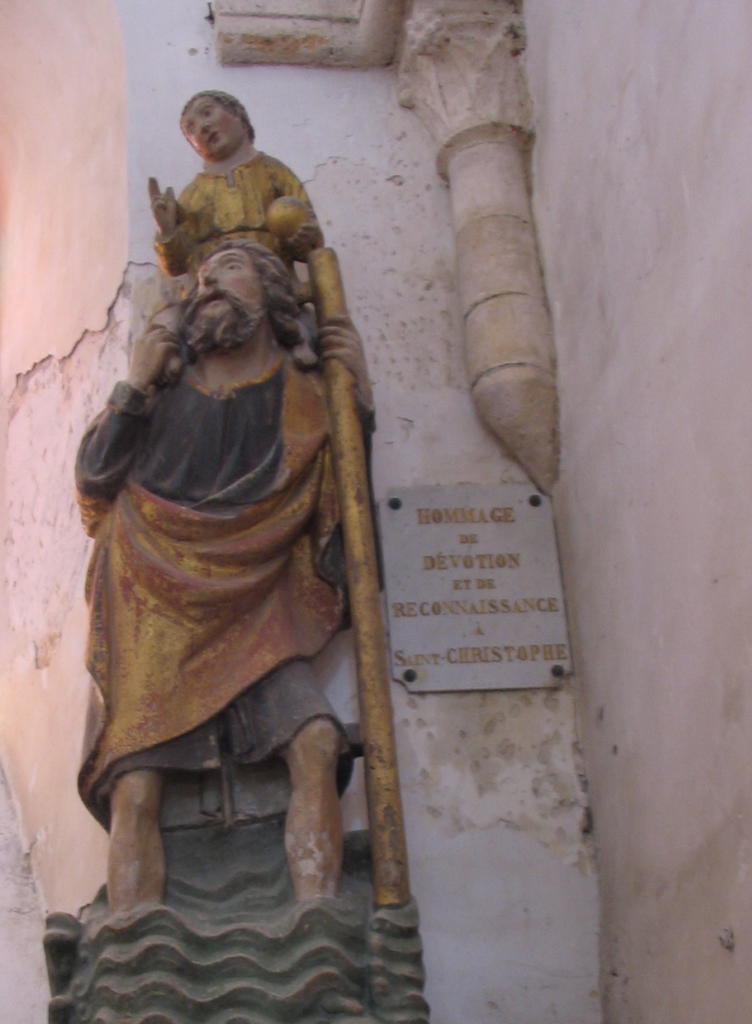 St. Christophe. 15th century. Chissey
 Altarpiece with the reliquary containing (supposedly) the
 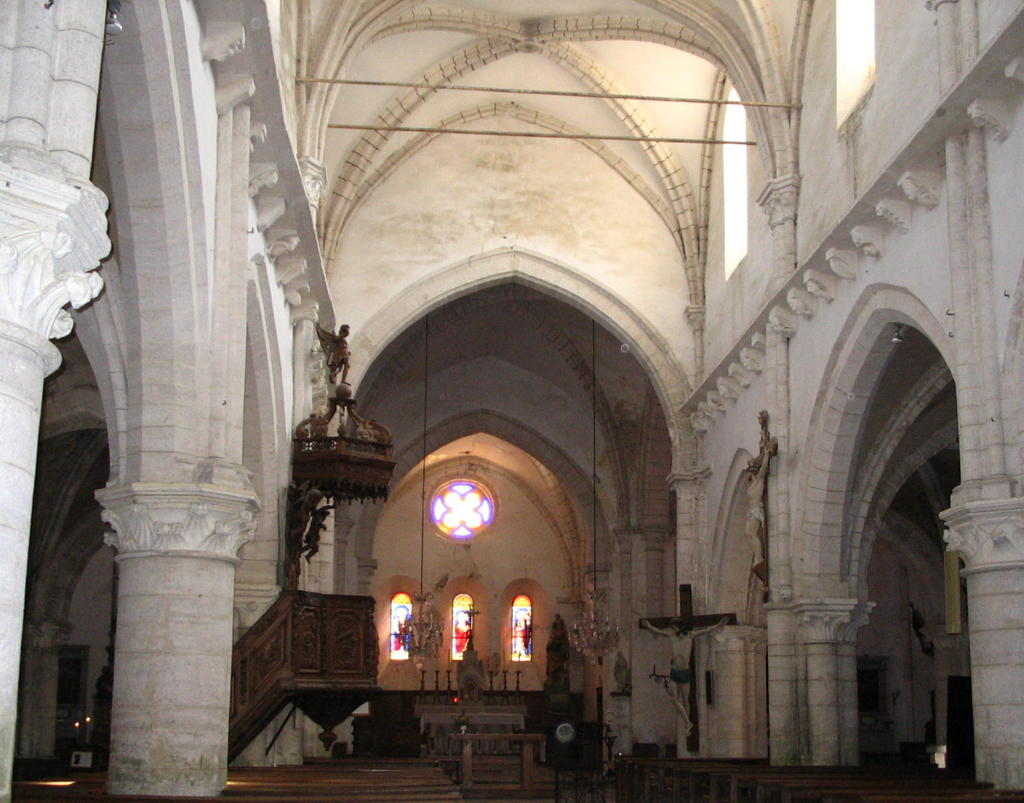 Interior of the church of St. Christophe, Chissey
 One of the strange carvings in the church
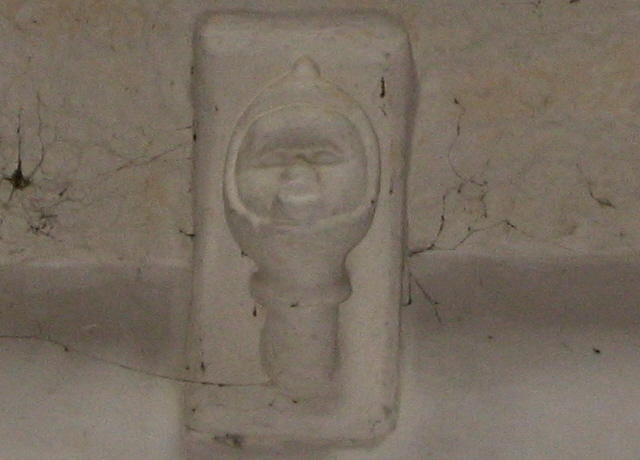 Another carving possibly depicting a tormented being
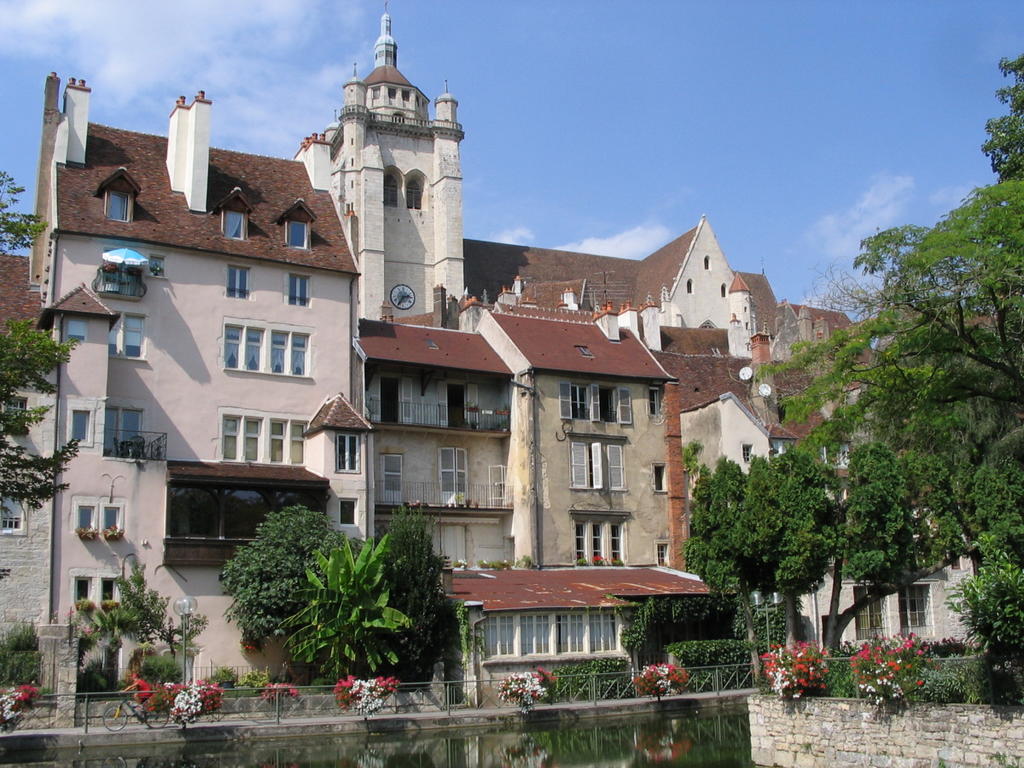 Dole, showing the church of Notre Dame
 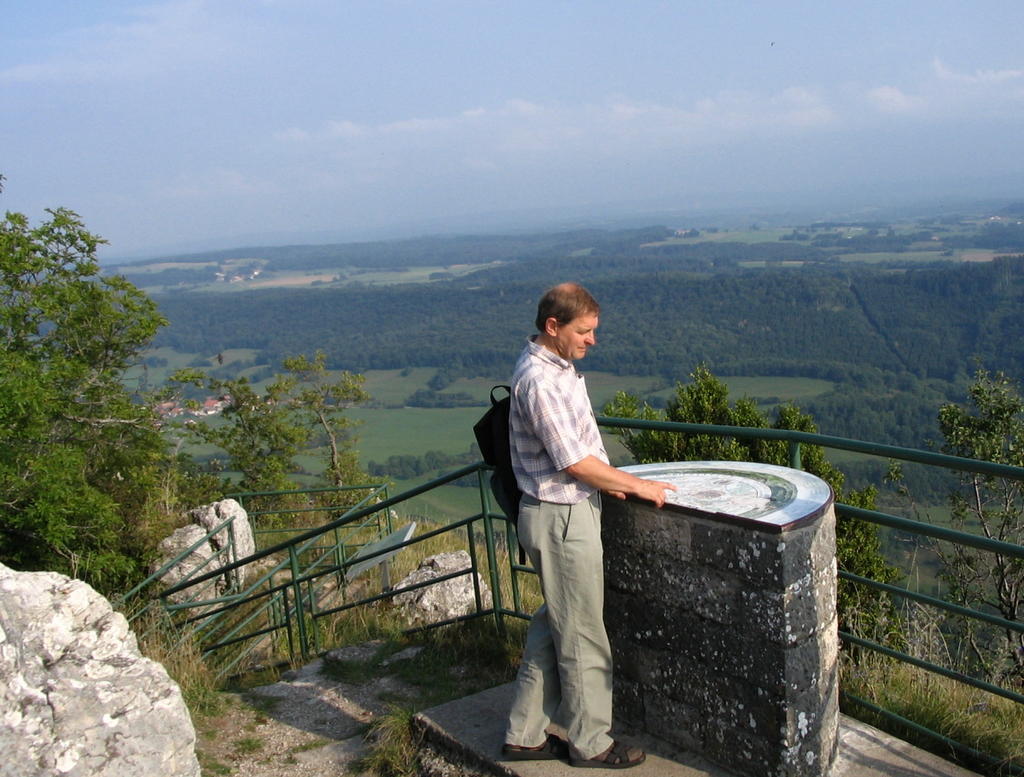 Ian gleefully discovers an orientation table on Mount Poupet
 Salins, 500 metres below us
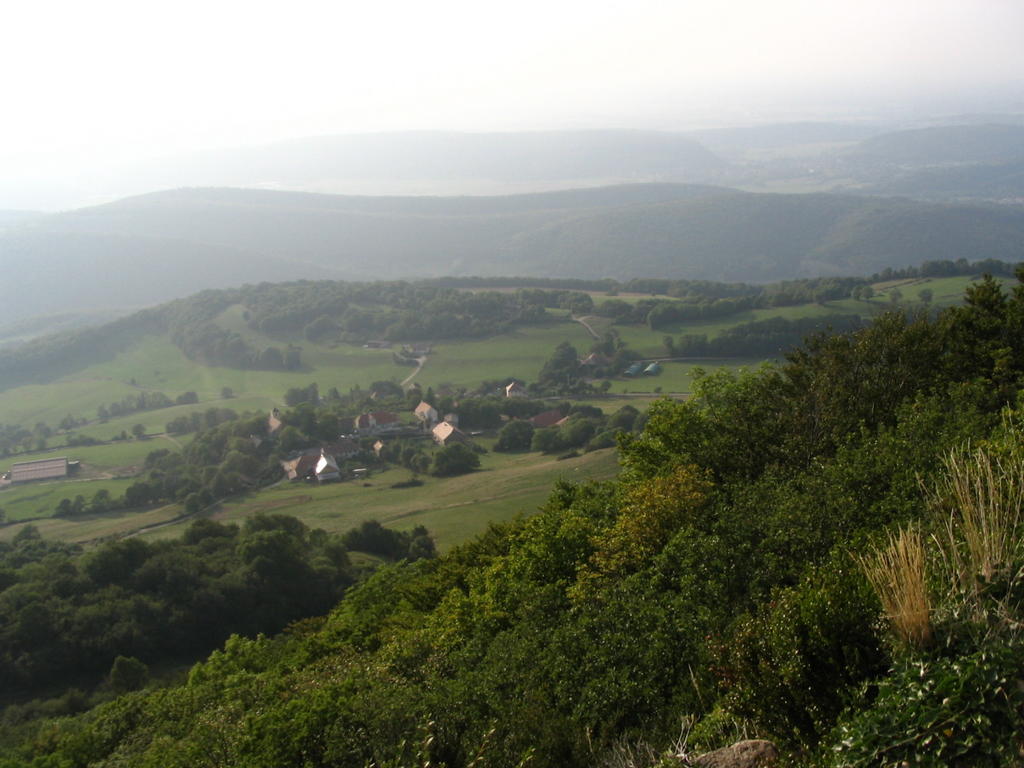 View from Mount Poupet in the direction of Champagne
 Entrance to the Salines at Arc-et-Senans
 Sunflowers ripening in the fields
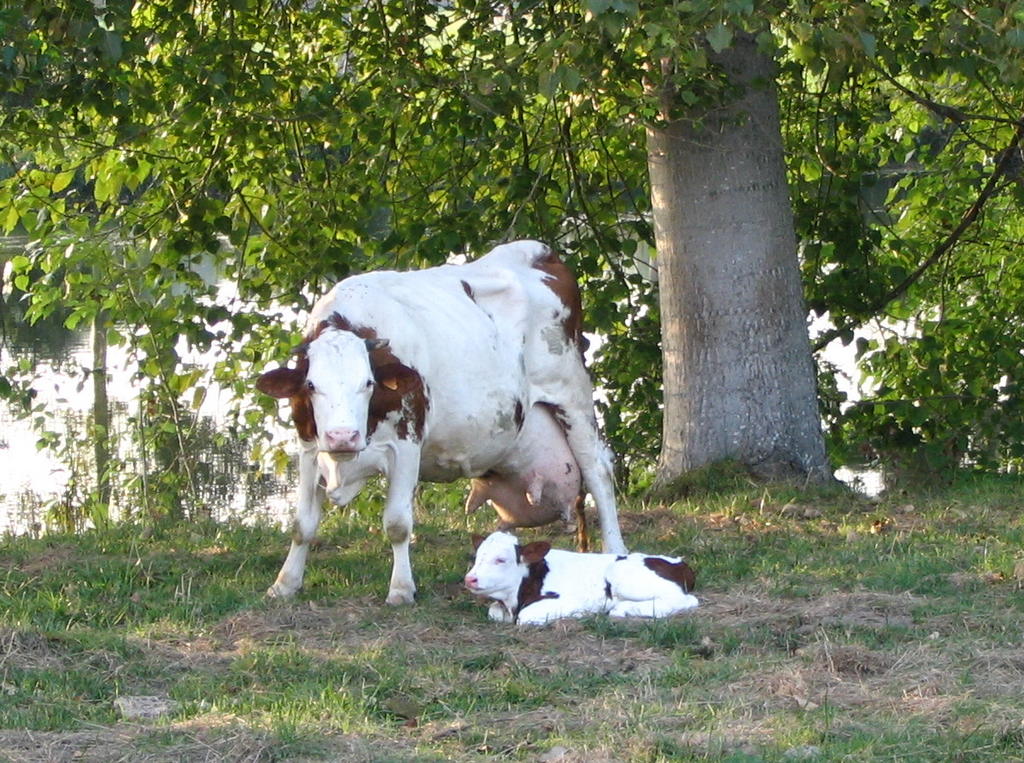 Mother and child
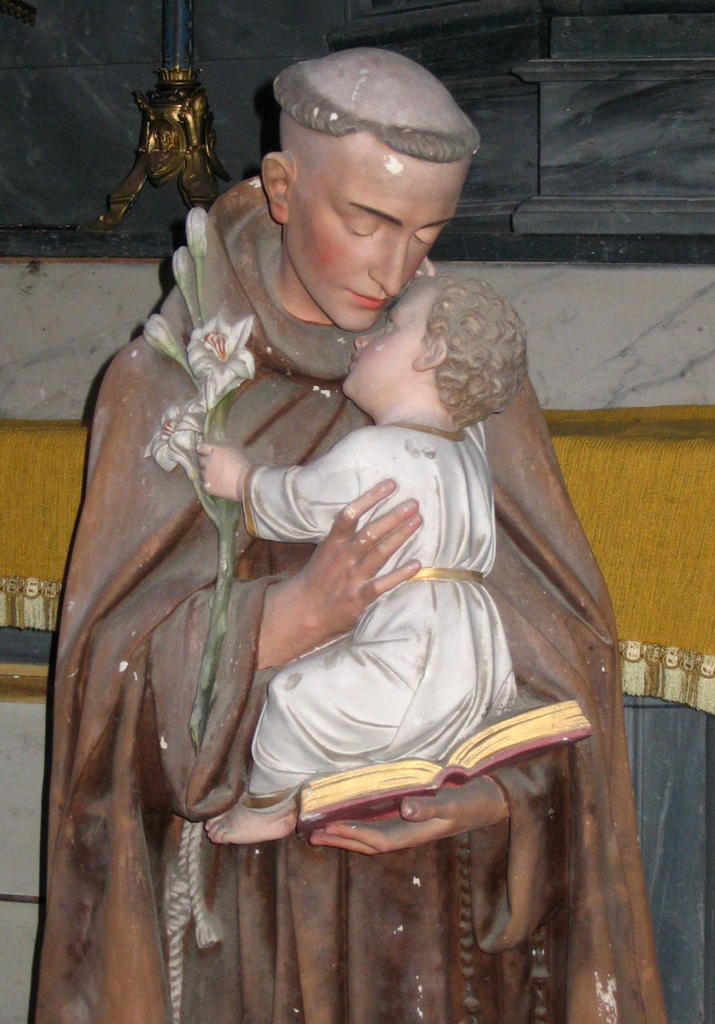 Dans l’église à Villers Robert. On traite les livres comme ça en France? (So thats what is meant by an absorbing book!)
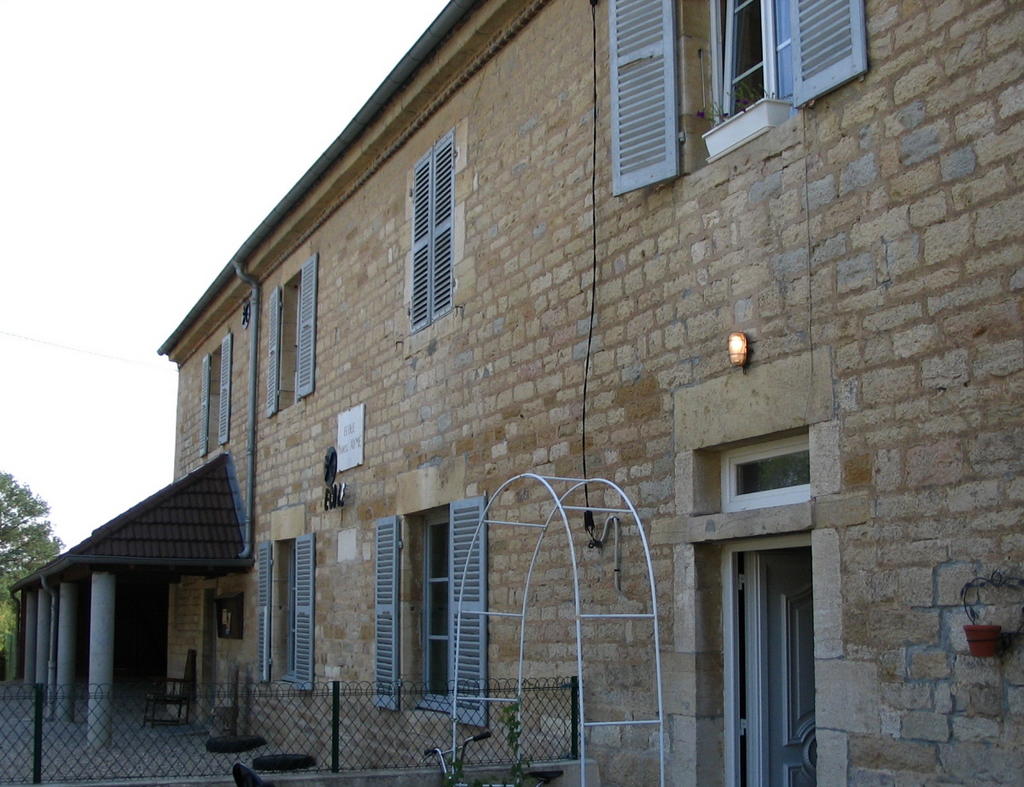 Ecole Marcel Aymé, (where the French writer was educated)
 Maison natale de l’auteur (the writer’s birthplace in the village)
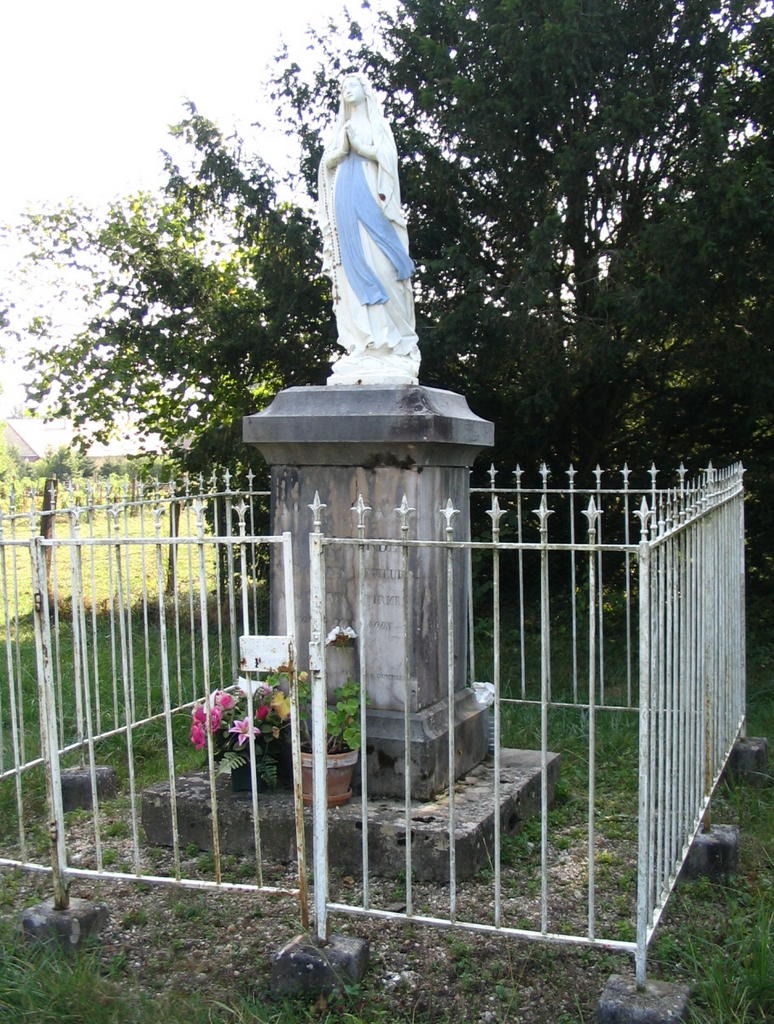 Statue de la Sainte Vierge (typical of most villages around here)
 Chateau Clairvans
 Gallo-Roman tile kiln
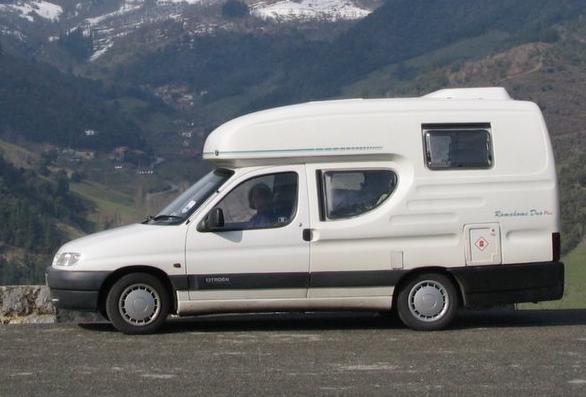
 Suzanne’s and Roland’s camping car on its return from Brittany